
DPR Member Ilham Permana Questions Import of 105,000 Indian Pickup Trucks for Village Cooperative Programme
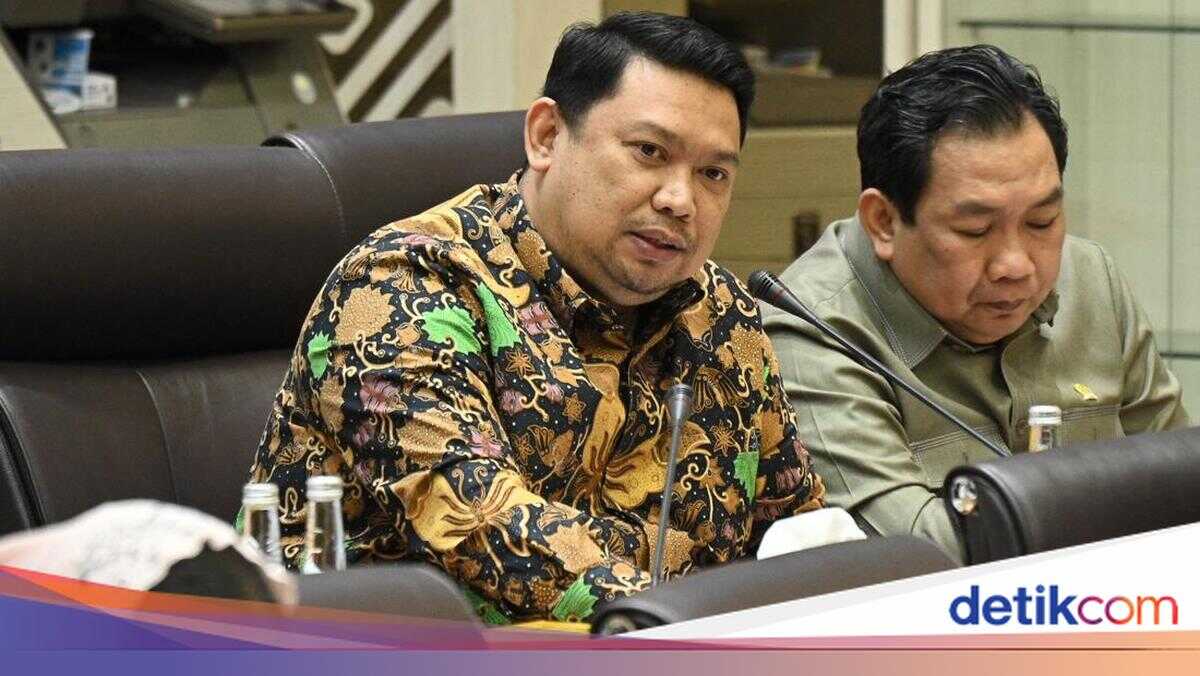
A member of the House of Representatives’ Commission VII from the Golkar Party faction, Ilham Permana, has raised concerns over the procurement of 105,000 commercial vehicles worth Rp 24.66 trillion for the Koperasi Desa/Kelurahan Merah Putih (KDKMP) village cooperative programme. The procurement is being carried out by PT Agrinas Pangan Nusantara, involving two Indian automotive manufacturers — Mahindra & Mahindra and Tata Motors.
Ilham argued that the pickup truck procurement must be viewed from a long-term industrial policy perspective, not merely on the basis of purchase price. In the context of state expenditure, he said, policy parameters cannot be limited solely to per-unit vehicle costs.
“In public procurement, what must be calculated is not simply the purchase price, but the total economic impact generated. We are talking about Rp 24.66 trillion of state funds. That is not a small figure,” Ilham said in a written statement on Saturday (21 February 2026).
The remarks were made in response to an explanation by Agrinas president director Joao Angelo De Sousa Mota regarding the vehicle imports. Joao had argued that imports were necessary because local production was deemed unable to meet demand, and in order to obtain more competitive pricing.
In response, Ilham said the claim that national production stands at only around 70,000 units per year needs to be examined more comprehensively. As stated by the Minister of Industry in press releases carried by various media outlets, Ilham noted, the domestic automotive industry has production capacity far exceeding its annual output.
Ilham added that the gap between capacity and actual production precisely demonstrates spare utilisation that could be optimised through government spending.
“If there is idle capacity, government procurement should serve as an instrument to fill it. Large-scale state spending should ideally function as a pillar of domestic industrial stability,” he explained.
Ilham also questioned the argument that prices were cheaper compared to competitors in the market. He emphasised that the principle of public procurement is not merely about finding the lowest price, but ensuring long-term value for money.
He explained that a lower purchase price does not necessarily reflect more efficient overall costs, particularly if maintenance costs, spare parts availability, after-sales service networks, and the long-term economic value of the vehicles are not taken into account.
“In fiscal policy, we must look at total cost of ownership. We must not allow something to be cheap upfront but expensive in operation,” he said.
He also drew attention to government procurement policies already established within the framework of domestic product usage, as stipulated in Law Number 3 of 2014 and Presidential Regulation Number 46 of 2025. These regulations position state expenditure as an instrument for strengthening the national industrial structure.
Ilham affirmed his full support for the Koperasi Merah Putih programme as part of strengthening the village economy and shortening food distribution chains. However, he cautioned that the programme’s success should not be measured solely by the number of vehicles distributed, but also by the impact on the national economy.
“We certainly want food distribution to be more efficient and farmers to be more prosperous. But at the same time, we must also ensure that this policy generates a multiplier effect for national industry, the workforce, and the domestic supply chain,” he said.
Ilham added that the policy direction is aligned with President Prabowo Subianto’s commitment to strengthening economic self-reliance and the domestic production base. He pledged to continue monitoring the procurement’s implementation to ensure it remains consistent with national industrial development objectives.
“State spending is not merely an economic transaction. It is a policy instrument. Therefore, its impact must be maximised for the national interest,” Ilham concluded.