
DPR Member Emphasises Forestry Law as Pro-People and Environmentally Sustainable
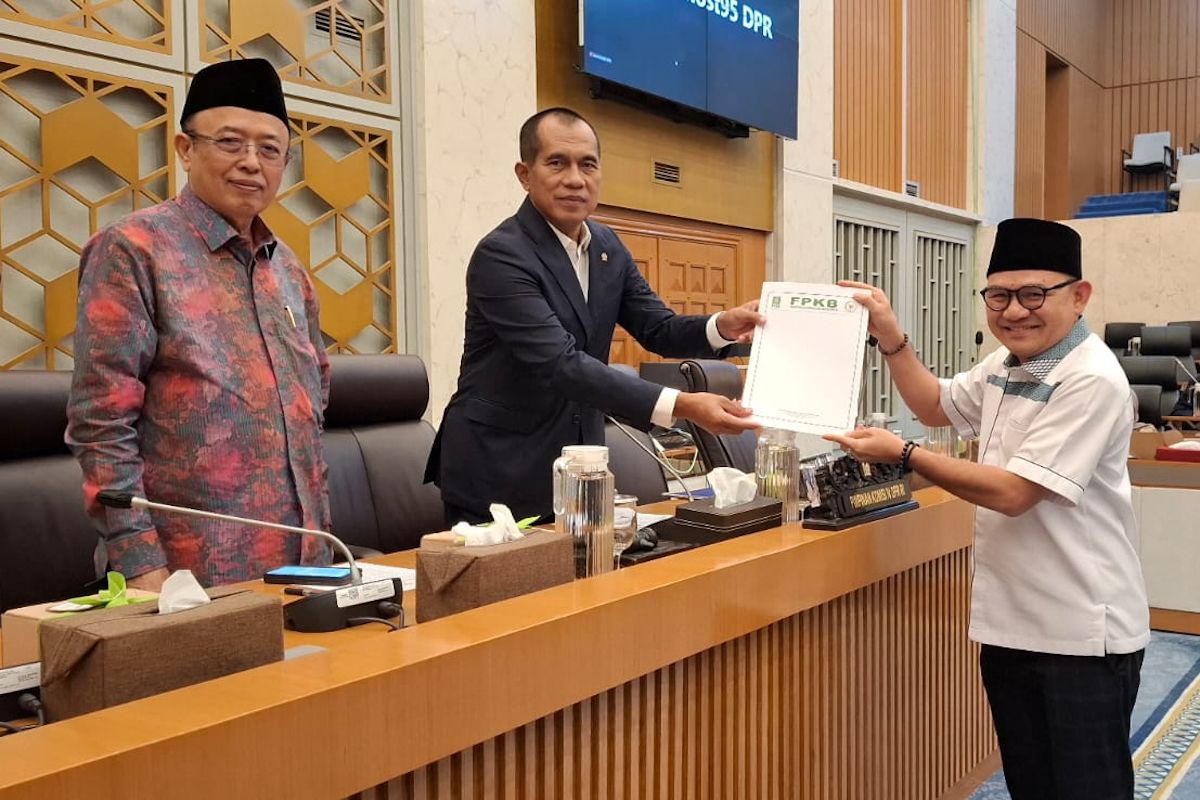
Jakarta (ANTARA) - Jaelani, a member of Commission IV of the Indonesian House of Representatives, emphasised the importance of the Forestry Law that favours the people and preserves the environment through strengthened forest governance that is just, participatory, and protects indigenous communities.
“This revision of the Law is a momentum to improve forest governance that is fair, sustainable, transparent, and pro-people,” said Jaelani in his statement in Jakarta on Saturday.
He conveyed this in relation to his party’s mini-factional view in the Working Committee Meeting on the Draft Law (RUU) concerning the Fourth Amendment to Law Number 41 of 1999 on Forestry.
Jaelani assessed that the preparation of the Forestry RUU is urgent, given the significant changes in social, ecological, juridical, and forestry governance aspects.
He stated that the central issues of the law revision include state control over forests, the status and function of forests, inventory, forest area extent, utilisation, rehabilitation and reclamation, data systems, indigenous legal communities, and organisational lawsuits.
As a member of Commission IV of the DPR handling matters in agriculture, the environment and forestry, as well as marine affairs and fisheries, Jaelani stated that his side views forests as life-support systems with balanced ecological, social, cultural, and economic functions, not merely objects of exploitation.
According to him, the RUU must encourage restorative, participatory, and just management.
He affirmed that state control over forests is a constitutional mandate to regulate and distribute forest benefits to the people, not to marginalise indigenous communities.
“State control must consider the rights of indigenous legal communities, in accordance with Constitutional Court Decision Number 35/PUU-X/2012,” he explained.
The man familiarly called Bang Jay also emphasised the recognition and protection of indigenous legal communities in the Law, including the right to manage forests based on adat law and local wisdom.
“We encourage operational and efficient formulations regarding the determination of indigenous legal communities and the role of regional governments,” he stated.
The DPR RI member from Southeast Sulawesi views that forest functions must be maintained through the principle of ecological prudence. Conservation, protection, and production functions must be affirmed, and area designation must be based on scientific studies and degradation risks.
“Changes in forest area functions must not be lax, as they can accelerate deforestation, weaken resilience, and increase conflicts,” he stressed.
Jaelani continued that forestry inventory and data systems as the foundation of modern governance need to be strengthened. Accurate, integrated, and digital data are important for area affirmation, forestry planning, information systems, and climate change mitigation.
For this reason, his side encourages forestry one-data norms and information openness to avoid overlapping permits and data conflicts.
In addition, his side also emphasised resolving tenurial conflicts, protecting village communities inside and around forests, and strengthening social forestry. Thus, the RUU must provide fair conflict resolution for indigenous, local communities, and forest farmers.
He also emphasised that forest utilisation must open up legitimate economic spaces without sacrificing preservation. Business certainty and data are important for business actors. Business certainty must go hand in hand with legal certainty, rehabilitation, and environmental recovery responsibilities.
“Rehabilitation and reclamation are obligations for every party. The RUU regulates critical land rehabilitation, participatory approaches, and sanctions,” he said.
His side supports strengthening those norms clearly and ensuring environmental recovery becomes a substantive obligation.
“We support regulations on forestry organisational lawsuits as strengthening public oversight and access to justice,” he said.