
DPR Member: ASN System Reforms Fall Under DPR's Authority Following Constitutional Court Ruling
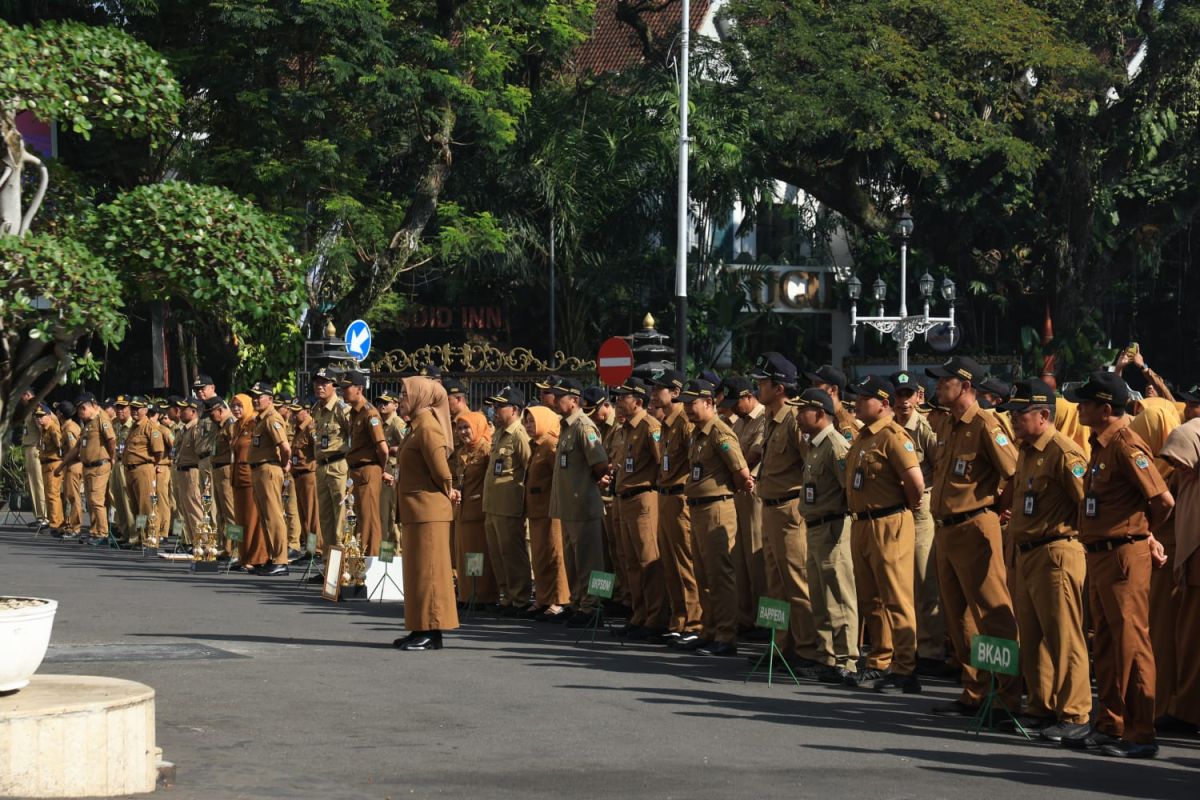
Jakarta (ANTARA) - Commission II of the Indonesian House of Representatives (DPR RI) has affirmed that reforms to the civil service (ASN) system fall under the authority of lawmakers, namely the DPR and the government, following the Constitutional Court’s rejection of a material review of the ASN Law concerning differences in status between PPPK and PNS.
Commission II DPR RI member Eka Widodo explained that the Constitutional Court’s ruling in case No. 84/PUU-XXIV/2026 only addressed formal aspects and did not accept the petition. Consequently, debates on ASN equality remain within the realm of legislative policy.
“This ruling serves as a reminder that reforming the ASN system is the responsibility of lawmakers. The DPR will ensure that every state apparatus receives certainty of rights and fair treatment,” said Edo, his familiar nickname, in a statement in Jakarta on Thursday.
He noted that the Constitutional Court’s decision was formal in nature and did not examine the constitutionality of the challenged provisions. Therefore, ASN reform steps must be taken through legislative mechanisms in the DPR alongside the government.
In formulating ASN policies, Edo stressed that they must be based on the 1945 Constitution of the Republic of Indonesia, particularly the principle of equality before the law and guarantees of decent work.
Nevertheless, he reminded that the constitution allows for distinctions as long as they are based on rational and proportional reasons.
“The difference in status between PNS and PPPK does not inherently contradict the constitution. The key is whether the difference is objective, proportional, and does not cause injustice,” he stated.
From a public policy perspective, Edo assessed that PNS and PPPK have different functions but complement each other. PNS plays a role in maintaining stability and continuity in the bureaucracy, while PPPK provides flexibility in meeting professional workforce needs in strategic sectors.
That said, he acknowledged the need for concrete steps to prevent disparities that harm one party. Basic rights such as labour protection, wage standards, and social security must be formulated more fairly and measurably.
Edo also urged that meritocracy become the main foundation of the state civil service system going forward. All recruitment, promotion, and evaluation processes for ASN must be based on competence and performance, not merely administrative status differences.
Additionally, he proposed a comprehensive evaluation of ASN regulations to ensure legal certainty and avoid multiple interpretations. Data-based approaches and real public sector needs must form the basis of every policy.
“ASN reform must be carried out in a measured manner, based on data, and considering the sustainability of the state’s fiscal position. This is not just a legal matter but also concerns effective governance,” Edo concluded.
The material review petition No. 84/PUU-XXIV/2026 was filed by the Forum Aspirasi Intelektual Nusantara (FAIN) and a government employee with a work agreement (PPPK), Rizalul Akram.
In the petition, they challenged Article 34 paragraphs (1) and (2) as well as Article 52 paragraph (3) letter c of Law No. 20 of 2023 on Civil Servants (ASN). These articles regulate access to positions and contract periods for PPPK and PNS.
The petitioners challenged these three articles because they did not want to be treated as “second-class ASN”. They requested that the Constitutional Court grant PPPK the same opportunities as PNS to hold positions and equality in pension arrangements.
However, in the ruling pronouncement session in Jakarta on Wednesday (29/4), the Constitutional Court stated that the petition was not acceptable.
The Constitutional Court found that the petitioners did not elaborate a comprehensive basis for their arguments. Additionally, the Court found that the object of the petition (petitum) submitted was mutually contradictory, making the petition unclear or obscure (obscuur).
Because the petition from FAIN and Rizalul Akram was unclear, the Constitutional Court did not consider it further.