
DPR Member Admits Election Bill Discussions Remain Stagnant, Several Issues Yet to Reach Consensus
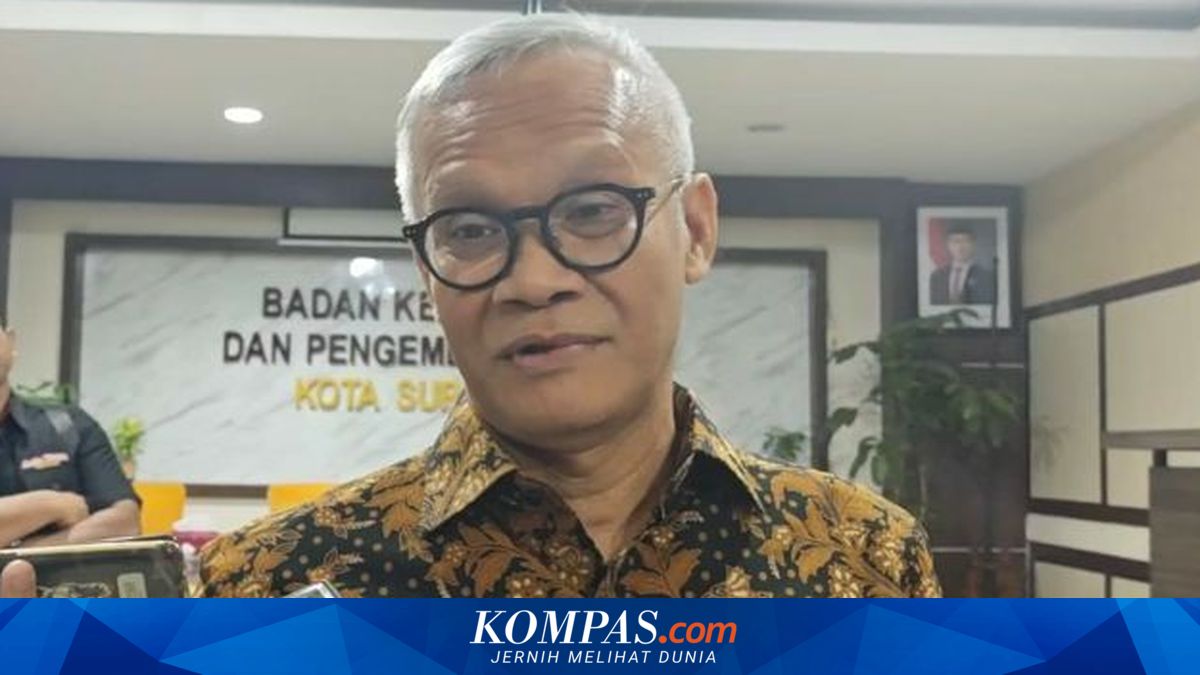
Jakarta - Deputy Chairman of DPR Commission II, Aria Bima, has admitted that the process of drafting the revision to the Election Law (RUU Pemilu) is still fraught with difficulties, as no consensus has been reached among factions regarding several crucial issues in the proposed legislation.
According to Aria, differences in perspectives persist in discussions on various matters, ranging from the parliamentary threshold, presidential threshold, to the design of national and regional elections.
“If there are claims of delays, the discussions are persistent and challenging; it’s not easy to translate this Constitutional Court (MK) ruling,” said Aria at the DPR Building in Jakarta on Tuesday (12/5/2026).
The PDI-P politician emphasised that these differing views pose the main challenge, especially since the RUU Pemilu is a DPR RI initiative.
“If it’s a matter of DPR initiative, we are one DIM. We cannot have different DIMs between one faction and another. Our DIM is the DPR with the government,” stated Aria.
Therefore, differences in views among factions emerged during the drafting process of the RUU.
He exemplified the debate regarding the parliamentary threshold.
According to Aria, some factions propose keeping the parliamentary threshold at around 4 to 7 percent, while the previous MK ruling opened the possibility of a zero percent threshold.
“Eventually, it must be one DIM. Whether zero, four, five, or seven, the DPR cannot disagree,” said Aria.
Such scheme proposals arise as a middle ground to avoid too many small factions in parliament, even if the parliamentary threshold is abolished.
Additionally, discussions remain challenging regarding the presidential threshold and the format of conducting national and regional elections separately, following the MK ruling.
“One of them is also the central and regional elections. Is it staggered? Is it an extension? Both sides argue there is no constitutional basis,” said Aria.
Reflecting on this situation, Commission II of the DPR, together with the DPR Expertise Agency, has agreed to invite several experts and civil society groups to provide input in the discussion of the revision to the Election Law.
“Hopefully, there will be qualitative improvements in our joint drafting with the expertise agency for the RUU draft,” he concluded.