
DPR Hajj Oversight Team Urges Innovative Solutions to Tackle Mina Overcrowding
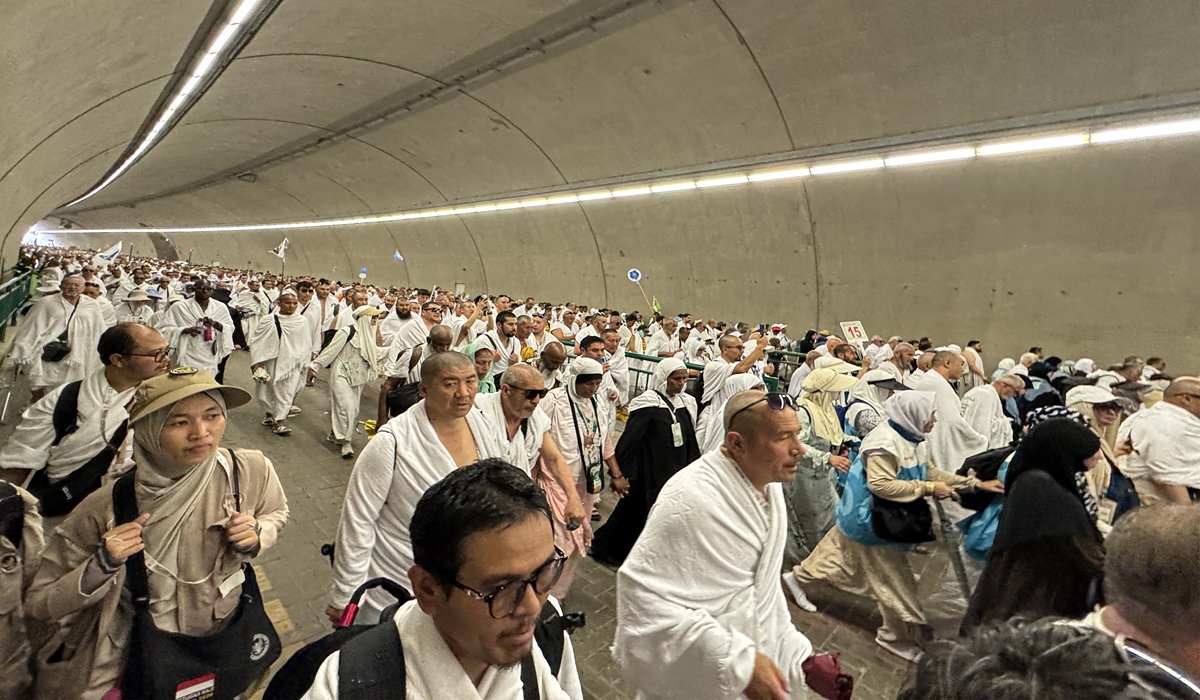
Chairman of the House of Representatives’ Commission VIII and member of the DPR Hajj Oversight Team, Marwan Dasopang, highlighted overcrowding in Mina.
He acknowledged that this year’s Hajj operations have generally run smoothly. However, space and facility constraints in Mina remain a challenge for pilgrims, including those from Indonesia. Despite this, he commended the overall execution of Hajj, which proceeded as planned from arrival to the peak rituals.
‘Overall, Hajj management has been good. The initial stages up to the peak rituals have proceeded according to schedule. We should appreciate the efforts of all parties working hard to serve the pilgrims. But conditions in Mina remain the main challenge,’ Marwan stated on Saturday (30/5).
He explained that Mina’s limited capacity makes overcrowding unavoidable. Millions of pilgrims from various countries gather simultaneously for rituals such as staying overnight (mabit) and stoning the devil (lempar jumrah), leading to restricted movement and reduced comfort.
Besides capacity issues, the DPR Hajj Oversight Team has received reports about suboptimal support facilities. Complaints include malfunctioning air conditioning (AC) and inadequate water supply at some locations.
‘We have received various inputs regarding facilities in Mina. Issues include AC not functioning optimally, insufficient water supply, and other challenges arising from high pilgrim density in a confined area,’ he said.
To address these issues, Marwan urged innovative approaches to Mina’s layout. One viable option is constructing multi-level tents if area expansion is not feasible.
‘We must start thinking of new formulas. If Mina’s area cannot be expanded, options such as tiered tents or other schemes that allow more space for pilgrims must be considered,’ he added.
In addition to infrastructure development, the DPR Hajj Oversight Team proposed optimising the tanazul scheme to reduce congestion. This would allow some pilgrims to stay in designated hotels instead of tents in Mina.
Marwan estimated around 60,000 Indonesian pilgrims could participate in this scheme, based on those whose hotels are conveniently located for movement to ritual sites.
‘Of approximately 201,000 Indonesian pilgrims, around 60,000 could potentially stay in hotels with proper arrangements while complying with regulations. If implemented, this would significantly ease space in Mina for those remaining in tents,’ he explained.
However, he stressed that implementing tanazul or new facilities requires comprehensive studies, regulatory support, and intensive coordination with the Saudi government.
Therefore, Marwan hopes the future establishment of Indonesia’s Ministry of Hajj and Umrah will strengthen negotiations and cooperation to find permanent solutions for Mina’s overcrowding.
‘It is not an easy task. Strong coordination, regulatory backing, and intense communication with the Saudi government are needed. But the Mina issue cannot be left unresolved. We must be bold in seeking breakthroughs to enhance the comfort and safety of Indonesian pilgrims,’ he concluded. (H-4)