
DPR Expert in Constitutional Review of the TNI Law: Active-Duty Soldiers Filling Civil Service Posts Remains Constitutional
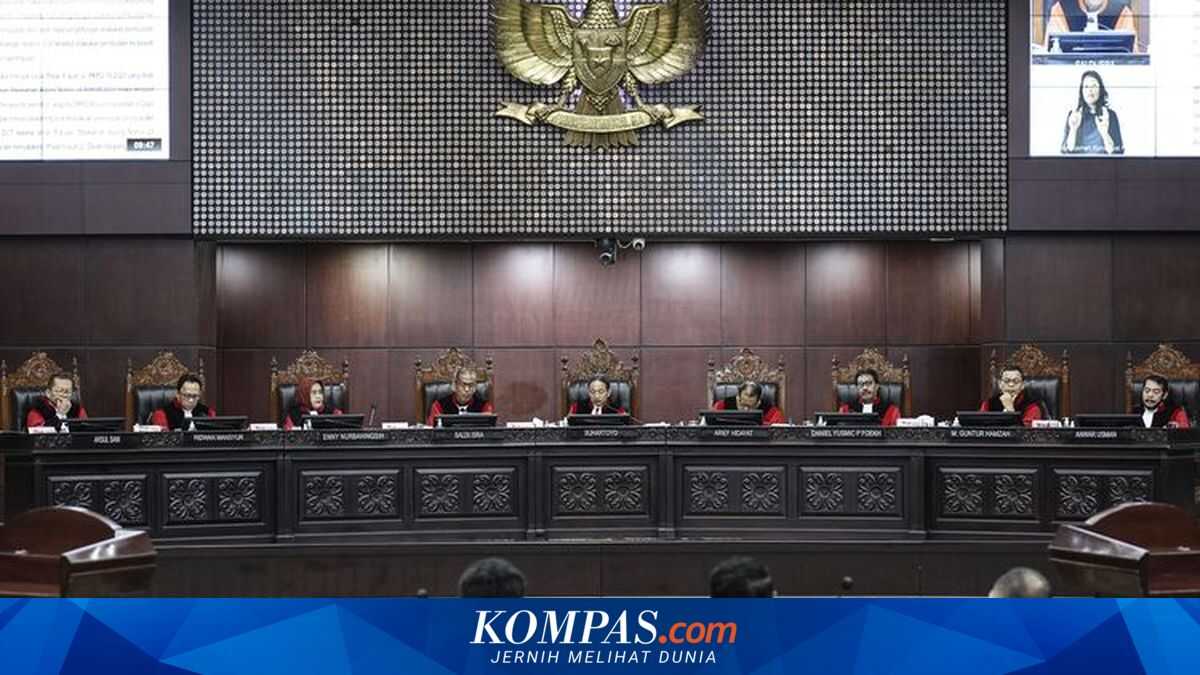
An expert from the DPR side in the challenge to the TNI Law, Professor Tedi Sudrajat of the Faculty of Law at Universitas Jenderal Soedirman, said the provision on filling certain civil service posts by soldiers is constitutional or not in conflict with the Constitution. Sudrajat, quoted by the Constitutional Court’s Jakarta site on Wednesday, explained that the filling of certain civil service posts by TNI soldiers has been built within a legal framework integrated among the 1945 Constitution, the Civil Service Law (UU ASN), and the TNI Law. In the ASN Law, the objective is that certain civil service posts in central agencies can be filled by TNI soldiers using the merit system. The TNI Law, meanwhile, further regulates the subjects and restrictions of appointments. “The TNI Law, as a regulation with a specific character, emphasises the subjects and restrictions of appointments. The subjects are the TNI soldiers and the restrictions are that they can occupy positions only in 14 ministries or central government agencies,” he said, on Wednesday (4 March 2026). “This can be interpreted as the entry of government affairs as strategic nodes of the state that refer to specific institutions with a critical role in ensuring stability and security of the state, and that have a high vulnerability to security threats,” he added. “Therefore, there is constitutional supremacy in the Constitution’s Article 1(3), Article 30(3), Articles 19 and 20 of the ASN Law, and Articles 47(1) and (2) of the TNI Law,” he continued. In Case No. 238/PUU-XXIII/2025, several advocates and civil servants are challenging Articles 47(1) and (2) of Law No. 3 of 2025 amending Law No. 34 of 2004 on the Indonesian National Armed Forces. Article 47(1) states, “Soldiers may occupy posts in ministries/agencies that oversee the coordination of political and national security affairs, national defence including the National Defence Council, the state secretariat handling the presidency’s secretariat and the presidential military secretariat, state intelligence, cyber and/or state code, the National Resilience Agency, search and rescue, national narcotics, border management, disaster response, counter-terrorism, maritime security, the Indonesian Attorney General’s Office, and the Supreme Court.” Sudrajat believes the phrase “may occupy a position” in both articles indicates a choice for soldiers to occupy or not occupy a post, while still meeting the stipulated requirements. The requirements, he added, refer to provisions in Law No. 30 of 2014 on Government Administration governing authority, procedures, and substantive matters. Therefore, he said, Article 47 of the TNI Law must be interpreted holistically to ensure the validity of soldiers occupying specific civil posts. The next hearing, with a DPR expert witness, was held in the MK’s Plenary Court on Tuesday (3 March).