
DPR Commission Chair Misbakhun Urges Constituents to Support Village Red-White Cooperatives and Free Nutritious Meals Programmes
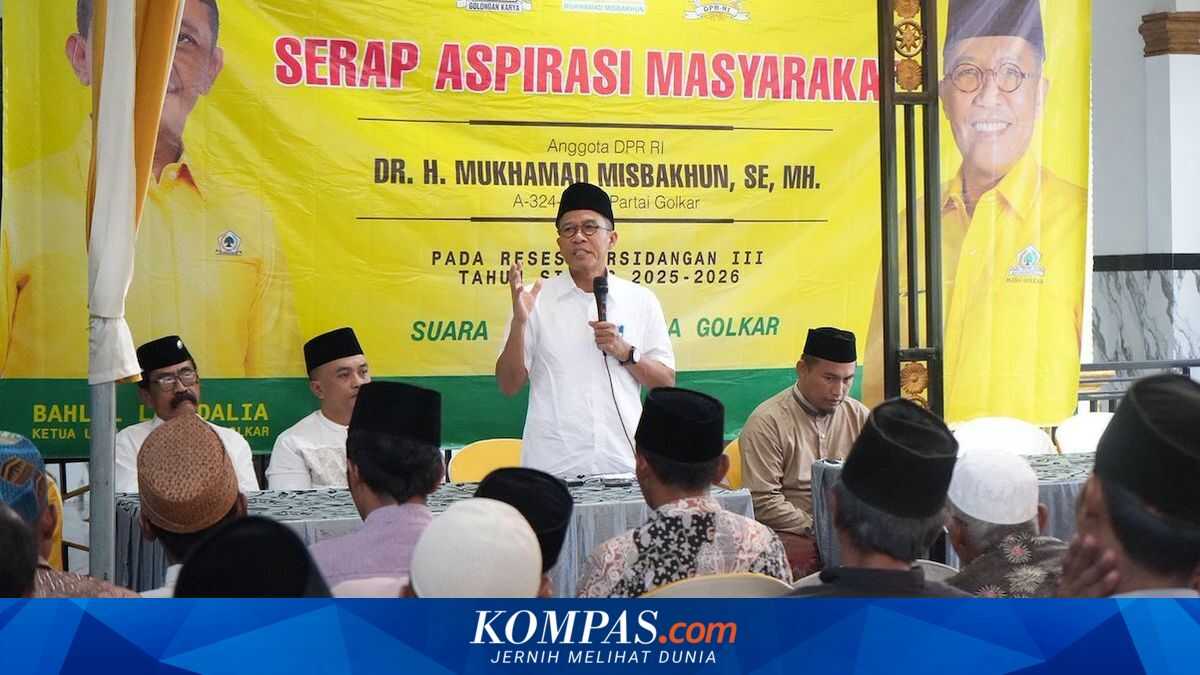
Mukhamad Misbakhun, Chairman of Commission XI of the People’s Consultative Assembly (DPR) and a Golkar Party politician, has urged his constituents to support and ensure the success of two flagship government programmes under President Prabowo Subianto: the Village Red-White Cooperative (KDMP) and the Free Nutritious Meals (MBG) programme.
Misbakhun is confident that both programmes will stimulate economic activity and benefit future generations. He conveyed this appeal during constituency consultation meetings held at three locations in Probolinggo Regency on Saturday, 28 February 2026, namely in Pajarakan District, Gending District, and Leces District.
Misbakhun, who also serves as Chairman of the National Leadership Council of the Central Organisation of Independent Indonesian Workers (Depinas SOKSI), believes that KDMP will serve as an engine for rural economic development. According to him, the national economy is currently facing pressure from global dynamics and international geopolitical tensions.
“One approach is through KDMP. We hope this programme will become the centre of economic activity in villages,” said Misbakhun in a written statement received by Kompas.com on Sunday, 1 March 2026.
Misbakhun explained that the KDMP programme involves Bank Rakyat Indonesia (BRI), Bank Mandiri, and Bank Tabungan Negara (BTN). These financial institutions, which form part of the Association of State Banks (Himbara) and already have networks extending into rural areas, will support KDMP.
Regarding MBG, he emphasised that the programme reaches schoolchildren, Islamic boarding school students, pregnant women, and nursing mothers. According to him, this programme is part of the state’s efforts to ensure that Indonesia’s future generation has adequate nutritional standards.
“Indonesia’s future generation must be equipped with sufficient nutrition to be able to compete with neighbouring countries and developed nations. We must not fall behind in preparing the quality of the next generation of the nation,” added Misbakhun.
The legislator serving on the DPR’s Finance and Banking Commission explained that the budget allocation for MBG reaches 350 trillion rupiah in 2026. According to him, this budget represents a long-term investment by the nation in shaping future generations.
He emphasised that the MBG programme has been designed through various considerations. Even if there are still shortcomings in the implementation of MBG, Misbakhun described this as natural given that the programme is still new.
“What matters is that its noble purpose should not be compromised. Criticism is welcome, but it must be constructive,” said Misbakhun.