
DPR Combined Faction Idea: Between Saving Votes and Ideological Compromise
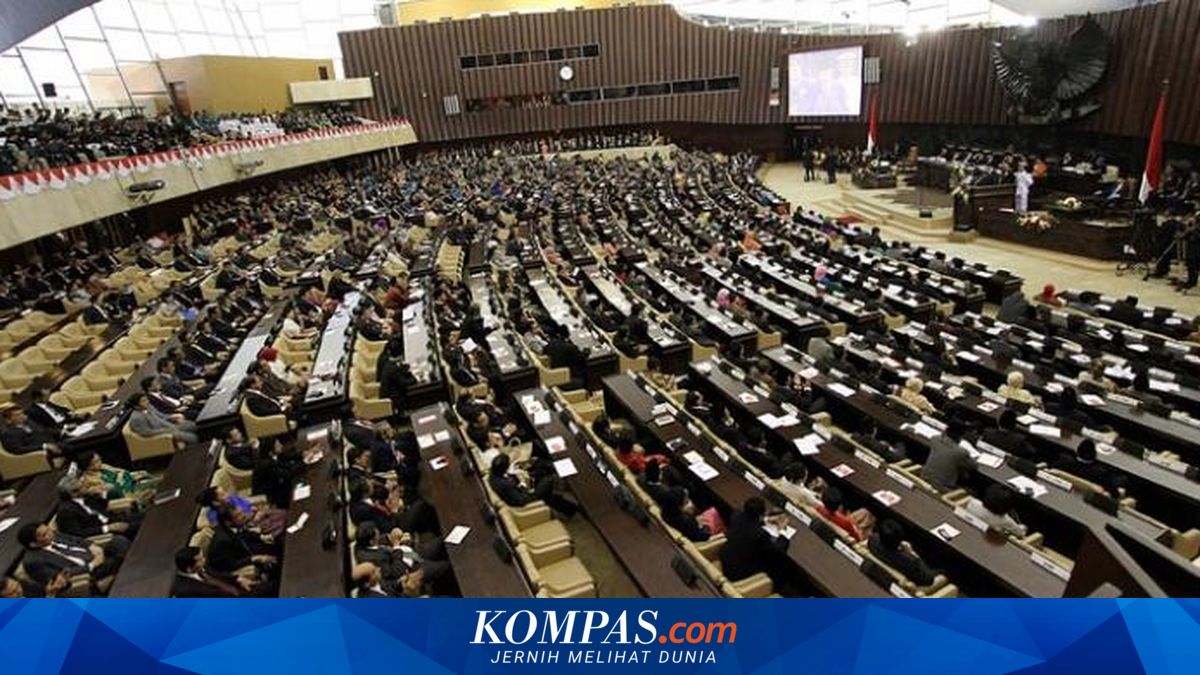
The idea of forming a combined faction in the DPR is sparking a dilemmatic tension between saving the people’s votes from being wasted and forcing political parties with differing ideologies to compromise by joining together.
The parliamentary threshold percentage is once again under discussion following talks of revising Law No. 7 of 2017 on General Elections after the Constitutional Court’s decision mandating changes to the threshold before the 2029 elections.
Most recently, the Coordinating Minister for Law, Human Rights, Immigration, and Correctional Services, Yusril Ihza Mahendra, has proposed that the number of commissions in the House of Representatives (DPR) RI could serve as a benchmark for the parliamentary threshold for political parties contesting legislative elections.
This means that if there are 13 commissions in the DPR RI, each political party must secure at least 13 seats.
However, responses to this proposal vary. The Indonesian Solidarity Party (PSI) considers it effective for simplification, as the current parliamentary threshold does not accommodate other parties to enter Senayan.
The United Development Party (PPP), which previously failed to meet the 4 percent parliamentary threshold in the 2024 elections, views this proposal as a middle path.
So, can the idea of a “combined faction” truly meet the needs of people’s representation?
Political observer and member of the National Board of the Independent Election Monitoring Committee (KIPP) Indonesia, Jojo Rohi, assesses that Coordinating Minister Yusril’s idea is administratively appealing but problematic democratically.
He believes the threshold should be based on the percentage of people’s votes, not on the internal technical needs of parliament.
According to him, if it is based on seats or the number of commissions in parliament, the logic of people’s representation shifts towards mere institutional management.
On the other hand, the proposal for a combined faction, as pushed by some parties, appears as a solution to avoid wasted votes.
“As a result, accountability to voters becomes blurred, party political identities weaken, and factions can become highly pragmatic and transactional. So, in the short term, this solves the ‘threshold’ problem, but in the long term, it can damage the quality of representation,” Jojo said when contacted by Kompas.com on Tuesday (5/5/2026).
Jojo sees this proposal as a political shortcut, as there is a tendency for all parties to want to maintain the threshold to simplify the system.
But on the other hand, political parties do not want to lose votes for electoral interests.
He assesses that there are negative impacts following this proposal.
The main impact is increased fragmentation because political parties can more easily enter parliament without a mature design.