
DPR Budget Committee Chairman Urges Restructuring of Energy Subsidy Policy
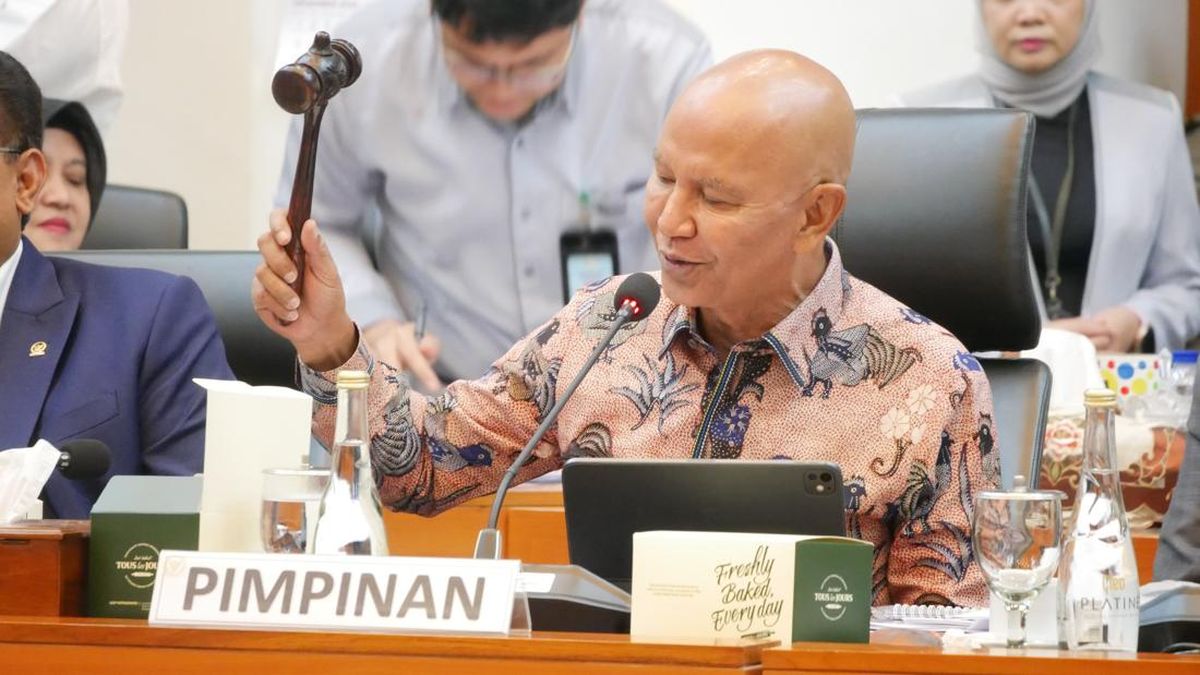
The Chairman of the DPR Budget Committee, Said Abdullah, emphasised the importance of learning from repeated experiences with global oil price shocks. He highlighted the negative impacts of energy price fluctuations that are currently pressuring the national economy once again.
“We have experienced the negative impacts of oil shocks multiple times. Less than five years later, we are facing another oil shock,” he stated in a written remark on Tuesday (7/4).
The situation in 2026 is assessed to present different challenges compared to the 2022 energy crisis. The government is now facing dual pressures from rising crude oil prices and the weakening rupiah exchange rate against the dollar.
He noted that, unlike in 2022, Indonesia is not currently benefiting from surges in coal and palm oil commodity prices. The absence of such unexpected profits limits the state’s budgetary flexibility in mitigating global energy price volatility.
Meanwhile, the ceiling for energy subsidies and compensation in the 2026 state budget is set at Rp381.3 trillion, assuming an oil price of US$70 per barrel.
“The risk is that any upward shift in oil prices and exchange rates will increase the costs of energy subsidies and compensation,” Said added.
As is known, the government has decided to maintain fuel and LPG prices despite rising fiscal pressures to preserve public purchasing power. This measure is supported by a budget surplus of Rp420 trillion and a burden-sharing scheme with Pertamina.
“I appreciate this step, as raising fuel prices when public purchasing power is declining would further burden the people. However, this must be followed by subsidy policy reforms,” he stressed.
Said continued that, based on Susenas data, the distribution of diesel and LPG subsidies has so far been inaccurate. A significant portion of the subsidy benefits has been enjoyed by economically capable household groups.
Households in deciles 6 to 10 account for about 72% of total diesel subsidy allocations. In contrast, poor communities in deciles 5 and below only receive 28% of the diesel subsidy benefits.
A similar issue occurs with Pertalite consumption, which is dominated by capable groups at 79%. This disparity arises because upper-income groups own more transportation modes than the poor.
For the 3 kg LPG subsidy, middle- to upper-income household groups still enjoy about 69% of the allocation. The open trading system allows these subsidised goods to be purchased freely by anyone without strict restrictions.
The distribution of electricity subsidies is considered better, as it has begun targeting households with 900 VA capacity and below. However, Said noted a remaining 40% bias where capable households still use subsidised capacity.
The government is urged to promptly change the LPG subsidy distribution scheme to better direct it to the 40% of the population with low incomes.
“First, data must be accurate. Second, beneficiaries can use biometrics,” Said outlined the technical requirements for improvement.
He also suggested adopting a biometric identity system linked to bank accounts, as implemented by the Indian government. This digital system is deemed capable of minimising manipulation, as aid is directly channelled to validated recipient accounts.
If this closed subsidy system is implemented, the 3 kg LPG price in the free market could be adjusted to market rates. This step is expected to significantly reduce the subsidy expenditure burden on the state budget.
Regarding fuel subsidies, Said requested Pertamina to revalidate application data through synchronisation with police vehicle data. Subsidies should be prioritised for small fishing boats, small farmers’ agricultural equipment, and motorbikes of MSME actors.
Private four-wheeled vehicles are proposed to be prohibited from using subsidised diesel and Pertalite, as they are the largest beneficiaries. Exceptions would only apply to yellow-plated commercial vehicles transporting people’s food to prevent inflation spikes.
PLN is also asked to revalidate electricity customers through integration with national socio-economic survey data. Customers whose welfare has improved are expected to exit the subsidised tariff group to make allocations more efficient.
This reform of energy subsidy policies is considered urgent to begin immediately, given the uncertainties of geopolitical conflicts in the Gulf region. Initial reform steps will provide the government with broader fiscal room to face energy crisis threats.
“If we can take reform steps earlier, in the future the government will have more fiscal space to address oil shocks,” Said concluded.