
DPR Budget Committee Chairman States 2026 State Budget Remains Safe and Under Control
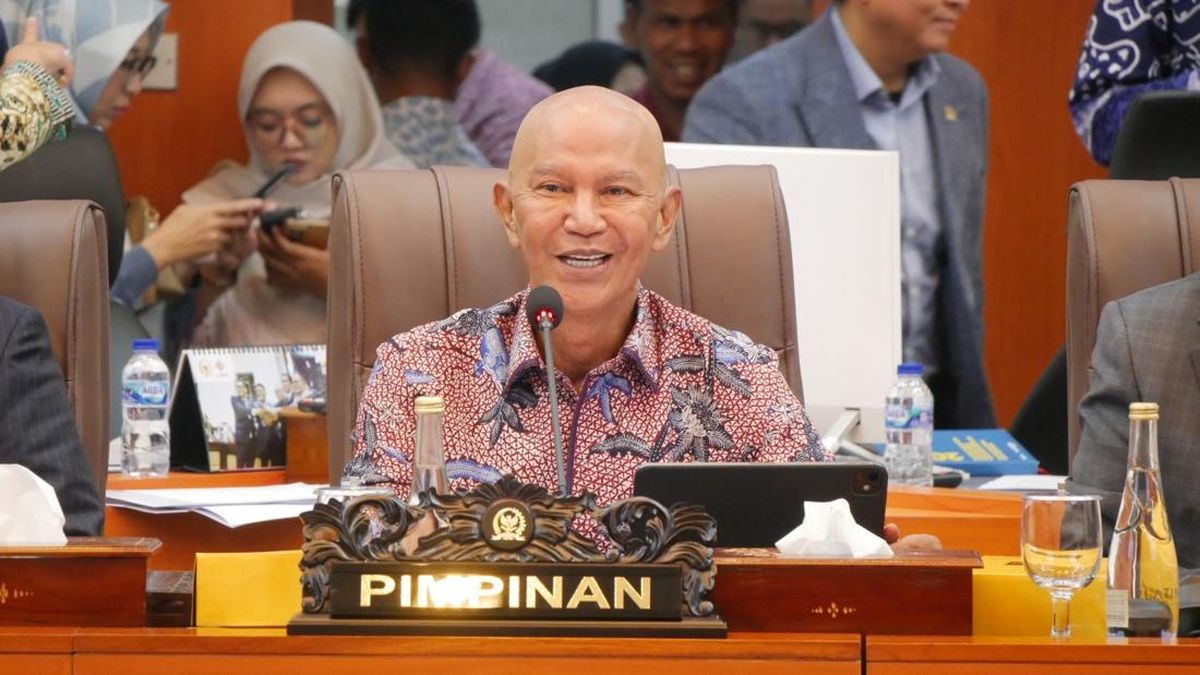
The Chairman of the House of Representatives’ Budget Committee (Banggar) DPR RI, Said Abdullah, has emphasised that the 2026 State Revenue and Expenditure Budget (APBN) remains on a healthy and controlled trajectory, despite recent issues regarding potential deficit expansion and fears of the budget collapsing.
According to Said, the criticisms and warnings from various observers and academics should be appreciated as a form of concern for the national economy. However, he assesses that several economic indicators and APBN performance actually demonstrate considerable resilience amid global pressures.
“Beyond the expectations of some parties, we have managed to grow by 5.6%. There are indeed seasonal factors, namely Ramadan and Eid, which boost household demand. These seasonal factors drive industry, trade, transportation, hotels, and restaurants as growth supports,” Said stated in his comments, quoted on Monday (11/5).
On the other hand, government spending in the first quarter of 2026 recorded a year-on-year (yoy) growth of 21.81% and contributed 1.26% to economic growth. According to him, this acceleration in spending deserves appreciation because it has mobilised the industrial, trade, transportation, hotel, and restaurant sectors.
“Q1 2026 government spending grew by 21.81% (yoy) and contributed 1.26% to economic growth. This strategy deserves our appreciation,” Said said.
In addition to economic growth, Said noted that several other indicators also show the national economy’s resilience remains intact. Indonesia’s trade balance still records a surplus of $5.5 billion and has remained positive for 71 consecutive months. Meanwhile, banking credit growth is also moving positively.
The APBN performance in Q1 2026 is also considered solid. State revenues reached Rp574.9 trillion, or a 10.5% yoy growth, supported by tax receipts of Rp394.8 trillion, which grew 20.7% annually.
Said explained that from the difference between underpayments and overpayments of taxes, the government even recorded a surplus underpayment of Rp13.38 trillion.
“Thus, the government still has ‘savings’ from taxes,” he said.
Nevertheless, he acknowledged challenges still emerging from Non-Tax State Revenues (PNBP), particularly due to declining oil and gas lifting and low Indonesian Crude Price (ICP). However, he said the situation will improve in Q2 2026 along with rising world oil prices and the recovery of upstream oil and gas operations.
“Other non-oil and gas PNBP all grew positively. The good news is that because tax revenues grew positively, it can support the needs for accelerating programme and capital spending,” he said.
On the state expenditure side, realisation up to Q1 2026 reached Rp815 trillion, or a 31.4% yoy growth. The majority of spending came from central government expenditure of Rp610.3 trillion, focused on supporting national priority programmes.
This spending acceleration strategy has indeed impacted the widening of the APBN deficit to Rp240.1 trillion, or equivalent to 0.93% of Gross Domestic Product (GDP). However, Said assesses that this figure is still within safe and controlled limits.
“The 2026 APBN plans a deficit of Rp689.1 trillion, equivalent to 2.68% of GDP,” he said.
He predicts the government will opt for a budget refocusing strategy amid external pressures such as rising oil prices and rupiah depreciation.
With this strategy, Said projects the APBN deficit by the end of the year could potentially be lower than the initial target, around 2.56% of GDP or approximately Rp658.3 trillion.
“Because of this choice, I estimate the APBN deficit will even be lower than planned, around 2.56% of GDP, equivalent to Rp658.3 trillion,” Said said.
Said also clarified the issue claiming the 2026 APBN balance is only Rp120 trillion remaining. According to him, the 2025 Budget Surplus (SAL) of Rp420 trillion remains intact.
“The SAL remains intact at Rp420 trillion; even the government receives returns from placing the SAL with state-owned banks. In accordance with the APBN Law, the SAL can only be used for spending with DPR approval,” Said said.
Although optimistic about the national fiscal condition, Said reminded the government to remain vigilant in facing Q2 2026 challenges, from rising commodity prices to global external pressures.
He supports the safe mode measures implemented by the government and Bank Indonesia through budget refocusing policies, dollar transaction restrictions, the establishment of the Bond Stabiliser Fund, and the issuance of panda bonds.
“With the safe mode policy, it will immediately curb the large financing needs this year. The government will also not face difficult situations in funding costs that are expensive,” Said said.
On the other hand, Said believes the government needs to seize the momentum to strengthen key sectors supporting the national economy, such as manufacturing, trade, agriculture, construction, and mining. These five sectors contribute more than 63% to the national GDP and absorb the majority of Indonesia’s workforce.
Therefore, he encourages a more expansionary fiscal policy direction through incentives and improvements to the investment ecosystem so that these sectors can grow stronger and create a large number of formal jobs.
“For that, the government needs measured quick-win programmes to revive industry, trade, agriculture, construction, and mining,” Said said.