
DPR Budget Committee Chair Said Abdullah Clarifies Free Nutritious Meals Programme Budget Allocation in National Budget
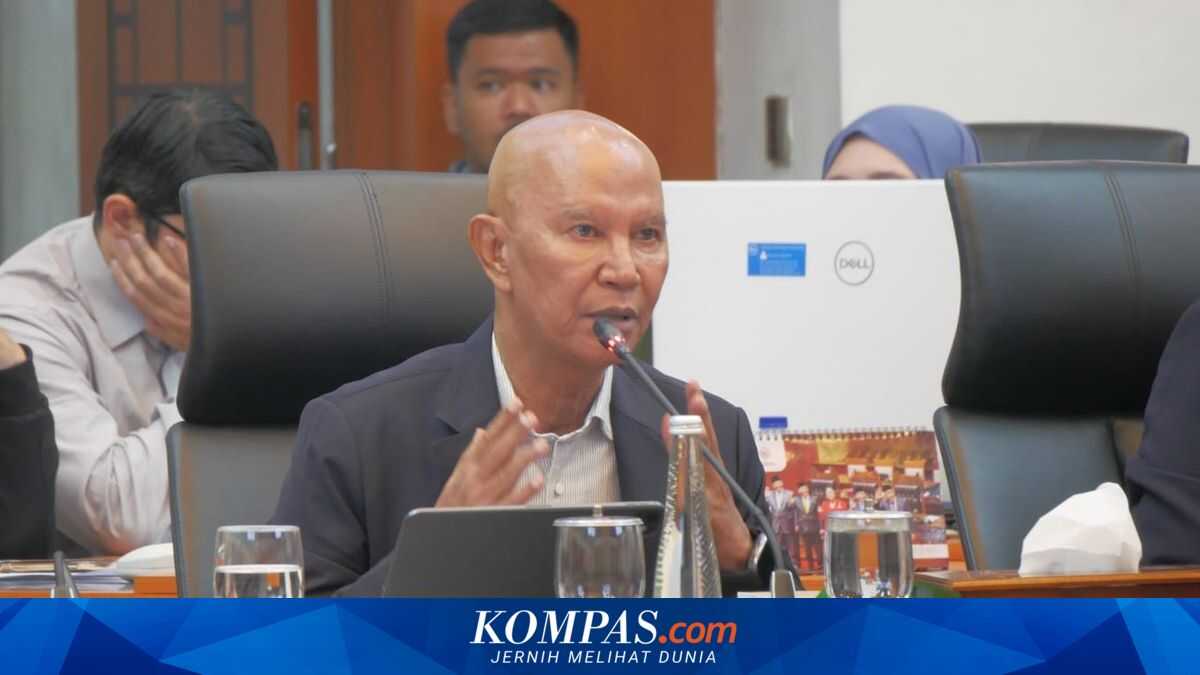
Controversy surrounding the budget allocation for the Free Nutritious Meals (MBG) programme has resurfaced after Reza Sudrajat, a contract teacher, filed a constitutional review petition against the 2026 National Budget Law with the Constitutional Court.
Said Abdullah, Chair of the DPR Budget Committee (Banggar), has clarified the government’s position and budget governance approach for the MBG programme within the 2025 and 2026 National Budgets.
“Since President Prabowo Subianto’s administration took office and submitted the 2025 and 2026 National Budgets, the education budget has been allocated in accordance with the constitutional mandate of 20 per cent of state expenditure,” Said stated in written remarks received on Friday, 27 February 2026.
The 2025 National Budget allocated Rp 724.2 trillion for education, increasing to Rp 769 trillion in 2026.
Over these two years, the MBG programme has been included in the National Budget with an allocation of Rp 71 trillion in 2025 and Rp 268 trillion in 2026.
Said asserted that the proposed National Budget is the sole legislative proposal submitted by the government to the DPR. In its deliberations, the DPR has the authority to approve or reject the entire proposal in its entirety.
“The DPR’s position regarding the proposed National Budget is to modify, increase, or decrease budget line items for programmes and ministries/agencies agreed upon jointly with the government,” Said stated firmly.
He emphasised that the placement of MBG funds within the education budget line represents a political decision between the government and the DPR that has been formalised in National Budget legislation.
“Whether placing the MBG budget as part of education spending aligns with the constitutional definition is a question. What is clear is that the government and DPR have made that decision in the National Budget Law,” Said said.
However, he clarified that the budget increase differs from the MBG allocation. According to Said, increases in ministry budgets are a consequence of rising state expenditure from 2025 to 2026.
“Because state expenditure forms the basis for calculating the education budget at 20 per cent, when expenditure rises, the education budget automatically increases as well,” he explained.
Said outlined that budget increases occurred across several ministries performing education functions: the Ministry of Education and Culture received Rp 21.5 trillion, the Ministry of Higher Education, Science and Technology received Rp 3.3 trillion, the Ministry of Religious Affairs received Rp 10.5 trillion, the Ministry of Social Affairs received Rp 4 trillion, and the Ministry of Public Works received Rp 1.7 trillion.