
DPD Secretary General Invites Strategic Partners to Collaborate in Accelerating Regional Development
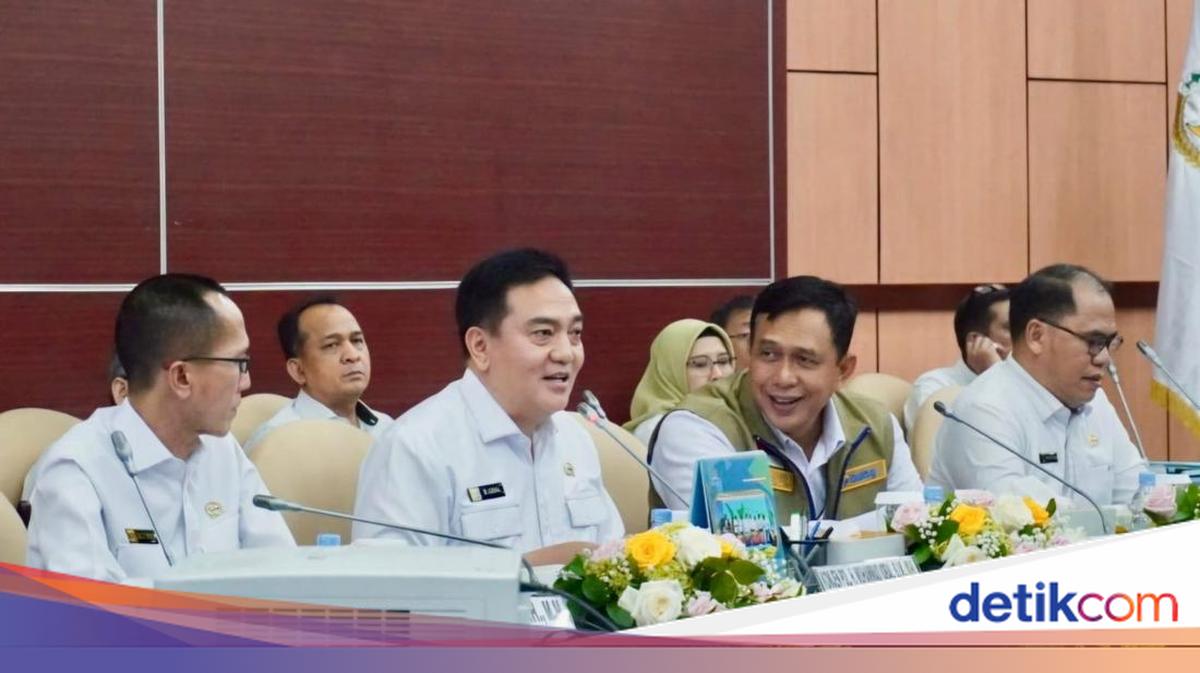
Secretary General of the DPD RI, Mohammad Iqbal, has underscored the importance of cross-sectoral collaboration in tackling national development challenges. Iqbal reminded that there is no longer room for sectoral egos among ministries, institutions, and state-owned enterprises.
“Today’s development challenges can no longer be resolved sectorally; instead, we must collaborate through integrated cooperation,” Iqbal stated during the Coordination Meeting of DPD RI Strategic Partners at the DPD RI Building in Senayan, Jakarta, as quoted on Thursday (23/4/2026).
Iqbal noted that the effectiveness of the DPD’s functions is heavily determined by the quality of its supporting systems. He acknowledged that policy fragmentation remains a primary obstacle.
“Programmes are running, but not always connected. Budgets are available, but not always on target. Data exists, but not always integrated,” he said.
Iqbal also referenced President Prabowo Subianto’s message from a briefing on 8 April, outlining three fundamental points. First, there must be no sectoral egos. Second, governance must operate seamlessly, connected and mutually supportive. Third, bureaucratic reform must yield real changes.
“We can no longer work in institutional silos,” Iqbal stated.
Iqbal explained that the DPD RI has initiated various collaborative activities, such as simultaneous maize planting in four provinces in 2025. Currently, it is promoting the Green Village programme in collaboration with the Ministry of Villages.
“This is not merely a programme, but a new approach that development must be area-based, ecosystem-based, and collaboration-based,” he said.
He emphasised that this collaborative initiative is not intended to add to workloads or create new layers of bureaucracy.
“On the contrary, this is an effort to simplify coordination, accelerate decision-making, and ensure that what we do truly has an impact,” Iqbal clarified.
Iqbal expressed three hopes at the forum. First, a shared understanding of the importance of cross-sectoral collaboration. Second, the establishment of clear working mechanisms. Third, the emergence of initiatives that can be immediately implemented together.
“Meetings are important, but too many meetings without execution become pointless. The measure of our success is not how many meetings we hold, but how much impact we generate,” he said.
Iqbal added that this collaboration is not to increase workloads or create new bureaucratic layers.
“On the contrary, this is an effort to simplify coordination, accelerate decision-making, and ensure that what we do truly has an impact,” he clarified.
Meanwhile, Bulog President Director Ahmad Rizal Ramdhani identified the strategic role of the DPD RI Secretary General as the driving force for collaboration. Rizal outlined Bulog’s technical support to the DPD RI, including a rice assistance programme of 3.5 tonnes per year for each member recess period.
“Since his leadership, alhamdulillah, he has initiated, assisted, or let’s say collaborated with us; per year, we support 3.5 tonnes of rice across the four recesses,” Rizal revealed.
Rizal also affirmed Bulog’s commitment to continue supporting DPD RI programmes that directly impact society. He explained Bulog’s technical readiness in distributing aid and synergising on strategic programmes such as food security.
“We are fully prepared to support DPD programmes, especially those touching on the basic needs of communities in the regions,” Rizal’s statement, which was met with applause from meeting participants.
The coordination meeting invited several DPD RI strategic partners, including BPK RI, Bank Indonesia, the Financial Services Authority, the Coordinating Ministry for Economic Affairs, the Coordinating Ministry for Infrastructure and Regional Development, the Coordinating Ministry for Food, the Ministry of Energy and Mineral Resources, and the Ministry of Housing and Human Settlements.
Then the Ministry of Forestry, the Ministry of Agriculture, the Ministry of Marine Affairs and Fisheries, the Ministry of Transportation, the Ministry of Public Works, the SOE Management Agency, the Ministry of Finance, the Ministry of Industry, and the Ministry of Trade.
Additionally, the Nusantara Future Investment Management Agency (Danantara), the National Nutrition Agency (BGN), PT Indonesia Asahan Aluminium (INALUM), PT Pupuk Indonesia (Persero), Perum Perhutani, PT PLN (Persero), and PT Krakatau Steel (Persero).