
DPD Secretary General Emphasises Importance of Collaboration to Accelerate National Development
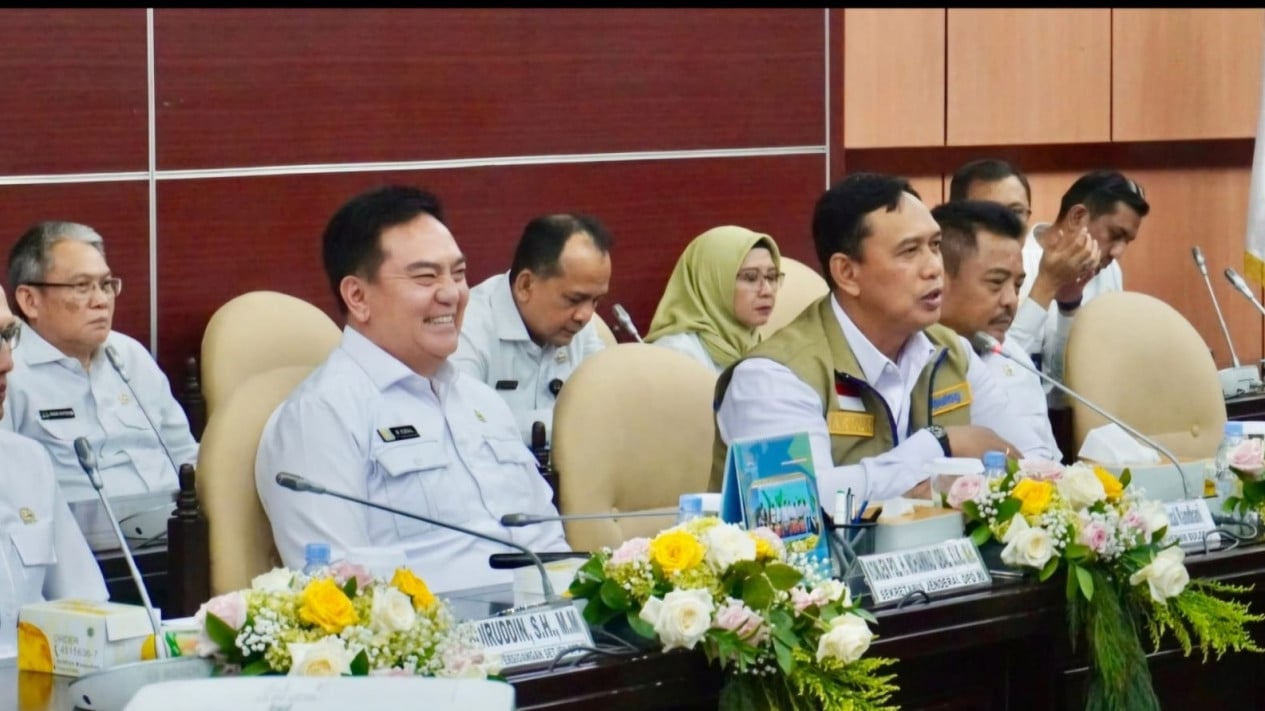
Jakarta, VIVA – The Secretary General of the DPD RI, Mohammad Iqbal, has emphasised the importance of cross-sectoral collaboration in tackling national development challenges. He made this statement during the Coordination Meeting of the DPD RI’s Strategic Partners at the DPD RI Building in Senayan, Jakarta, on Tuesday, 21 April 2026.
Iqbal reminded attendees that there is no longer room for sectoral egos among ministries, institutions, and state-owned enterprises.
“The development challenges of today can no longer be addressed sectorally; instead, we must collaborate and work through integrated cooperation,” Iqbal said in his speech.
Iqbal noted that the effectiveness of the DPD’s functions is heavily determined by the quality of its support system. He acknowledged that policy fragmentation remains the primary obstacle.
“Programmes are running, but not always connected. Budgets are available, but not always on target. Data exists, but not always integrated,” he asserted.
The DPD Secretary General also quoted a message from President Prabowo Subianto during a briefing on 8 April regarding three fundamental points. First, there should be no sectoral egos. Second, governance must operate seamlessly, connected and mutually supportive. Third, bureaucratic reform must produce tangible changes.
“We can no longer work in silos of institutions,” Iqbal emphasised.
Iqbal explained that the DPD RI has initiated various collaborative activities, such as simultaneous maize planting in four provinces in 2025. Currently, it is promoting the Green Village programme in collaboration with the Ministry of Villages.
“This is not just a programme, but a new approach that development must be area-based, ecosystem-based, and collaboration-based,” he stated.
He emphasised that this collaborative initiative is not intended to add to the workload or create new layers of bureaucracy. “On the contrary, this is an effort to simplify coordination, accelerate decision-making, and ensure that what we do truly has an impact,” Iqbal clarified.
Iqbal expressed three hopes in the forum. First, a shared understanding of the importance of cross-sectoral collaboration. Second, the establishment of clear working mechanisms. Third, the emergence of initiatives that can be immediately implemented together.
“We hold important meetings, but too many meetings without execution become unimportant. The measure of our success is not how many meetings we have, but how much impact we produce,” he concluded.