
DPD RI: Southern Central Java Route Has Potential to Become National Food Buffer
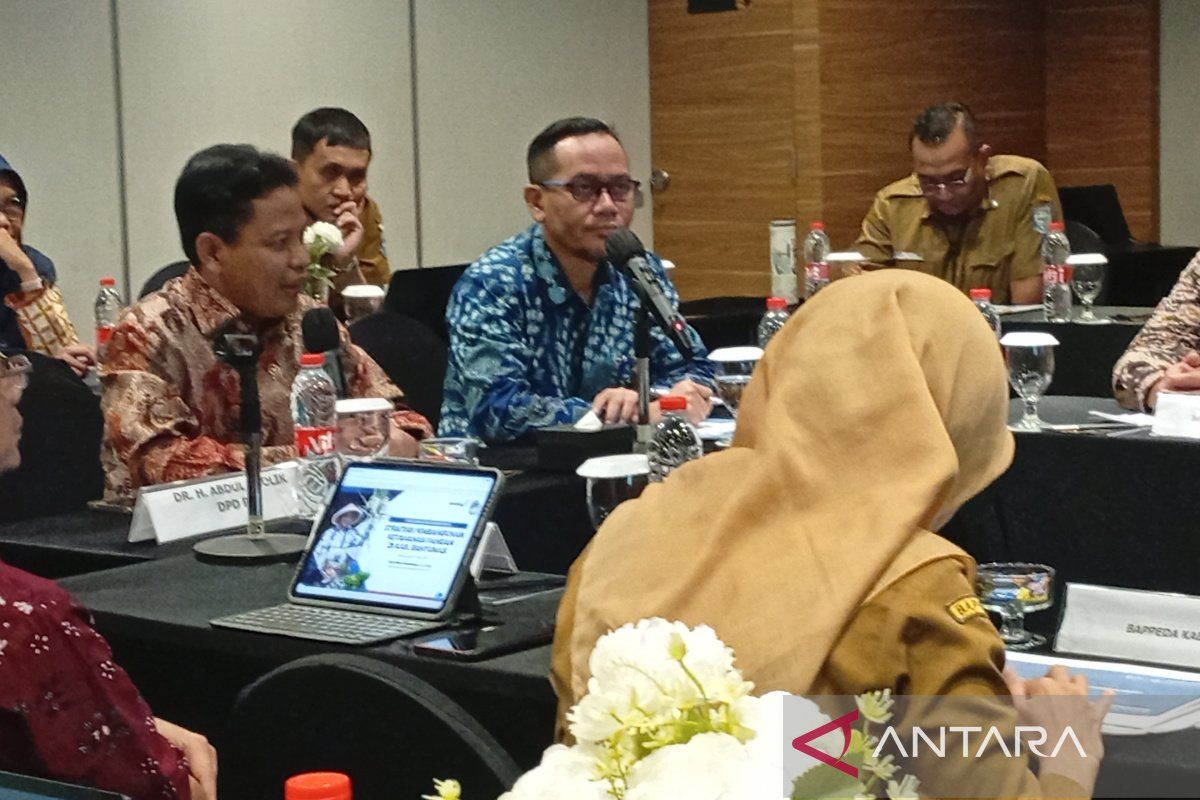
Purwokerto (ANTARA) - DPD RI member Abdul Kholik believes that the area along the southern Central Java route (Jasela) has the potential to be developed into a national food buffer zone through strengthening the agricultural and fisheries sectors, as well as building integrated inter-regional connectivity.
“We want to discuss policies and strategies for developing agricultural and fisheries potential to achieve food self-sufficiency in the Barlingmascakeb and Purwomanggung areas, particularly the Jasela region (southern Central Java),” said Abdul Kholik during a Focused Group Discussion in Purwokerto, Banyumas Regency, Central Java, on Tuesday.
The discussion involved the Regional Development Planning, Research, and Innovation Agency (Baperida) from the Barlingmascakeb area (Banjarnegara, Purbalingga, Banyumas, Cilacap, and Kebumen) and the Purwomanggung area (Purworejo, Wonosobo, Magelang, and Temanggung), as well as academics from General Soedirman University (Unsoed) in Purwokerto.
Furthermore, Kholik said that Central Java faces development challenges in the form of a large population, high poverty rates, regional disparities, and pressure on the food sector due to land conversion and weak farmer regeneration.
According to him, Central Java’s population of around 38 million people demands an even distribution of economic growth centres so that development does not only rely on the northern coastal areas.
“We see quite high regional disparities. On one side, there are areas with poverty rates around 4 percent, but in the southern region, there are still double-digit figures,” he said.
According to him, Jasela has great potential supported by agricultural and fisheries resources, tourism, creative economy, and a population of around 11.8 million people, making it worthy of development as a strategic national food buffer zone.
“We cannot keep thinking that progress is only about manufacturing industry. The food sector must also be viewed as a strategic industry,” he said.
Meanwhile, Deputy Head of the Bank Indonesia Representative Office (KPwBI) Purwokerto, Mahdi Abdillah, said that the agricultural and fisheries sectors play a strategic role in maintaining regional economic stability, controlling inflation, increasing investment, and strengthening community welfare.
“Volatile food commodities have so far been the main contributors to inflation dynamics in various regions, including the former Banyumas Residency area (Banyumas, Cilacap, Purbalingga, and Banjarnegara),” he said.
He said that Bank Indonesia consistently supports regional food security through the development of strategic food clusters, inter-regional cooperation, agricultural digitalisation, strengthening downstream processing of products, and increasing the capacity of farmers and business actors.
“Inter-regional collaboration is key to achieving food self-sufficiency because each region has different potentials that need to be integrated into an efficient and competitive supply chain,” he said.
In the discussion, Head of the Centre for Transportation and Regional Development Studies at Unsoed’s LPPM, Probo Hardini, said that the development of Jasela must be built through a regional approach that considers potentials, spatial characteristics, basic problems, and the needs of each area.
According to him, the results of LPPM Unsoed’s study show that one of the main problems in southern regional development is weak intra- and inter-regional connectivity, including the strong sectoral ego in each area.
“We found that each region has comparative advantages that can complement each other, so the approach must be collaborative,” he said.
Meanwhile, Unsoed public policy expert Prof Slamet Rosyadi said that the direction of agricultural and fisheries development in Jasela needs to refer to the Sustainable Development Goals (SDGs), particularly Zero Hunger.
“All policies and development programmes must be directed to support food security and the achievement of Zero Hunger,” he said.
He emphasised that universities are ready to support Jasela’s development through research, technological innovation, and policy assistance so that productivity and added value in the food sector continue to increase.