
DPD Member: Vocational School Students' Innovations Drive Regional Economic Acceleration
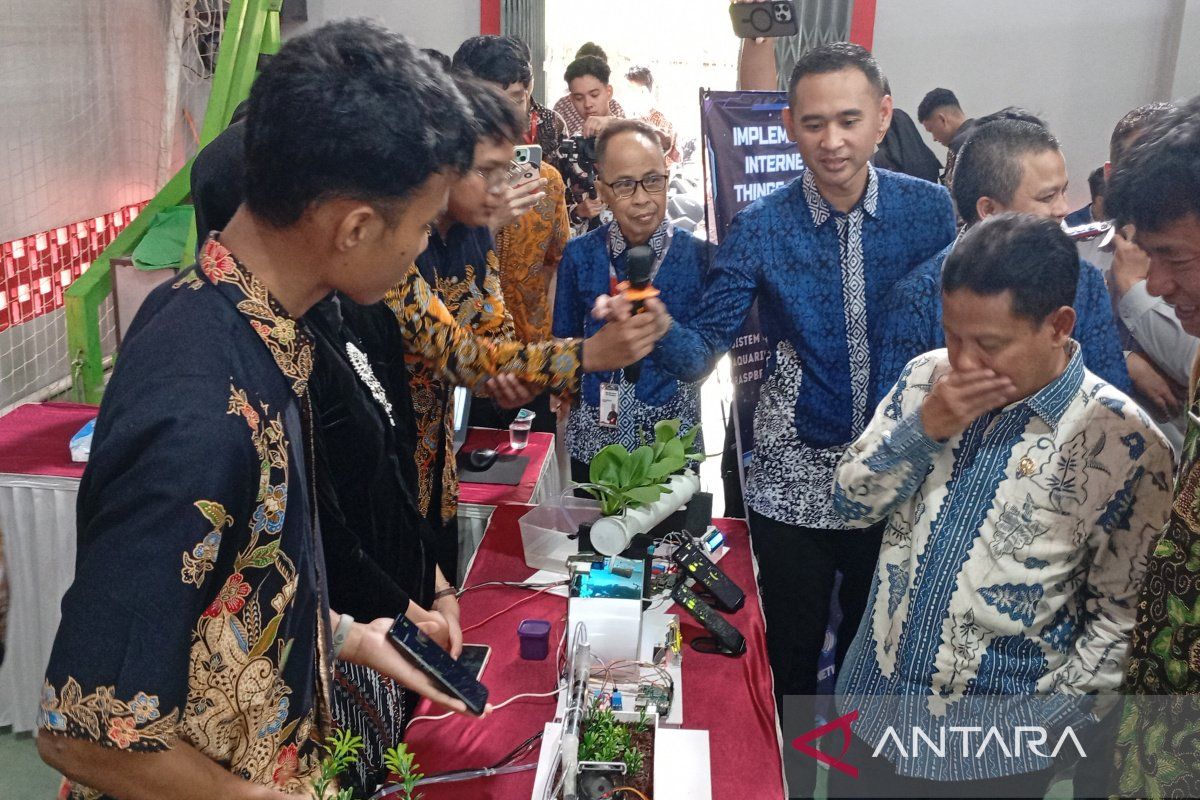
Purwokerto (ANTARA) - Abdul Kholik, a member of the DPD RI, stated that innovations produced by SMK students can drive regional economic acceleration, particularly through the utilisation of technology for the development of micro, small, and medium enterprises (UMKM).
“What we see here feels like being transported to the future, a digital era that can be applied to nearly all sectors, and this is just at the level of secondary vocational school students,” he said after opening the Stematel Innovation Summit organised by SMK Telkom Purwokerto at the GOR DI Panjaitan in Banyumas Regency, Central Java, on Thursday.
According to him, the various works displayed not only demonstrate creativity but also have high applicative value and the potential to assist communities in various sectors.
He stated that these innovations can be utilised to encourage UMKM actors to enter the digitalisation era, thereby enabling them to scale up their businesses and optimise performance.
The senator from the Central Java electoral district also encouraged local governments and various stakeholders to forge collaborations with educational institutions, particularly SMKs, to maximise the utilisation of student-produced innovations.
According to him, such collaborations are important so that digital transformation can be felt more broadly, especially in the Banyumas area and the southern Central Java region (Jasela).
“All parties should collaborate so that UMKM in Banyumas and Jasela can enter the digitalisation era, which will improve many aspects, from business scale to greater optimisation,” he said.
“This shows that our society is actually ready to enter the technological era. This is extraordinary,” he said.
He stated that the SMK Telkom Purwokerto students are part of the future generation of Jasela who possess excellent technological capabilities and have great potential to drive regional progress.
Furthermore, he assessed that the Jasela region still requires accelerated development because it is considered to be lagging behind other areas, including in poverty alleviation efforts.
“We need acceleration and a leap forward because we are still behind other regions. Technology is one of the keys to catching up on that lag,” said Kholik.
“Today’s event is named the Stematel Innovation Summit, which is part of the final summative assessment at the end of the programme,” he emphasised.
He said that the students have been equipped with technological foundations since year 10, then began developing competencies through project-based learning in year 11, culminating in year 12 with the innovative works on display.
“In year 12, this is the peak, where our students’ works already meet industry standards,” he said.
According to him, learning at SMK Telkom Purwokerto emphasises project-based learning, where students do not only learn in the classroom but also go directly into the field to interact with UMKM and industry.
“They seek out UMKM and industries, then offer their competencies, and subsequently implement them into a project,” he said.
He stated that the results of the students’ works are not limited to meeting academic needs but also have the potential for real-world application and are even supported by industry requirements.
In fact, if industries need applications or network infrastructure, the students are ready to provide support.
Through the event, he said, the school hopes that the students’ works can serve as a platform to demonstrate real competencies while strengthening the readiness of graduates to face the workforce or contribute to society.
“We want to show that this is not just an exam, but a real competency showcase ready to compete,” said Krisma.