
Dozens of Countries Release Largest Oil Reserve in History
The International Energy Agency (IEA) will release 400 million barrels of oil to compensate for supply losses resulting from the closure of the Strait of Hormuz following US-Israel attacks on Iran.
The announcement was made on Wednesday, 11 March, by IEA Executive Director Fatih Birol, after the Iranian government threatened not to allow “a single litre” of crude oil to pass through the waterway, which has historically transported over 20% of global oil supplies.
Birol stated that all 32 IEA member countries agreed to release the largest strategic oil reserves in the organisation’s history.
Despite this measure, oil prices rose again on Thursday, 12 March. Brent crude surged more than 9% in Asian trading, exceeding US$100 per barrel, before correcting to around US$97.50.
The IEA is an international organisation that coordinates energy policy and manages strategic oil reserves for 32 industrialised nations, primarily advanced economies in Europe, North America, and the Asia-Pacific region.
The announcement came after several days of blockade activity in the Strait of Hormuz. In recent hours, the region experienced a series of attacks on three cargo vessels, with at least one attack claimed by Tehran.
Simultaneously, Iraq reported that two foreign oil tankers were also attacked at one of its ports.
Hours after the IEA statement, the United States government announced it would release 172 million barrels of oil from its emergency reserves as part of a coordinated international effort to reduce global energy prices.
Delivery of US strategic oil reserves is expected to begin next week and will continue for approximately 120 days.
An unprecedented challenge
“The scale of the challenge we face in the oil market is truly unprecedented. Therefore, I am very pleased that IEA member countries have responded with a collective emergency measure that has also never been undertaken before,” said IEA Executive Director Fatih Birol.
The IEA explained that emergency reserves would be released to the market over a timeframe adjusted to suit each member country’s national conditions.
The 400 million barrels of oil are equivalent to four days of global consumption or the volume that normally flows through the Strait of Hormuz over 20 days.
This marks the sixth time the IEA has approved a coordinated strategic reserve release. Previous releases occurred in 1991, 2005, 2011, and twice in 2022.
According to the agency’s data, IEA member countries hold more than 1.2 billion barrels of emergency reserves, in addition to approximately 600 million barrels held by the oil industry to meet legal obligations set by their respective governments.
Brent and WTI crude prices stood at around US$60 before the Iran conflict erupted on 28 February, a historically low level due to abundant supplies.
The conflict pushed oil prices above US$100 per barrel, though they had fallen to the US$80-US$90 range in recent days.
However, a fresh wave of attacks launched by Iran in recent hours against tankers attempting to transit the Strait of Hormuz has driven crude oil prices above US$100 again.
In early Thursday trading, Brent crude surged more than 9% on Asian markets and briefly exceeded US$100 per barrel, before correcting to around US$97.50.
Regardless, fuel prices have risen across nearly all countries, and many governments are preparing emergency measures should the energy crisis worsen.
On Wednesday, 11 March, the Iranian government stated it had ended its reciprocal military attack policy and would now focus on blockading the Strait of Hormuz.
Analysts view this as an attempt to leverage control over the strait to drive up oil prices and increase the cost of war for the United States and its allies.
Tehran’s new policy will be “attack after attack,” said spokesman for the Khatam al-Anbiya Command Headquarters, Ebrahim Zolfaqari, in a statement.
He stressed that Iran would not allow “a single litre of oil” to pass through the Strait of Hormuz bound for the United States, Israel, or their allies.
“Every ship or tanker heading to them will be a legitimate target,” he warned.
“Prepare to see oil prices reach US$200 per barrel, because oil prices depend on the regional security you have disrupted,” he said.
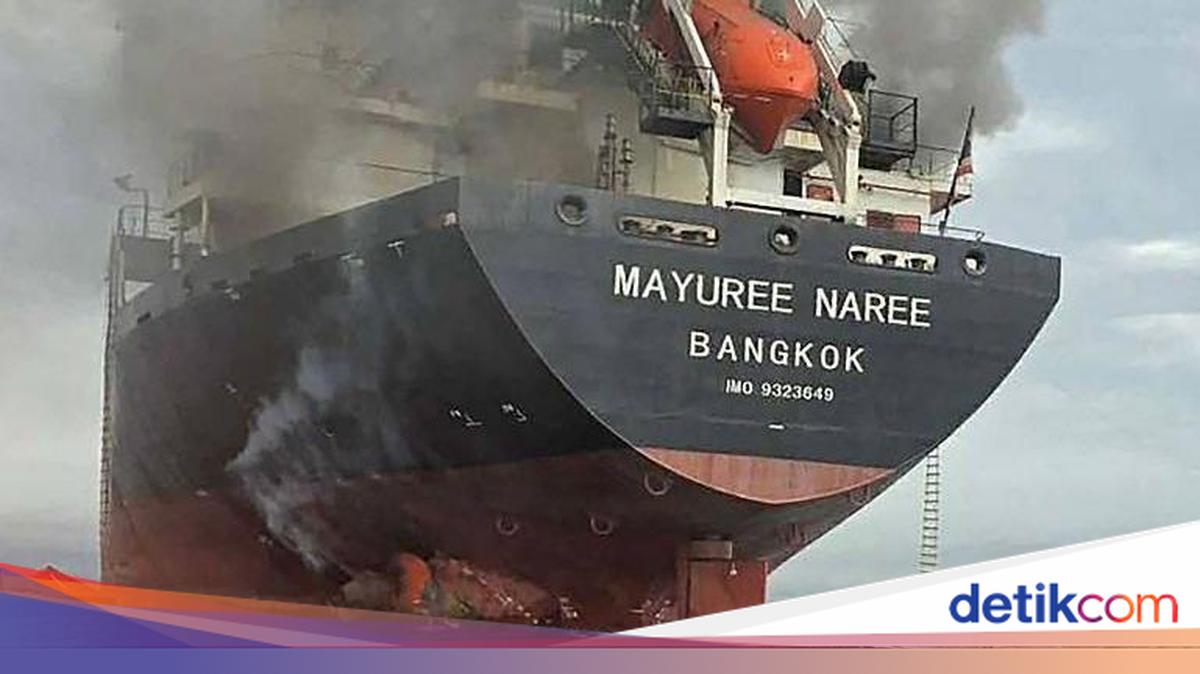
On Wednesday, 11 March, three vessels were attacked in the Strait of Hormuz. Two vessels sustained damage, whilst another cargo ship flying a Thai flag, identified by the Thai Navy as MV Mayuree Naree, caught fire following an attack off the coast of Oman.
According to Thai maritime authorities, the vessel was struck by a projectile that ignited a fire on board. The Omani Navy was deployed to the location to assist in rescue and evacuation operations for 20 crew members. All crew were Thai nationals, with three sustaining injuries.
The Iranian government claimed responsibility for the attacks.
Shortly thereafter, an Iraqi armed forces spokesman reported that one crew member was killed and 38 others rescued following attacks on two oil tankers.