
Downstreaming: Building Value from Our Own Earth's Bowels
Indonesia possesses all the prerequisites to become a major player in the future industry, from mineral reserves to a large domestic market.
Jakarta (ANTARA) - There was a time when Indonesia’s natural wealth more often left in raw form, as if only stopping briefly before gaining value in other countries. Now, slowly, that perspective is changing.
From bauxite mines to electric vehicle batteries, efforts are emerging to retain, process, and grow value within the country itself.
This change is not just about industry, but about a new belief that the resources possessed can become a foundation for leaping further, building a more independent, strong, and relevant economic future in line with the world’s ever-moving direction.
Amid long debates about the direction of Indonesia’s economic development, one keyword that is increasingly appearing is downstreaming. This is not just policy jargon, but a turning point in how this nation views its natural wealth.
For decades, Indonesia’s mineral resources have mostly left as raw materials, leaving added value in other countries.
Now, that direction is beginning to reverse, as the state-owned mining holding MIND ID is determined to implement downstreaming.
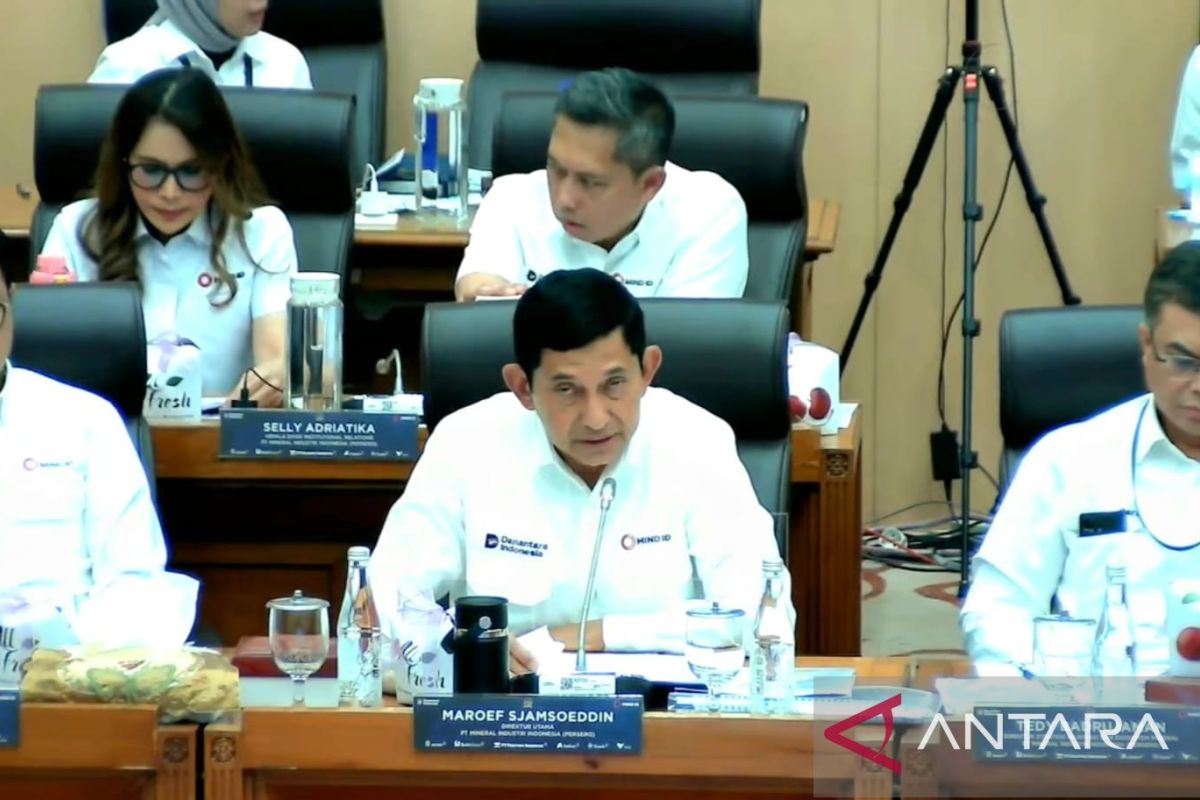
MIND ID President Director Maroef Sjamsoeddin, in a Hearing with Commission XII of the Indonesian House of Representatives in April 2026, emphasised that downstreaming is not just an economic project, but part of a grand strategy to strengthen energy resilience, drive energy transition, and build the foundation for Indonesia’s future industry.
This must be read not as a claim, but as a policy direction that must be tested in practice.
One of the clearest examples is seen in the development of the integrated bauxite to aluminium value chain. For a long time, Indonesia has been known as one of the world’s bauxite producers, but the greatest added value has been enjoyed by countries that process it into alumina and aluminium.
With integration involving ANTAM as the bauxite miner, PT Borneo Alumina Indonesia as the processor into alumina, and INALUM as the aluminium producer supported by energy supply from Bukit Asam through the Mempawah PLTU, that value chain is now beginning to be pulled into the country.
This step is not just about industrialisation, but about economic sovereignty. When the entire process takes place domestically, dependence on aluminium imports can be reduced, while jobs, technology transfer, and national industrial capacity increase.
However, this is where the real challenges lie. Downstreaming is not enough just by building factories, but also ensuring the efficiency, sustainability, and global competitiveness of the resulting products.
A similar approach is seen in gold commodities. The construction of a precious metals manufacturing facility in Gresik involving ANTAM and raw material supply from Freeport Indonesia shows efforts to strengthen Indonesia’s position in the gold value chain.
For a long time, gold has often stopped as a mining commodity, without strengthening the manufacturing and investment product distribution side.
With more integrated processing, domestic investment gold needs can be better met, while also increasing added value domestically.
Project realisation