
Downstream Investment Surges, But Rocky Paths Still Lie Ahead
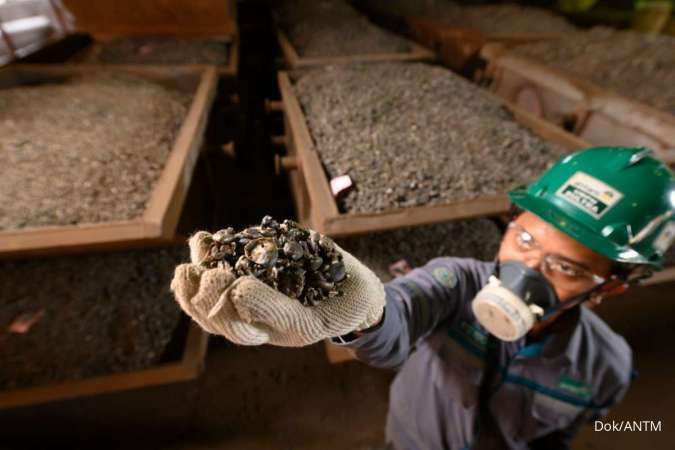
JAKARTA. Efforts to downstream the national mining industry have shown progress in recent years, yet structural challenges and global dynamics continue to shadow its sustainability.
This momentum is reflected in the strong flow of investment. From January to September 2025, downstream investment realisation reached Rp 431.4 trillion, surging 58.1% year-on-year.
This figure indicates that the industrial transformation from mere raw material exporter to value-added producer is underway.
Among industry players, MIND ID has become a key driver of downstream development. Several strategic projects are already operational, ranging from the bauxite to aluminium processing chain, an integrated copper smelter with precious metal refining facilities in Gresik, to nickel processing projects in Sulawesi.
Geopolitical tensions and trading policies of partner countries also influence the industry’s direction.
Domestically, policies restricting raw mineral exports are seen to provide a boost to the development of the midstream and downstream sectors.
The aim is to strengthen the domestic supply chain while increasing the value added of natural resource-based products.
From a fundamental perspective, Indonesia has substantial capital. Data from the United States Geological Survey positions Indonesia as the world’s largest holder of nickel reserves, around 55 million tons.
Nevertheless, several homework items still need to be addressed. Reliable energy availability for smelters, transparent trade governance, and targeted fiscal incentives are considered key to ensuring downstream investment can continue to deeper stages.
MIND ID’s Division Head of Institutional Relations, Selly Adriatika, stated that cross-stakeholder evaluation forums are needed to ensure policy directions remain aligned with existing challenges.
“KILAS serves as a strategic space for all stakeholders to evaluate the achievements of strategic programmes and ensure that every challenge faced can be resolved through agreed strategic steps,” she said in an official statement received by KONTAN on Friday (20/3/2026).
She added that downstreaming is not an instant process, but a long-term agenda that requires consistency and collaboration among various parties.