
Downstream Investment Reaches Rp136.6 Trillion in Q1 2025, Up 79.82% Year-on-Year
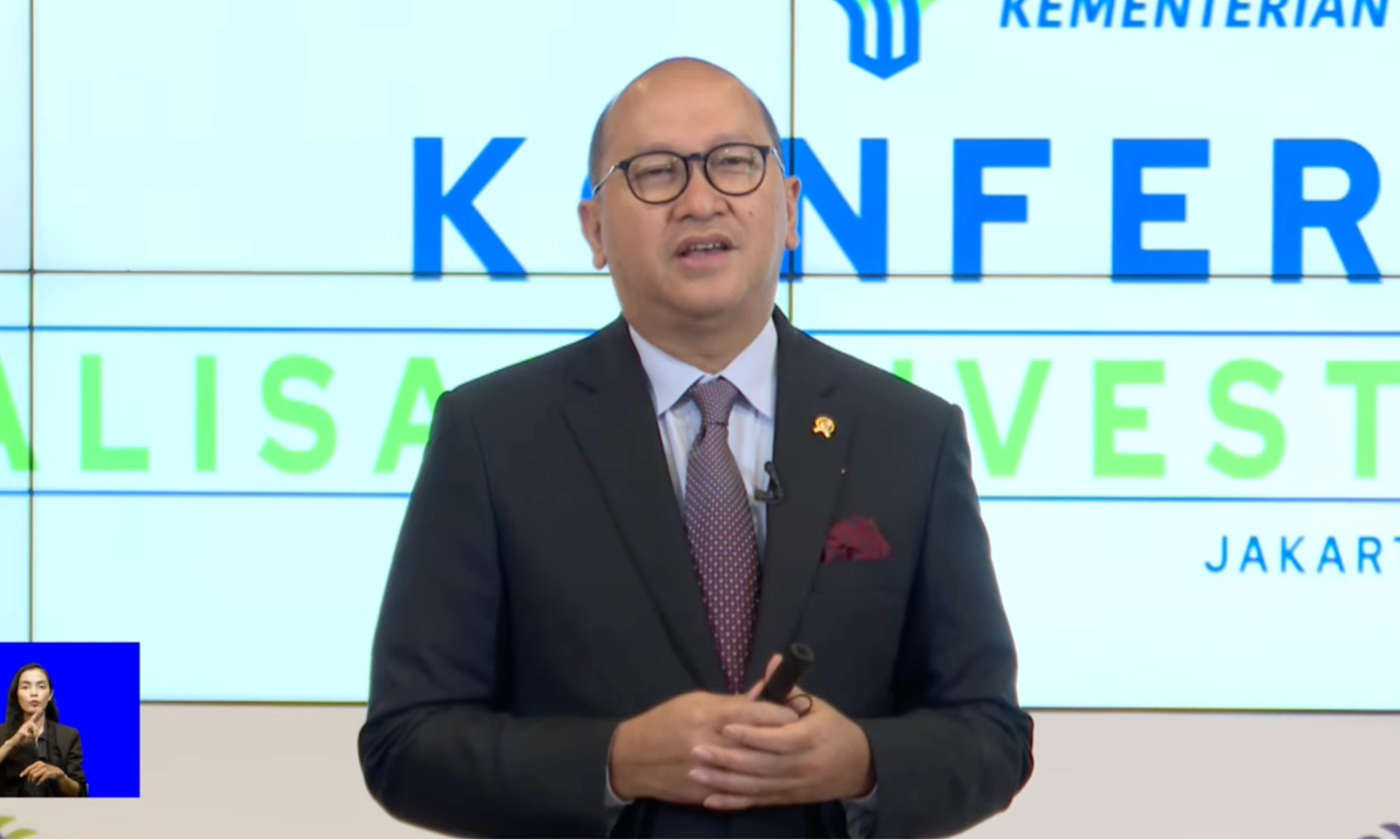
JAKARTA — Minister of Investment and Downstreaming/Head of BKPM Rosan Perkasa Roeslani announced that investment realisation in the downstreaming sector reached Rp136.6 trillion in the first quarter of 2025. His ministry recorded that this figure rose 79.82% year-on-year compared with the same period the previous year, which stood at Rp75.8 trillion.
Rosan also emphasised that downstreaming investment contributed 29.3% to overall investment in the first quarter of 2025, a notably better performance than the trend over the past three years.
“What is quite interesting is that the realisation or contribution of downstreaming investment reached 29.3%. If we look at the trend over the past three years, it usually ranges between 23–24%, yet now it is 29.3%,” said Rosan at the Q1 2025 Investment Realisation press conference in Jakarta on Tuesday (29/4).
He also revealed that downstreaming investment in Q1 2025 grew 1.04% quarter-on-quarter, compared with Rp134.9 trillion in the preceding quarter.
In detail, downstreaming investment comprised the mineral sector at Rp97.6 trillion; plantations and forestry at Rp31.13 trillion; oil and gas at Rp6.55 trillion; and fisheries and marine at Rp1.03 trillion.
Regarding the relatively modest realisation in the fisheries and marine sector compared with other sectors, Rosan pledged that his ministry would continue to push for increased investment in the sector. “We see this as a very positive trend. Downstreaming in fisheries and marine will also be promoted, such as seaweed and tilapia, as already conveyed by the Ministry of Marine Affairs and Fisheries. We will push this so that the commodities become increasingly varied and numerous,” he added.
As for the top five source countries for downstreaming investment, Singapore ranked first with investment valued at US$1.7 billion, of which approximately 79.8% targeted the mineral sector. In second place was Hong Kong with US$1.5 billion in downstreaming investment, with 99.2% directed at the mineral sector. China followed with US$0.8 billion, of which 76.6% targeted minerals. In fourth and fifth places were the United States with US$0.6 billion (98.5% in minerals) and Malaysia with US$0.2 billion (54.5% in the forestry sector).
Central Sulawesi the Primary Downstreaming Investment Destination
Rosan continued that Central Sulawesi was the primary location for downstreaming investment from both foreign and domestic sources, with a value reaching Rp29.73 trillion — approximately 21.8% of total downstreaming investment in Q1 2025.
“Central Sulawesi, specifically Morowali and North Morowali, continues to provide the largest contribution. There are industrial parks there that are already operating and continuing to expand, providing a very positive contribution to Morowali and North Morowali regencies,” Rosan explained.
The second-ranked location was North Maluku with investment reaching Rp18.95 trillion, or approximately 13.9% of total downstreaming investment in Q1 2025. “North Maluku also has enormous potential, as there is a very large industrial park there. They are also moving towards renewable energy-based industrial parks, using solar panels and wind farms,” Rosan elaborated.
Next was West Java, which absorbed Rp13.44 trillion in downstreaming investment, followed by East Java at Rp9.81 trillion and Banten at Rp8.25 trillion. Rosan noted that within West Java, Karawang remained the most sought-after downstreaming investment destination owing to its numerous industrial estates, particularly in the electric vehicle sector.
“We want to ensure that this investment truly delivers significant benefits to the Indonesian economy,” he said.