
Downstream Industry Investment Surges 54.8% to Rp 280.8 Trillion in First Half of 2025
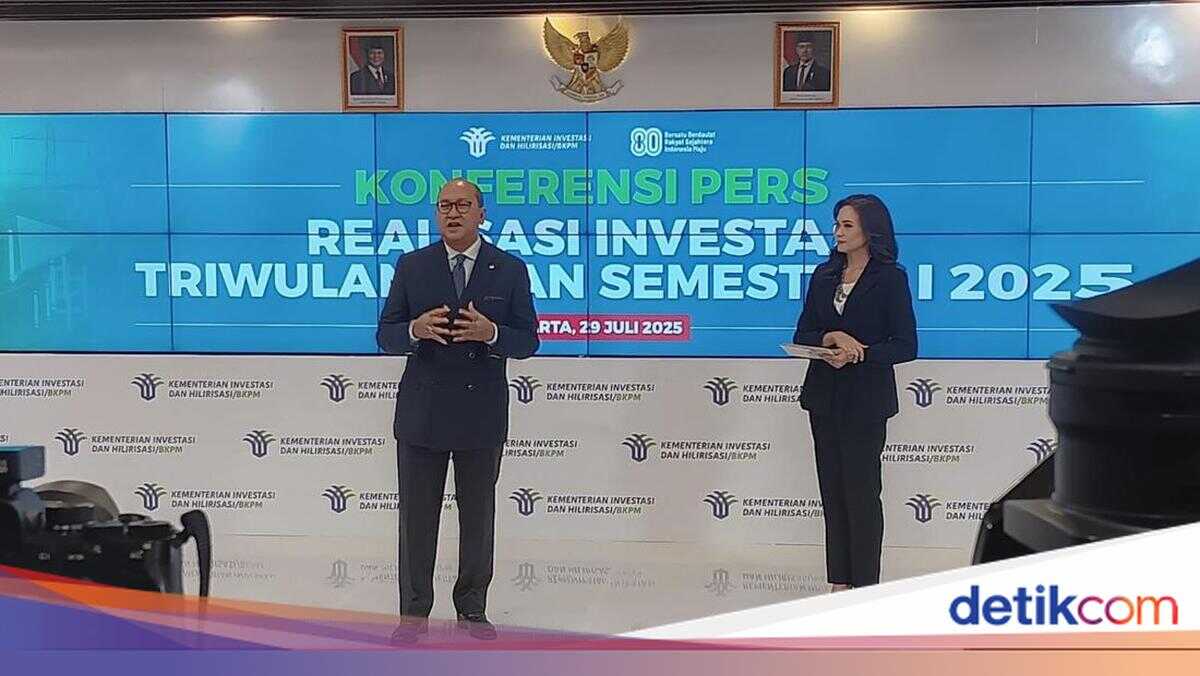
Jakarta — Investment in Indonesia’s downstream processing sector continues to soar. The Ministry of Investment and Downstream Industries/BKPM recorded that investment realisation in the sector reached Rp 280.8 trillion throughout the first half of 2025, a 54.8% year-on-year increase compared with the same period last year.
Minister of Investment and Downstream Industries/Head of BKPM Rosan Perkasa Roeslani stated that the downstream sector accounted for 29.8% of total investment realisation in the first half of 2025, which stood at Rp 942.9 trillion. Moreover, in the second quarter alone, downstream investment reached Rp 144.5 trillion, or 30.2% of the quarterly total of Rp 477.7 trillion.
“If we look at the current figures of 29.8%, and in the second quarter it was over 30%, the trend is rising and we expect it will continue to grow,” said Rosan at a press conference in Jakarta on Tuesday (29 July 2025).
The mineral sector dominated downstream investment with a remarkable Rp 193.8 trillion. Nickel was the star commodity, contributing Rp 94.1 trillion, followed by copper at Rp 40 trillion and bauxite at Rp 27.7 trillion.
Rosan revealed that nickel downstream processing serves as the backbone for building the electric vehicle (EV) ecosystem, including batteries and recycling systems. He noted that a major project worth US$9 billion, or approximately Rp 150 trillion, is being developed in partnership with state-owned enterprises to build a complete supply chain from nickel mining to battery recycling.
“A few months ago we held the groundbreaking for the construction of the whole ecosystem from nickel mine to recycling. This demonstrates our commitment,” he said.
The plantation and forestry sector ranked second with a contribution of Rp 67.4 trillion. Of this amount, palm oil investment accounted for Rp 31.6 trillion, timber logs Rp 24.9 trillion, and rubber Rp 8.2 trillion.
The oil and gas sector also contributed with investment worth Rp 17.3 trillion, comprising Rp 7.9 trillion in crude oil and Rp 9.4 trillion in natural gas.
The fisheries sector, though relatively modest in value, remained on the downstream investment radar with a contribution of Rp 2.3 trillion. Dominant commodities included salt, TCT fish (tuna, skipjack, and mackerel tuna), shrimp, seaweed, blue swimming crab, and tilapia.
With this significant upward trend, Rosan expressed optimism that downstream investment will continue to grow in the second half of 2025, particularly as new investors and downstream processing projects across various strategic commodities continue to materialise.
“Looking at this growth, we are confident that downstream processing will become the mainstay in driving sustainable national economic growth,” Rosan concluded.