
Doomsday for the Night Sky? Astronomers Protest SpaceX's Plans for Millions of Satellites and Giant Orbital Mirrors
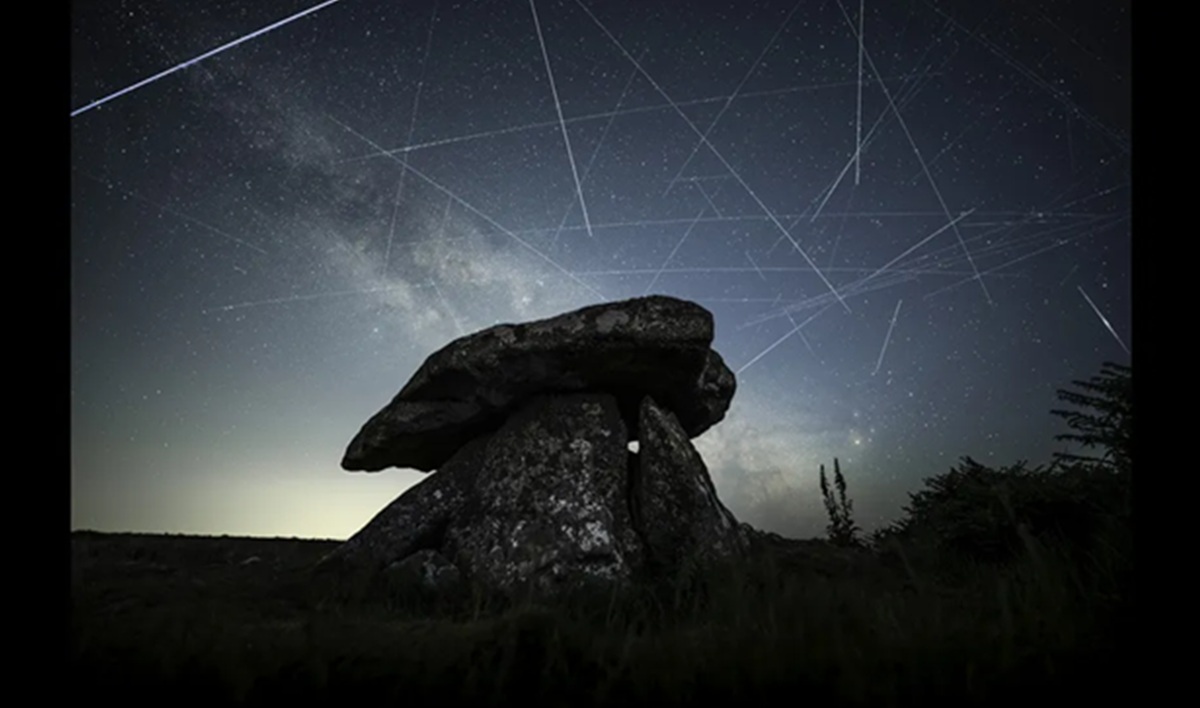
The world of astronomy is currently on high alert. Scientists from various parts of the globe have issued strong protests against plans to launch tens of thousands of orbital mirrors and millions of data centres into space. This ambitious project is deemed to destroy the night sky view and permanently cripple scientific observations.
Prestigious research institutions such as the British Royal Astronomical Society (RAS) and the European Southern Observatory (ESO) have officially submitted objections to the US Federal Communications Commission (FCC).
“This is truly intolerable,” said Robert Massey, Deputy Executive Director of the RAS, to Space.com. “This is the destruction of a central part of humanity’s heritage.”
The main trigger for this anxiety is two major proposals. First, SpaceX’s plan, owned by Elon Musk, to launch one million data centres into orbit to support AI computing power. Second, the startup Reflect Orbital’s plan to launch 50,000 giant mirrors (each 55 metres wide) to reflect sunlight to power plants on Earth.
If approved, the visual impact would be terrifying. Massey explained that these mirrors could be several times brighter than a full moon. Even from an oblique angle, their light would match that of Venus, the brightest object in the sky after the moon.
For the human eye, the sky would no longer be pitch black but filled with thousands of bright points constantly streaking across. Massey estimates that global sky brightness would increase up to three times, including in remote areas that have long served as dark sky sanctuaries.
For astronomers, this is not just an aesthetic issue but a real technical threat. Olivier Hainaut, an astronomer from ESO, revealed that the Very Large Telescope in Chile is at risk of losing 10% to 30% of pixels in every image taken due to interference from SpaceX’s data centre lights.
“That is a significant loss,” said Hainaut. He added that the increased sky brightness from Reflect Orbital’s mirrors would force astronomers to triple camera exposure times. “We will no longer be able to observe faint targets. This will be a disaster.”
Experts are now urging strict policies on the number of satellites in orbit. Fabio Felchi, a light pollution researcher from Italy, stated that the safe limit has already been exceeded. He calls for a “red line” policy on satellites, similar to regulations on other environmental pollutants.
On the other hand, there are concerns that the FCC will approve these applications without a comprehensive environmental impact assessment. “The fact that they are expediting these applications… without engaging in a full environmental review is very concerning,” said John Barentine, a dark sky consultant.
If these technological ambitions proceed without regulation, humanity’s collective relationship with the cosmos and Earth’s ecosystem is at risk of changing forever.