
Don't Wait to Be Rich to Give to Charity, But Give Charity Until You Are Rich
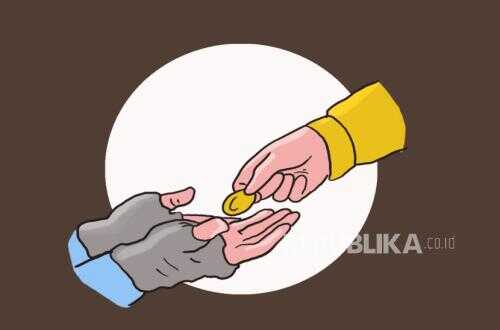
One day, we might find ourselves standing in front of a charity box. Our hand reaches into our pocket, then stops. A small voice whispers, “Wait until our income is higher.” We close our wallet and walk away with an indescribable feeling. We are not rejecting kindness; we are simply postponing it. In an era where success is measured by balance, assets, and material achievements, charity is often seen as an activity for the “well-off.” It is as if sharing is a luxury that should only be done when life is completely secure. In reality, in Islam, charity is not the pinnacle of prosperity, but the foundation of faith. The Prophet Muhammad SAW never taught his followers to wait until they were rich to give. In fact, he praised those who gave charity in times of hardship, because that is when faith is truly tested: when someone chooses to share in the midst of fear of scarcity. QS Al-Baqarah: 261 describes charity as a seed that grows into seven stalks, and each stalk contains one hundred grains. This is a depiction of the divine law of growth: what is given sincerely is never truly lost. We often forget that what makes a person noble is not that they give after they are rich, but that they continue to give even when they do not feel they have enough. Giving in Times of Need Many exemplary stories show that generosity is not born from abundance, but from belief. Those who give in times of need demonstrate the purest quality of faith: believing that sustenance is not merely the result of human calculation. Giving when one has plenty is easy. But giving when one has little is an exercise in trust. Charity teaches us not to be enslaved by the fear of loss. It trains the heart to believe that what is given in the way of goodness is never truly lost. Examples from the Early Generations Islamic history records a moving story. When the call for donations for the Battle of Tabuk was made, the companions rushed to bring their best possessions. Among them was Abu Bakar, who brought all his possessions. When the Prophet asked, “What do you leave for your family?” He replied, “I leave them with Allah and His Messenger.” On another occasion, Umar bin Khattab brought half of his possessions, hoping to surpass Abu Bakar. But he found that in the matter of giving, there were those who surpassed rational calculation. What is remarkable is that it was not only the wealthy who gave charity. There was also a companion who could only bring a handful of dates. Its value may be small in the eyes of humans, but it is great in the sight of Allah. Because he gave from what he had, not from what he had left over. In another narration, there was a poor woman who came bringing a single date to give as charity. The Prophet accepted it with great appreciation. Because charity is not about quantity, but about the quality of sincerity. These stories teach one thing: the culture of giving is not born from abundance, but from belief. Stories in Our Midst Some time ago, in a corner of the city, an online motorcycle taxi driver told about his habit. Every day, from his uncertain income, he sets aside two thousand rupiah to put in the charity box of the mosque near his house. “It’s not much,” he said with a smile, “but it makes my heart not feel like I’m the most unfortunate.” This sentence is simple but profound. He does not wait for many orders. He does not wait for a bonus. He gives in the midst of uncertainty. There is also a small trader in a traditional market. His profits are small. But every Friday, he distributes packed rice to rickshaw drivers and porters. When asked why he continues to share in the midst of a fluctuating business, he replied, “If I stop giving because I’m afraid of being short, then my heart will become poorer than my wallet.” These stories may never make the headlines. They are not viral. They do not become headlines. But it is there that the meaning of charity finds its most honest face. They are not rich in numbers, but rich in the courage to trust in Allah. Building a Rich Soul from an Early Age So the question is no longer, “Have we become rich enough to give charity?” but, “Have we made it a habit to share?” Because charity is an exercise for the soul, educating the heart not to be controlled by possessions. A child who is accustomed to setting aside part of his pocket money is learning that sustenance is not just for himself. If a person is accustomed to giving from an early age, he will grow up with a mentality of contentment. He will not be easily anxious when he sees others more successful. He will not feel threatened when his income decreases. Because he knows that blessings are not identical with quantity. On the other hand, if we continue to postpone until we are “enough,” we may be trapped in an endless cycle. The definition of “enough” always moves. When income increases, needs also increase. When savings increase, desires also increase. Charity breaks that cycle. It affirms that sufficiency is not about how much we accumulate, but how much we share. Charity as a Social Movement If the potential for national zakat reaches hundreds of trillions of rupiah, then the potential for participatory charity is actually much greater. The problem is not a lack of ability, but a lack of habit. Charity must move from individual awareness to collective culture. From incidental action to a way of life. Imagine if charity became a daily habit: five thousand rupiah per person, per day. This small amount may not seem heavy, but when multiplied by millions of people, it turns into an extraordinary social force. In the midst of inequality and crisis, charity is not just a personal act of charity. It is an instrument of equalization and a strengthening of solidarity. In addition, more charity and humanitarian projects will be built, such as free schools, and so on. The habit of giving is not just about helping those in need. It is about building a more just and compassionate society. It is about creating a world where everyone has the opportunity to thrive. So let us not wait to be rich to give charity. Let us give charity until we are rich. Let us make charity a habit, and let us create a better world for all.