
Don't Let Wayang Orang Become Just a Fairy Tale
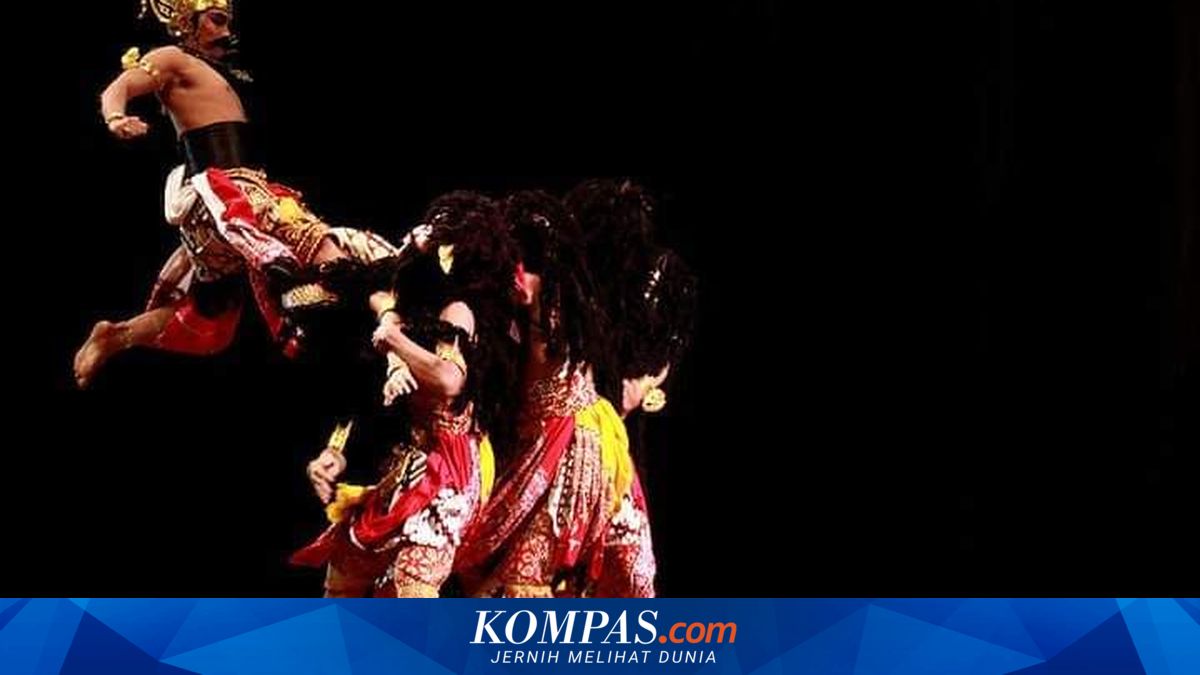
JAKARTA - Amidst the glitter and rapid modernisation of the metropolis, Wayang Orang Bharata remains one of the traditional arts steadfastly preserving ancestral heritage.
However, the resilience of this classical stage performance does not align with the reality faced by its key practitioners.
When the spotlight fades and the curtain closes, the artists who have dedicated their lives to safeguarding this culture confront the harsh truth of meagre material security and inadequate living standards.
For them, Wayang Orang is more than just performances; it is a lifelong commitment to a culture passed down through generations.
Yudi first became involved in 1986 at age 16, beginning in Surabaya’s art padepokan (traditional school) which sparked his interest in dance and Wayang Orang.
He initially intended to continue his education in Jakarta, but the artistic environment drew him deeper into traditional performance, leading him to stay and pursue it.
“I wanted to continue school in Jakarta. Back then, I didn’t know much. Since I was living in the padepokan, I gradually became involved and felt compelled to learn dance,” Yudi said when interviewed at the Wayang Orang Bharata Art Building in Senen, Central Jakarta, on Friday (22/5/2026).
Yudi recalls his early days in Wayang Orang Bharata as a period of strict discipline.
Not everyone can immediately perform on the main stage; each actor must first hone basic skills.
He explained that aspiring performers must master three key abilities: dancing, dialogue, and singing Javanese tembang.
“Before learning, we had to serve our seniors—cleaning, doing chores. Only then did we receive instruction,” Yudi recalled.
His career began as a group dancer in 1987, later advancing to soldier roles and eventually major characters like Setyaki.
Yudi described his learning process as an active and arduous pursuit of knowledge.
“Back then, we ‘collected knowledge’—we went to the well ourselves. Now, it’s the opposite—the well comes to the bucket,” he said.
In his early career, Yudi earned only Rp500 per performance in 1988, equivalent to around Rp20,000–30,000 today.
At that time, lead actors received Rp5,000–7,500.
Besides learning from seniors, rehearsals were disciplined, both individually and in groups.
Even before performances, actors underwent additional rehearsals to perfect the show.
“Besides individual practice, if the show is at 8pm, we rehearse together from 4pm,” Yudi said.
Outside the stage, self-practice was crucial for skill development.
Yudi even used mirrors to correct movements and expressions, as if facing the audience directly.
However, he chose to continue in Wayang Orang Bharata due to his deep connection with traditional arts since youth.
Behind this long journey, Yudi highlighted the persistent welfare challenges faced by Wayang Orang performers.
Current earnings after operational costs range from Rp150,000 to Rp200,000 per performance.
“Let’s be open: if the budget is divided among people and operational costs are deducted, most earn around Rp150,000 or Rp200,000 per show,” he said.
With performances only once a month, this income is insufficient to meet living costs in Jakarta.
“Can you live in Jakarta with that? Mathematically, no,” he stated firmly.