
Don't Get Too Excited: Strait of Hormuz Reopened, But Dangers Still Lurk!
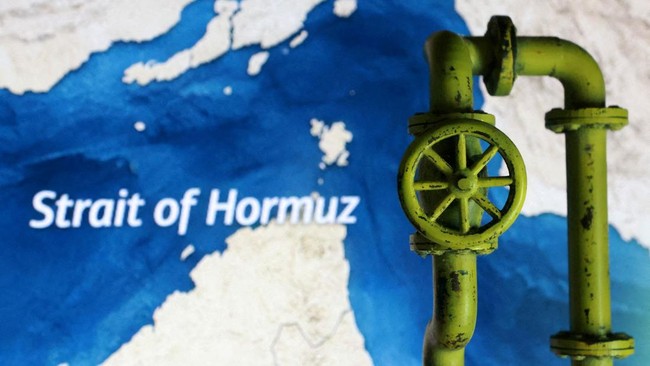
Jakarta, CNBC Indonesia - The closure of the Strait of Hormuz due to escalating conflict in the Middle East has blocked around 20% of global crude oil and liquefied natural gas (LNG) supplies. However, shipping and trade experts warn that reopening the waterway will not immediately resolve the crisis, instead leaving long-term supply chain and security issues. Citing Al Jazeera, Hapag-Lloyd’s Senior Director of Corporate Communications, Nils Haupt, revealed that the real logistical challenges will begin after the war ends and routes reopen. “We will see hundreds of ships wanting to dock at major ports in the Persian Gulf. Many containers entering the area, and we will see disruptions in supply chains to and from the Persian Gulf,” Haupt said, as cited by Al Jazeera, quoted on Sunday (5/4/2026). Based on data from the International Maritime Organization (IMO), around 2,000 ships are currently detained in the area due to Iran’s partial blockade. Managing Director of the Norwegian Shipowners’ Mutual War Risks Association, Svein Ringbakken, assessed that it will take months to clear the backlog of oil, gas, and other goods. Ringbakken added that recovery is complicated by damage to more than 40 energy assets and port infrastructure across the Middle East, as well as halted production lines due to limited storage capacity. In addition to logistical issues, security and financial risks continue to loom over the shipping industry. Safesea Chairman SV Anchan highlighted the emergence of asymmetric threats such as unmanned vessel attacks, which have fundamentally altered the risk environment. The IMO records at least 18 attacks on ships since the war began. “Even if fully reopened, returning to normal conditions will require a sustained period of stability. Ship owners, charterers, and insurance companies will seek consistency, credible security assurances, and a structured risk framework,” Anchan emphasised. Director General of the Chartered Institute of Export & International Trade, Marco Forgione, revealed that the crisis has triggered a surge in hull and cargo insurance premiums of up to 300%. This burdens shipping companies that cannot continuously absorb the cost increases. CEO of NSI Insurance Group, Oscar Seikaly, also affirmed that new insurance rates could normalise only if security is 100% guaranteed and permanent. This uncertainty is believed to reshape the global shipping map. Lead Analyst for Global Trade at the Economist Intelligence Unit (EIU), Nick Marro, predicted that companies will permanently diversify trade routes to avoid conflict zones. “Over time, traffic through the Strait of Hormuz is likely to decline due to the risks associated with concentrating oil trade in such a highly volatile area,” Seikaly concluded.