
Donald Trump Wants Involvement in Selecting Iran's Supreme Leader to Succeed Ayatollah Ali Khamenei
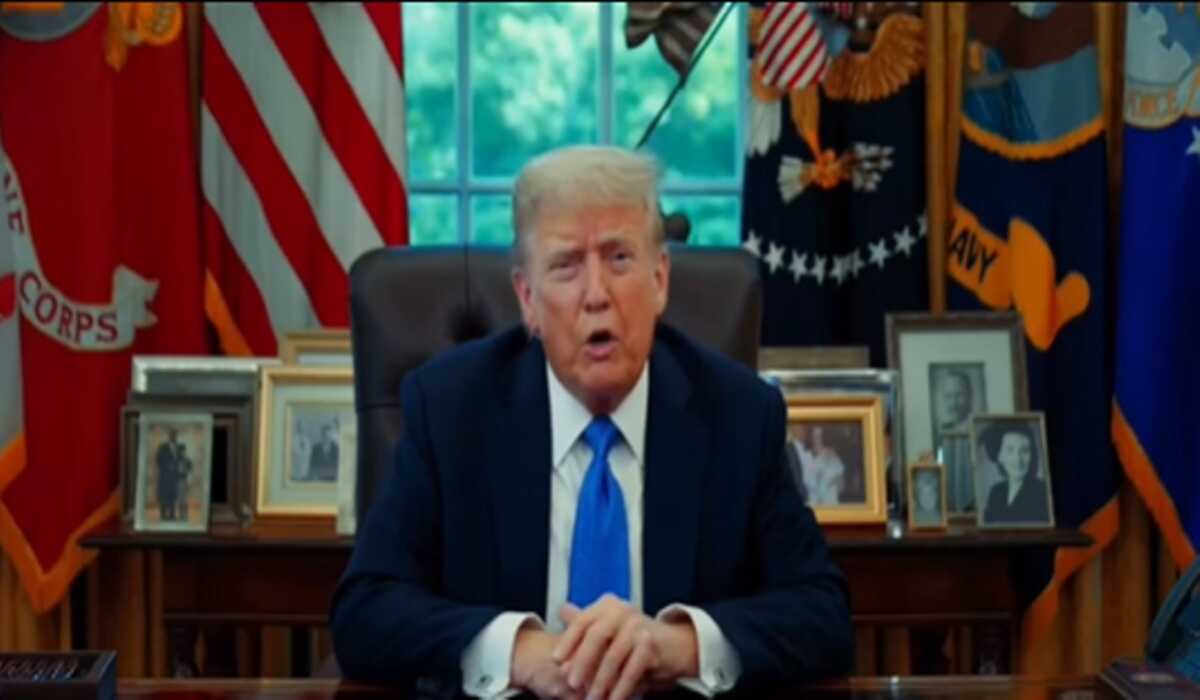
US President Donald Trump has said he should be involved in selecting Iran’s next Supreme Leader after Ayatollah Ali Khamenei’s death. He made the comments on Thursday, 5 March. In the wake of US and Israeli strikes on Iran, Tehran has continued retaliatory attacks on public facilities in Israel, on US military bases, and on other regional targets. Trump reportedly dismissed Mojtaba Khamenei, the son of Ayatollah Khamenei and a frontrunner to succeed the Supreme Leader, from consideration. The remarks were given to the US news site Axios and could reignite questions about whether the United States and Israel aim to topple the Islamic Republic or merely press for policy changes, as the conflict appears to be escalating with no clear end in sight. The confrontation between the United States, Israel and Iran is intensifying by the day, with spillover affecting a further 14 countries in the Middle East and surrounding regions.
On 5 March, Azerbaijan accused Iran of drone attacks, though Tehran denied involvement. Iran said the United States would regret a torpedo strike against an Iranian warship near Sri Lanka the day before. Israel issued a warning of mass evacuation for southern Beirut as fighting with Iran-backed militants intensified. UN peacekeepers reported ground clashes in southern Lebanon as more Israeli forces crossed the border. Meanwhile, the United States and Israel launched national-scale strikes against Iran, targeting its military capabilities, leadership and nuclear programme. Iran’s state news agency IRNA alleged Israel has a history of such operations to foster discord. The broader Iran–Azerbaijan conflict of 2026, including the attack on Nakhchivan Airport and the security implications for the South Caucasus, is part of the regional backdrop.
CENTCOM released footage of a ship strike in what it called Operation Epic Fury. Iran’s Foreign Minister, Seyed Abbas Araghchi, stressed that Iran does not seek a ceasefire and is prepared to withstand a potential US ground invasion. The escalation in the Middle East involving Iran, Israel and the United States is seen as potentially placing further pressure on regional actors. The piece profiles Ali Larijani, Secretary of Iran’s SNSC, who has emerged as a key figure in Tehran in the wake of Khamenei’s death and the ongoing tensions with Donald Trump. Trump has claimed that Iran twice tried to assassinate him before Khamenei’s death in an American-Israeli operation. Ali Larijani asserted that Iran will not negotiate with the United States, delivering a sharp critique of Trump and detailing the latest state of the Iran-Israel conflict in 2026. The death of Ayatollah Ali Khamenei, Iran’s Supreme Leader, in an American-Israeli air strike on his office on Saturday, 28 March, has created a vacancy that has sparked speculation about who will succeed him. The piece also touches on the significance of the title Ayatollah within Iran, its role in the Wilayat al-Faqih system, and its implications for regional stability.