
Donald Trump Accused of Not Having a Clear Plan for the War in Iran
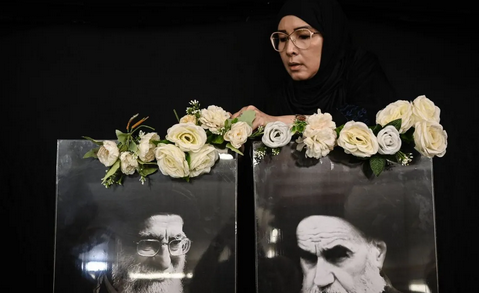
US Representative Bill Foster, a Democrat, questioned the government’s lack of a clear plan to secure Iran’s enriched uranium amid the ongoing offensive, warning of nuclear proliferation risks and the limits of American interceptor stocks. After attending a closed briefing with senior administration officials, Foster told Fox News that lawmakers did not receive detailed explanations of steps to secure or neutralise the nuclear material. ‘We’ve heard that they never had a plan for the stockpile of enriched uranium, to destroy it, to seal it, or to place it under international inspection,’ said Foster, who is also a physicist. The US military intervention itself has been justified by the Trump administration as a preventive measure so that Iran does not develop nuclear weapons. To date, more than 1,700 targets across Iran have been attacked, including ballistic missile launch sites, air defence systems, naval assets, and command centres. However, core nuclear facilities have not been targeted in the early phase of the campaign. Foster warned that without safeguarding the nuclear material, Iran remains capable of developing a simple nuclear device. ‘Until that happens, Iran will be very, very close to making one; Iran could use that material to construct a number of Hiroshima-style devices,’ he said. ‘Not a device that can be mounted on a rocket, but a device that could be transported by other means and would be very difficult to stop,’ he added. He referred to the enriched uranium, noting that, according to experts, it is indeed easier to assemble into a large, simple nuclear device than a miniaturised warhead for a ballistic missile. While it cannot be launched with a long-range rocket, such a device could theoretically be transported by other means. According to Foster, securing material, much of which is stored deep underground, may require deployment of ground troops. ‘You would have to go in there with ground forces and take a lot of equipment,’ he said. He also warned that without concrete safeguards, military operations could accelerate Iran’s nuclear ambitions. ‘The only positive thing about the ayatollah is that he has a fatwa against developing nuclear weapons,’ he said. ‘Who knows how future generations of the ayatollah will feel? They will be under heavy pressure from the IRGC, which does not oppose ownership of nuclear weapons so strongly,’ he added. Ayatollah Ali Khamenei was previously known to have issued a fatwa forbidding the development of nuclear weapons, though the effectiveness and binding nature of it are debated by analysts. At the White House, press secretary Karoline Leavitt stressed that the administration believes Iran intends to build a weapon to use against the United States and its allies. ‘The US military has more than enough ammunition, shells, and stockpiles of weapons to achieve the objectives of Operation Epic Fury set by President Trump and even more besides,’ she said. Other senior officials, including Defence Secretary Pete Hegseth and Foreign Minister Marco Rubio, emphasised that the focus now is to disable Iran’s ballistic missiles and drones. Rubio said the United States is working methodically to dismantle Iran’s missile programme so Tehran cannot hide behind it to develop a nuclear weapon. However, a number of Democratic lawmakers questioned the campaign’s sustainability. Senator Mark Kelly warned about limited interceptor stockpiles. ‘We do not have unlimited stocks,’ he said, noting the conflict could be a mathematical problem in balancing strikes and air defence stock. He questioned how the US would restock without weakening readiness in other theatres. ‘How can we resupply air defence ammunition? Where will the ammunition come from? How does that affect other operations?’ he asked. Senator Andy Kim also admitted he had not received adequate answers. ‘I am very concerned about that,’ he said. ‘Something like ’trust us’ is not good enough for me,’ he added. Conversely, Senator Markwayne Mullin of the Republican Party said officials reassured lawmakers that US forces are in very good condition. Israel’s national security analyst Ehud Eilam assessed that as long as Iran is not capable of assembling a nuclear weapon in the near term, the most pressing threat remains missiles and drones. ‘As long as Iran is not able to produce a nuclear weapon in the near term, the focus shifts to missiles and drones,’ he said. ‘There are limits to how many THAAD missiles can be used. This is not a system you can reproduce overnight,’ he explained. In the June 2025 Iran-Israel conflict, US forces reportedly fired more than 150 THAAD interceptors and a large number of ship-based interceptors. Analysts note that reconstituting advanced air defence systems such as Patriot, THAAD, and SM-3 could take more than a year, adding pressure in the face of global competition for scarce resources, including support for Ukraine. Hundreds of US soldiers protested after a commander described the Iran war as Armageddon prophecy and Donald Trump as anointed by Jesus. See the full MRFF report here. Ecuador expelled the Cuban ambassador after Trump proposed a ‘friendly takeover’. Cuba’s foreign minister described the move as a response to aggressive US pressure to isolate Havana in the region. The US Senate rejected attempts to curb Trump’s war powers against Iran despite the conflict killing Ali Khamenei. Republicans backed the initiative.