
Dompet Dhuafa Secures Extension of Ministry of Religious Affairs Permit, Ready to Expand Poverty Alleviation Programmes
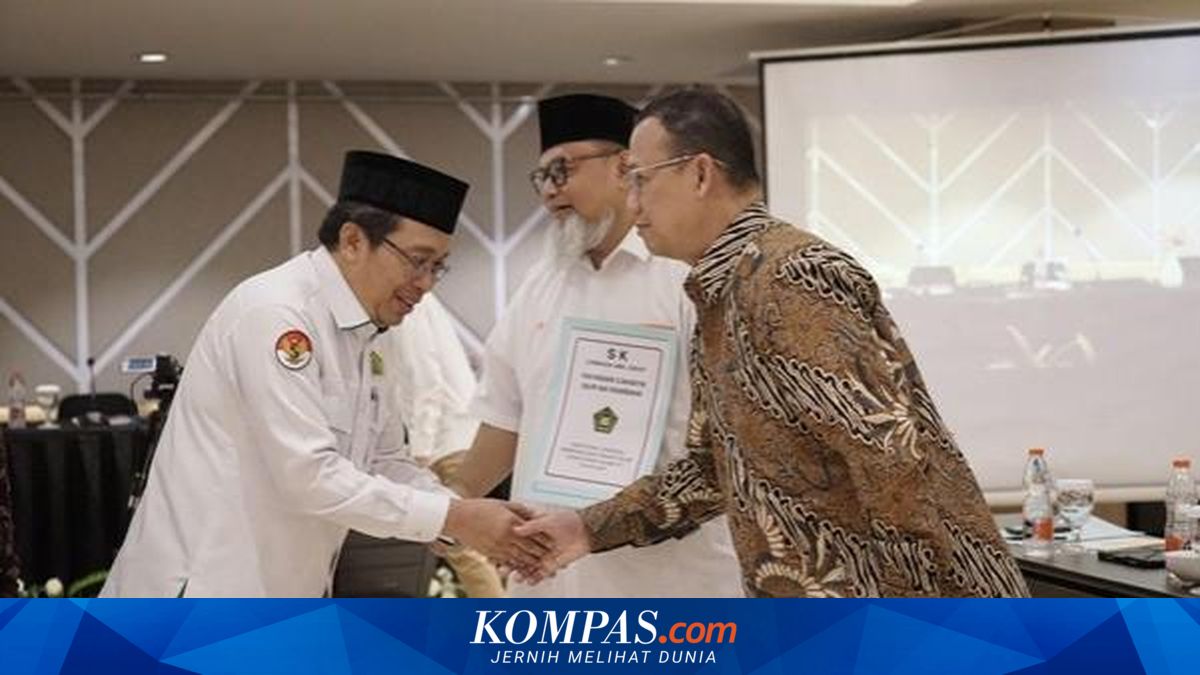
Yayasan Dompet Dhuafa has officially received an extension of its operational permit as a National Zakat Amil Institution (Laznas) from the Republic of Indonesia’s Ministry of Religious Affairs (Kemenag).
This permit extension serves as a new foundation for Dompet Dhuafa to expand its poverty alleviation programmes and community empowerment efforts.
The Minister of Religious Affairs’ Decree (SK) on the operational permit extension was handed over by the Directorate General of Islamic Community Guidance (Ditjen Bimas Islam) of Kemenag to several national zakat institutions in Jakarta on Monday (20/4/2026). One of the recipients was LAZ Yayasan Dompet Dhuafa.
Ahmad Juwaini, Chairman of the Dompet Dhuafa Foundation Board, expressed gratitude for the renewed trust given by the government to his organisation.
According to him, this permit represents a significant mandate as well as an appreciation for continuously improving the quality of zakat management.
“This is a very significant mandate as well as an appreciation to Dompet Dhuafa to continue this task, carrying out zakat management as best as possible by enhancing the quality of collection, distribution, utilisation, internal management, and institutional governance,” said Ahmad Juwaini in a written statement received by Kompas.com on Wednesday (29/4/2026).
According to Ahmad, the continuity of Dompet Dhuafa’s role as a Laznas is inseparable from the trust of the community, which has thus far supported the zakat movement and social empowerment.
“With this SK extension, we hope that the entrusted funds from the community will continue to increase. This also reflects the growing public trust in us,” he said.
On the same occasion, Waryono Abdul Ghofur, Director of Zakat and Waqf at Kemenag RI, stated that the government continues to encourage the role of national zakat institutions in improving community economic empowerment and the quality of life for beneficiaries.
According to him, zakat-based programmes can be expanded through various initiatives, such as zakat villages, coastal community empowerment, and border areas.
“The government encourages the role of national zakat institutions in enhancing economic empowerment and the quality of community life. This is our collective task in efforts to alleviate poverty and improve welfare,” said Waryono.
He added that public trust is a crucial factor in zakat management. Therefore, zakat institutions must maintain integrity and deliver tangible impacts for the community.
According to Waryono, when institutions can uphold their mandate and demonstrate results felt directly by the community, public support through zakat, infak, sedekah, waqf, and other religious social funds will continue to grow.
Dompet Dhuafa views this operational permit extension as a momentum to broaden benefits for the community, especially vulnerable and underprivileged groups.
Going forward, the philanthropic institution targets an increasing number of beneficiaries who can transform into independent and economically empowered individuals.
Thus, communities that initially receive assistance are expected to advance to become muzakki or parties that contribute benefits to others.