
Domestic Workers Bill: An Answer to Long Waits or the Start of New Challenges
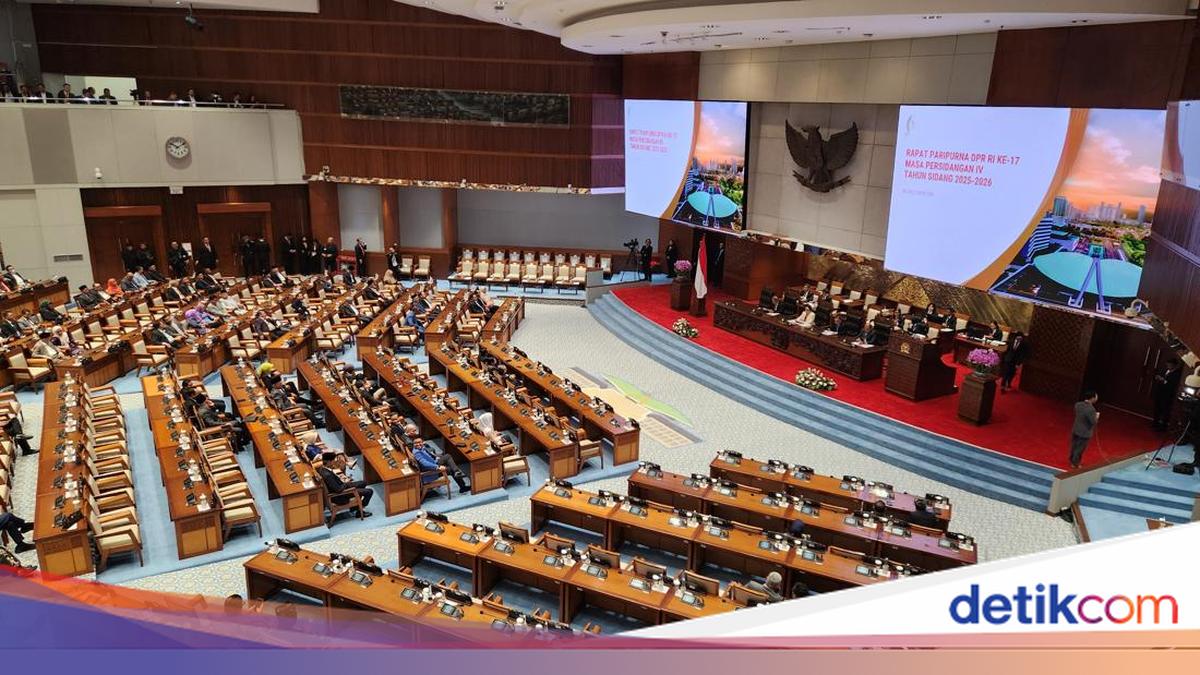
For more than two decades, this bill has appeared as a recurring agenda, but without a definitive resolution. It has entered and exited priority discussions, debated in various forums, yet has never reached the enactment stage. This phenomenon shows that the presence of a bill in the National Legislation Programme (Prolegnas) does not always correspond to political progress in resolving it.
Amid this stagnation, the need for protection of domestic workers has never disappeared. Various studies, civil society advocacy, and public pressure have continually emphasised the urgency of regulating this sector.
However, the slow legislative process has left millions of domestic workers in a state of inadequate legal certainty. They work, but are not fully recognised as workers within a complete legal framework.
Ending Uncertainty in the Domestic Sphere
The enactment of the RUU PPRT can be seen as the state’s effort to end this uncertainty. Household work is beginning to be positioned as part of work that has economic value and thus requires legal protection. However, this step also marks an important change: the domestic sphere is no longer entirely viewed as a private space free from legal intervention.
Nevertheless, this bill still shows an approach that seeks to balance social relations and employment relations. The principle of kinship is retained as part of the regulatory foundation. This approach, on one hand, reflects sensitivity to the social realities of society. But on the other hand, it leaves a question: can this social value operate without reducing legal certainty and protection for workers?
In terms of substance, this bill regulates various important aspects, such as rights to wages, working hours, social security, and protection from violence. This is significant progress. However, some regulations are still based on agreements between workers and employers. In unequal relations, this approach has limitations. Without firm minimum standards, protection risks becoming relative and non-uniform.
Regulating Intermediaries, Testing Supervision
This bill also regulates the role of domestic worker placement companies. This regulation is important to provide legality and structure in the recruitment process. However, the regulation, which is still administrative in nature, needs to be balanced with effective supervision. Without it, intermediaries could become a new point for practices that harm workers.
One policy direction in this bill is strengthening vocational training for domestic workers. This effort shows that protection is not only interpreted as prevention, but also empowerment. However, its effectiveness will greatly depend on clear standards and supervision. Without them, training risks becoming a mere administrative formality with no significant impact.
The biggest challenge of this bill lies in its implementation. Household work takes place in private spaces, which are not easily reached by state oversight mechanisms.
The bill attempts to address this by involving various actors, including local governments and social structures such as neighbourhood associations (RT/RW). However, this approach requires careful design to avoid creating new problems, both in terms of effectiveness and privacy protection.
Not an End, but a Starting Point
After years of stagnation in the Prolegnas, the enactment of the RUU PPRT in April 2026 is a noteworthy advancement. However, enactment is not the end of the process. Far more important is ensuring that the formulated norms can be implemented consistently. Legal protection must not stop at the text, but must be present in practice.
In the end, the RUU PPRT becomes a reflection of how the state views domestic work. Whether it will remain in a grey area, or be truly recognised as part of a work system deserving legal protection.
The answer to that question is now no longer in the debate stage, but in the implementation stage.