
Domestic Investment Overtakes Foreign Investment for First Time in Q1 2025
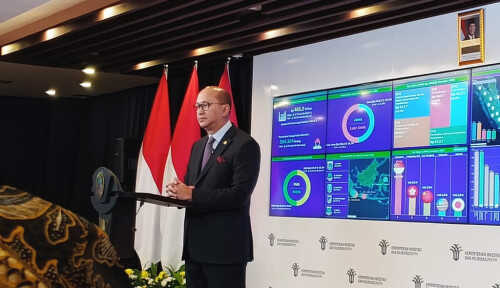
Warta Ekonomi, Jakarta — Foreign investment realisation in Indonesia recorded slower growth compared to domestic investment in the first quarter of 2025. According to data from the Ministry of Investment and Downstreaming/Investment Coordinating Board (BKPM), Foreign Direct Investment (FDI) was recorded at Rp230.4 trillion, growing only 12.7 per cent compared to the same period last year. Conversely, domestic investment surged to Rp234.8 trillion, rising 19.7 per cent year-on-year. This marks an important milestone, as for the first time in recent years, local investors have been able to outperform foreign investment.
Minister of Investment and Downstreaming/Head of BKPM, Rosan Roeslani, stated that the slowdown in FDI does not reflect declining confidence among global investors, but rather the swift response of domestic investors to opportunities in strategic sectors such as infrastructure and manufacturing.
“Thankfully, investment realisation has risen sharply despite ongoing global pressures. This demonstrates that investor confidence in the national economy remains high,” said Rosan at a press conference in Jakarta on Tuesday (29/4/2025).
Rosan emphasised that foreign investment growth remains positive, but domestic business players are now more aggressive in executing investment projects. Meanwhile, FDI is still constrained by several external factors such as global uncertainty and regulatory adjustments, including the global minimum tax.
Nevertheless, FDI still shows solid performance, particularly from countries such as Singapore, China, and South Korea. The LG expansion project worth USD 1.7 billion also continues to proceed amid speculation of delays.
Total investment realisation in Q1 2025 reached Rp465.2 trillion, growing 15.5 per cent compared to the same period last year. The basic metals, machinery, and equipment industry sector remains the main contributor, accounting for 14.5 per cent of total investment. The downstreaming sector also experienced a surge, contributing 29.3 per cent — up significantly from the average of 23–24 per cent over the past three years.
“Our focus is not only on increasing investment volumes, but also on accelerating downstreaming, so that the national economy becomes more competitive and sustainable,” said Rosan.
Geographically, Java still absorbs the majority of investment at 50.7 per cent. However, regions outside Java such as Central Sulawesi and North Bangka are beginning to show competitiveness, particularly through the development of industrial zones based on renewable energy.
The government is optimistic that the 2025 investment realisation target can be achieved, potentially even surpassing the previous year’s figures. However, the slowdown in FDI remains a concern in maintaining the balance of national capital sources.