
Dollar to Rupiah Breaches Rp17,000 Today; Indef: Domestic Currency Faces Continued Depreciation Pressure
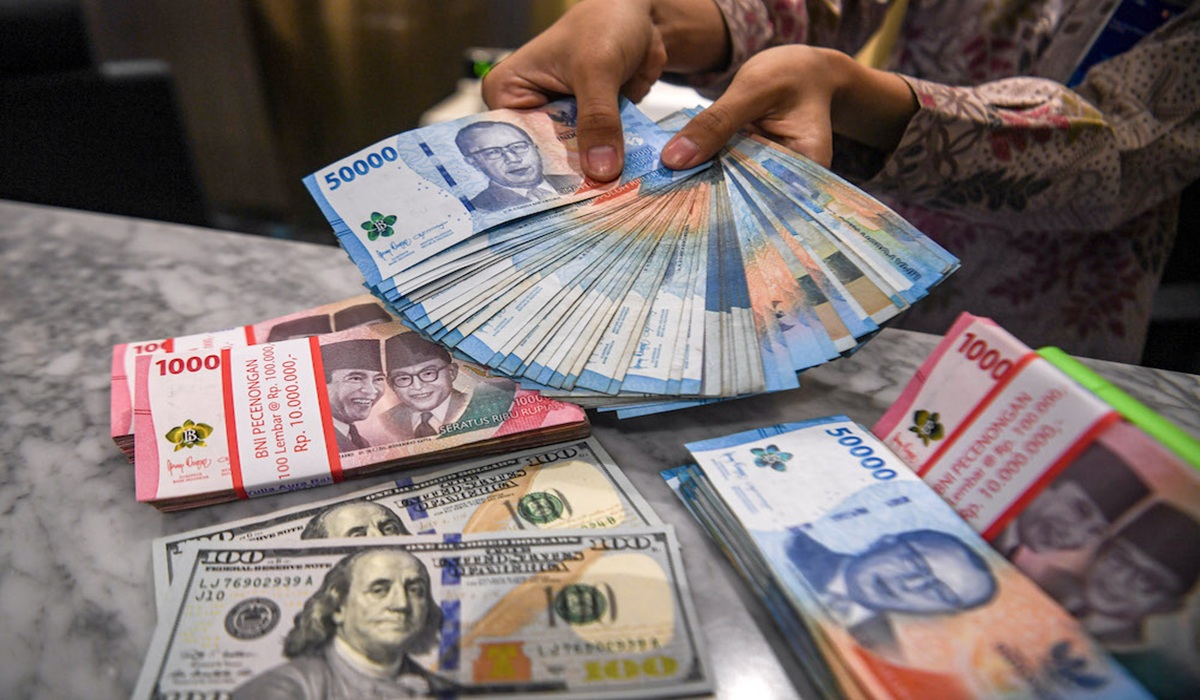
A researcher at the Centre for Macroeconomics and Finance of the Institute for Development of Economics and Finance (Indef), Abdul Manap Pulungan, has assessed that the rupiah exchange rate still faces potential depreciation pressure amid increasingly difficult global economic conditions and the relatively limited depth of the domestic financial market. As reported, the dollar to rupiah exchange rate has breached Rp17,000 today.
According to him, pressure on the rupiah is also reflected in exchange rate movements that at several banks have reached approximately Rp17,243 per US dollar.
“The rupiah will continue to face pressure. I read earlier that some banks have already traded at Rp17,243. Why is this happening? It is because global economic trends are truly severe,” he stated on Monday, 9 March.
He explained that Indonesia’s relatively shallow foreign exchange financial market makes the rupiah more vulnerable to depreciation pressure when global turbulence occurs.
“Amid our very shallow foreign exchange financial market, when pressure occurs investors will easily sell rupiah and move to other countries or other instruments, particularly gold which is considered a very safe investment,” said Pulungan.
He assessed that Bank Indonesia actually has certain psychological thresholds for rupiah exchange rate levels deemed risky for economic stability.
“If it reaches around Rp17,000, this could already be a warning signal for Bank Indonesia because the margin against the 2026 macroeconomic assumption has nearly reached Rp1,000 per dollar,” he said.
Beyond the central bank’s role in maintaining exchange rate stability, Pulungan believes the government must also undertake fiscal adjustment measures to anticipate external pressure, including the potential for rising global energy prices.
He considered that one step that could be reviewed is reconsidering the budget allocation for the Free Nutritious Meals (MBG) programme, which is assessed to absorb a large share of the 2026 fiscal budget.
“The government needs to undertake fiscal restructuring, particularly by reviewing MBG which is one of the largest budget items in the 2026 fiscal,” he said.
According to him, some of that budget could be redirected to strengthen energy subsidies should global oil prices spike, so that the burden is not directly borne by society.
“If there is a shock to oil prices, it should not immediately be passed on to society. There could be budget reallocation from MBG to subsidies because the impact will be severe for the national economy when fuel prices rise,” he said.
He added that increases in fuel prices impact not only low-income groups but also the middle and upper classes and the business world, which ultimately can constrain national economic growth.
“The impact is not only on the lower class, but also the middle and upper classes. If that occurs, the national economy could be constrained and the growth target of around 5.4 per cent this year could be difficult to achieve,” Pulungan concluded.