
Does the World Need a Caliphate?
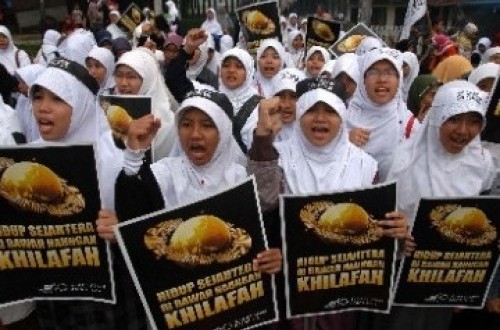
Ongoing wars across the globe, widening wealth inequality, exploitation of natural resources, and escalating global moral crises raise a pressing question: has modern political systems truly delivered justice? Liberal-capitalist democracy, long promoted as the modern governance model, has yet to fully eradicate economic disparities or global conflicts. Studies indicate wealth is increasingly concentrated among a small elite, with economic influence over public policy growing stronger (Piketty, 2014; Stiglitz, 2012). Criticism of modern democracy is not new. Political scientists warn that democracy does not always equate to genuine popular sovereignty. In practice, capital, media, and interest groups often wield more influence than ordinary citizens (Dahl, 1989). While elections grant universal political rights, modern political competition frequently demands high costs, fostering political oligarchies. This creates a paradox: systems built in the name of freedom produce inequality and injustice. Despite major powers speaking of human rights and democracy, the world continues to witness wars, military aggression by strong states against weaker ones, refugee crises, and ongoing resource conflicts. Amid this, some have revisited the Islamic political system from Prophet Muhammad’s era to Caliph Ali. Though lasting only 40 years (c. 620-660), it set a precedent and laid foundations for Islamic governance worldwide for 1,300 years, ending with the Ottoman Caliphate’s collapse in Turkey in 1924. For many modern societies, the term ‘caliphate’ is viewed negatively, often associated with religious extremism, rejection of nation-states, or fears of reduced political pluralism. Historically, however, the concept embodies ‘mercy to all worlds’ (rahmatan lil ‘aalamiin). During Prophet Muhammad’s time and the Rashidun Caliphate, governance was built on consultation (shura), pluralism, inclusivity, justice, integrity, and rule of law (Al-Mawardi, 1996). Several principles deemed modern were indeed practised in early Islamic governance. Leaders were not above the law; caliphs could be criticised and corrected. History records caliphs living simply, avoiding excess and abuse of power, prioritising public interest over personal gain (Lapidus, 2014). The fundamental distinction between caliphate and modern democracy lies in the source of sovereignty. Democracy bases legal legitimacy on the people, whereas the caliphate concept places divine law as the primary foundation. This provides moral stability to laws, not solely dictated by majority opinion (Esposito & Voll, 1996). Caliphate proponents argue it offers three key solutions to current global crises. First, economic justice. In Islamic economic systems, the state has a strong duty to manage public resources for societal welfare. Natural resources (forests, water, minerals) are communal property, alongside mandatory zakat (alms), charity, and donations, preventing wealth concentration—’so that wealth does not merely circulate among the rich’ (Quran 59:7). Second, human unity. Modern nationalism has built strong states but also sharp geopolitical competition. Caliphate supporters believe universal human identity could reduce conflicts based on race, ethnicity, and narrow national borders. Third, moral foundations in politics. Modern politics often separates from spiritual values through secularism, leading states to prioritise economic growth over societal morality. The caliphate approach seeks to link public governance with ethical and spiritual accountability. Yet a key question remains: can the world adopt such a system today? The issue is complex—not merely replacing democracy with caliphate. Modern societies comprise thousands of ethnic, religious, and cultural groups. Historically, after the Rashidun Caliphate, many Islamic governments evolved into dynastic systems, sometimes tyrannical and rife with political strife and power struggles (Hodgson, 1974). Thus, today’s greatest challenge may not be changing state structures, but restoring the substance of early Islamic governance: justice, integrity, meritocracy, leaders’ simplicity, fair economic distribution, and support for the weak. Yet, on the other hand, embedding these values might be more assured under a caliphate rather than today’s materialistic, secular, capitalist democracy. This reflection leaves us questioning: is the world facing a crisis of governance form or governance values? In answering this, the Rashidun Caliphate remains a vital source of inspiration for contemporary political debates.