
Doctor urges safe mudik plan for GERD patients
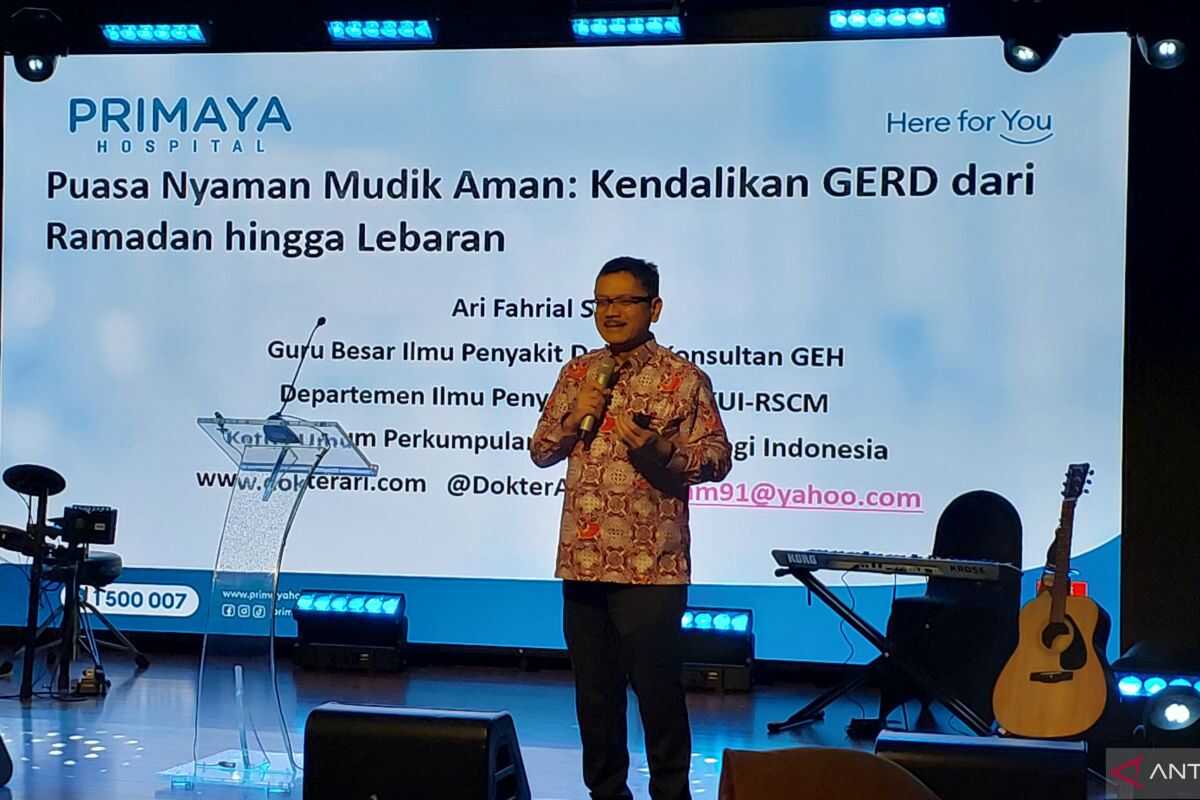
Jakarta (ANTARA) – Professor of Internal Medicine and Consultant Gastroenterology–Hepatology at the Faculty of Medicine, University of Indonesia (FK UI) and Cipto Mangunkusumo Hospital (RSCM), Prof. Dr. dr. Ari Fahrial Syam SpPD-KGEH, has advised that GERD patients undertake mudik travel at night or when not fasting to stay safe and avoid flare-ups en route. ‘I would advise that they undertake mudik travel at night, meaning when they are not fasting. Frankly, if they travel in the day, their energy and everything will be drained,’ Ari said during a health discussion with Primaya Hospital in Jakarta on Thursday. He noted that GERD sufferers are also advised to bring food from home and not to eat carelessly or snack on food from outside as its hygiene cannot be guaranteed. Ari further urged reducing fried foods during mudik for GERD patients. In addition to diet, GERD can be triggered by excessive stress, so it is recommended to bring devices or equipment that can keep the traveller’s mental state in good order and reduce stress from traffic congestion during mudik. ‘Because there will certainly be traffic jams on the road, they must be prepared with devices—have a power bank—meaning they can stay connected so there is time to do activities, so even if they are stuck in traffic, there are things to do and hence stress is reduced,’ he said. Another point not to be forgotten for GERD sufferers during mudik is to carry medications they regularly take to relieve or neutralise stomach acid. Conditions en route can be unpredictable, and there is concern that a nearby pharmacy may not be found if GERD flares up. GERD symptoms include heartburn, chest pain, and a bitter taste in the mouth. Risk factors that can worsen GERD include age (typically over 40), smoking, and a body mass index over 30, classified as obesity.