
Doctor Reveals Lung Cancer Increasing in 30-40 Year Olds, Not Just Due to Smoking
Lung cancer is no longer solely associated with the elderly or heavy smokers. This paradigm is shifting dramatically as diagnoses increase among individuals aged 30 to 40, including those who are non-smokers and lead active lifestyles. This demographic shift indicates a new threat looming over Indonesia’s productive-age population.
A study conducted over 18 years (2002-2019) at Dr. Wahidin Sudirohusodo General Hospital in Makassar found that nearly 63 percent of lung cancer cases occurred in the productive age range of 30-59 years. This phenomenon confirms that cancer is increasingly affecting the productive-age population.
In Indonesia, lung cancer is the most common type of cancer affecting men, while it ranks fifth among women. When data from both genders are combined, lung cancer becomes the second most common cancer overall.
However, the most concerning aspect is its high mortality rate compared to other types of cancer.
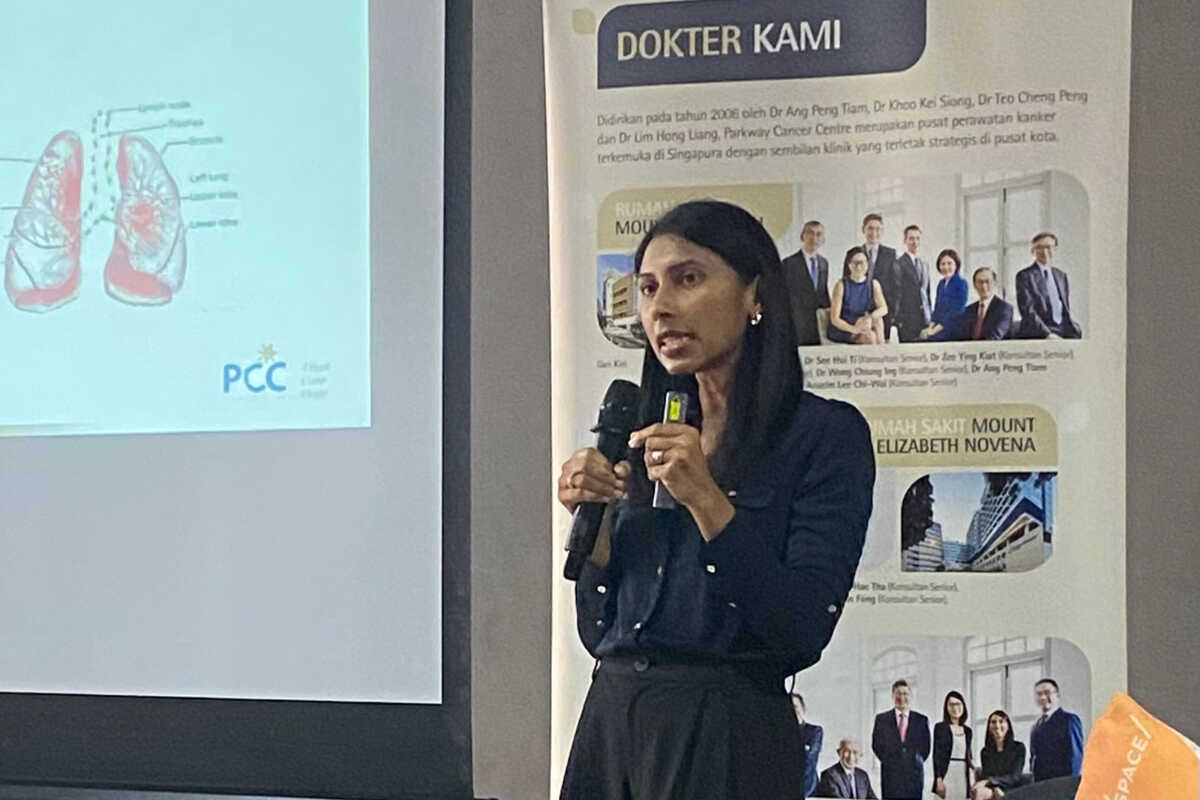
Lung cancer occurs due to the uncontrolled growth of abnormal cells in the lungs. Dr. Tanujaa Rajasekaran, Senior Consultant Medical Oncologist at Parkway Cancer Centre (PCC), explained that normal cells that undergo mutations will continue to grow uncontrollably, eventually disrupting normal lung function. The characteristic of these cancer cells is very dangerous because of their ability to spread to other organs.
“Cancer cells can originate in the lungs and eventually spread to the liver, bones, brain, or other parts of the body,” she explained during a media briefing in South Jakarta on Thursday (February 26).
Dr. Tanujaa also highlighted the changing profile of lung cancer patients and the urgent need for early detection. She emphasized that while smoking remains the primary trigger, other factors such as the environment also play a significant role.
“Although smoking is still the main risk factor, we are increasingly finding younger patients and patients with no history of smoking. Risk factors such as passive smoking, air pollution, workplace exposure, and genetics are important contributors that should not be ignored,” she said.
The main challenge in managing lung cancer is the delay in diagnosis. Early symptoms such as prolonged cough, fatigue, chest pain, or shortness of breath are often mistaken for common respiratory illnesses. As a result, many patients are only diagnosed at stage III or IV, when treatment becomes much more complex, so early detection is essential.
“When symptoms persist for more than a few weeks, they should not be ignored. Timely evaluation and appropriate screening can make a significant difference in patient survival and quality of life,” she added.
Over the past two decades, lung cancer treatment has shifted from a chemotherapy-dominated approach to a highly personalized approach. Currently, treatment decisions are based on the type, stage, and genetic profile of the cancer, allowing doctors to tailor therapy to each patient’s condition.
The duration of immunotherapy also depends on the type and stage of the patient’s cancer. For early-stage or certain stage three cancers, immunotherapy may only be given for one year. However, for stage four cases, this treatment may be long-term.
“If we are talking about stage four or metastatic lung cancer, immunotherapy is generally given (for) the long term as long as the cancer is still responding to treatment,” said Dr. Tanujaa. (Z-4)