
Doctor: Lung cancer patients in Indonesia are 10 years younger
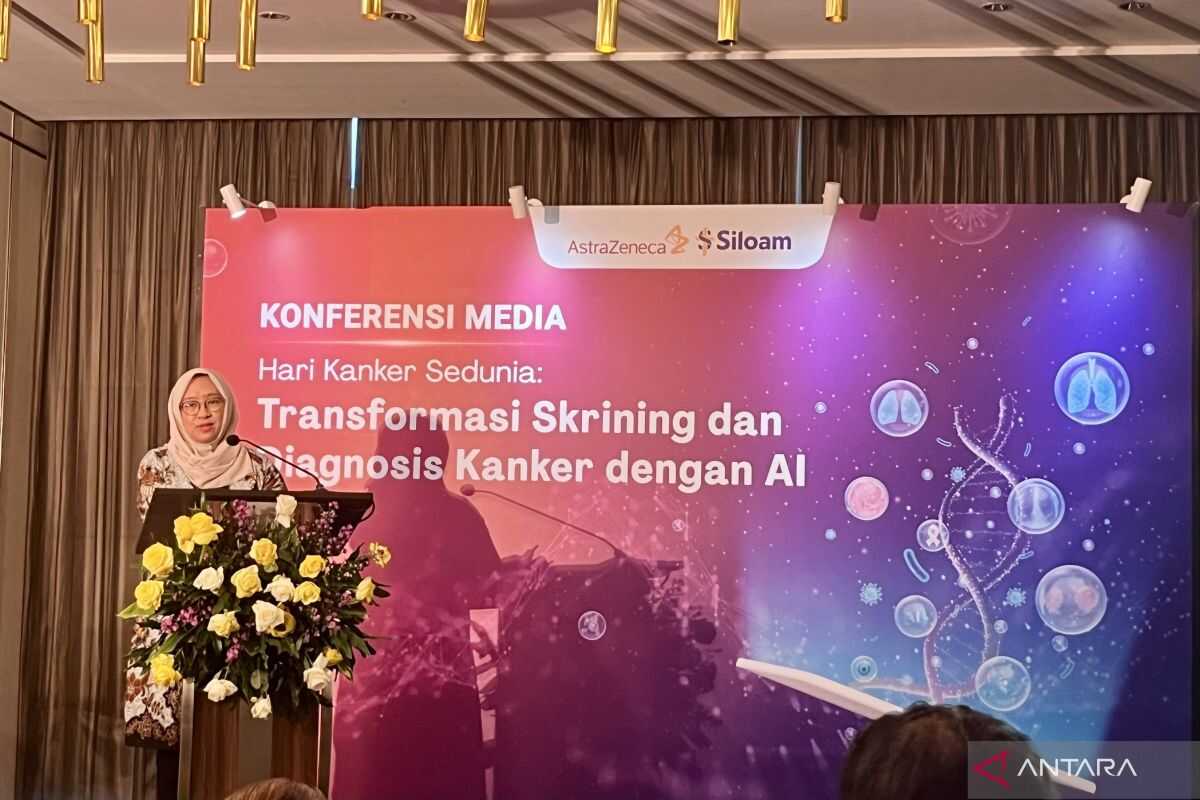
Jakarta (ANTARA) - Doctor Sita Laksmi Andarini, Ph.D., Sp.P(K), a subspecialist in thoracic oncology, stated that the age of lung cancer patients in Indonesia tends to be 10 years younger compared to other countries, with an increase in cases also occurring among non-smoking women.
“In Indonesia, the age of lung cancer patients is 10 years younger compared to other countries. The numbers are also increasing, especially among young, non-smoking women,” said Sita during a press conference for World Cancer Day, entitled ‘Transforming Cancer Screening and Diagnosis with AI’ in South Jakarta, held in collaboration with AstraZeneca Indonesia and Siloam International Hospitals, Wednesday.
According to Sita, the biggest risk factor for lung cancer is exposure to cigarette smoke. In addition, exposure to asbestos, air pollution, especially fine particulate matter (PM2.5), a history of tuberculosis, and genetic factors in the family also increase the risk.
“The highest risk is exposure to cigarette smoke. By avoiding cigarette smoke, about 80 percent of chronic diseases, including lung cancer, heart disease, and stroke, can be prevented,” she said.
The doctor, who is a member of the Indonesian Oncology Association of Jakarta, added that about 90 percent of lung cancer patients come in at an advanced stage, even though the progression from early to advanced stage can occur rapidly, in about one to one and a half years.
In the early stages, lung cancer can still be treated, and the chances of survival are much better compared to the advanced stage, which requires more complex therapy and higher costs.
Sita explained that screening is different from early diagnosis. Screening is carried out before symptoms appear in high-risk groups, while early diagnosis is carried out when symptoms have appeared.
In Indonesia, lung cancer screening is recommended for high-risk groups aged 45 to 71 years with a history of active, passive, or recent smoking (less than 15 years), as well as individuals with a family history of lung cancer. The examination is carried out using a low-dose, non-contrast CT scan.
She emphasised that early detection is very important because a difference of just one stage can increase treatment costs several times over.