
Do Not Be Alarmed, Trump Says This as Oil Price Surges to $113 per Barrel
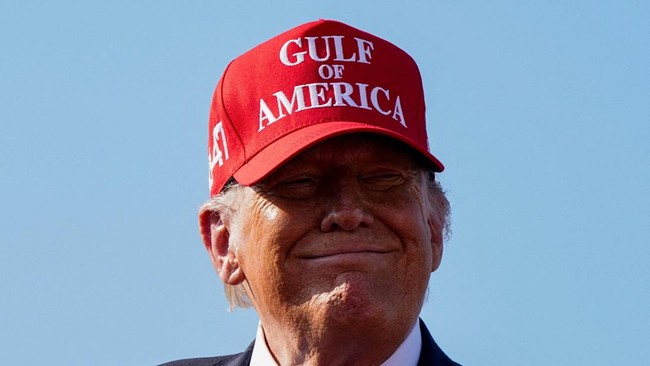
US President Donald Trump dismissed concerns over rising oil prices when crude prices surged past $100 per barrel on Sunday. As of 09:20 WIB, Brent crude was recorded at $113.68 per barrel, whilst West Texas Intermediate (WTI) stood at $113.25 per barrel.
“Short-term oil prices, which will fall rapidly once the destruction of the Iran nuclear threat ends, are a very small price to pay for US and world security and peace,” Trump stated on his social media platform.
“ONLY A FOOL WOULD THINK DIFFERENTLY!” Trump wrote on Truth Social.
Sunday marked the first time oil prices exceeded $100 per barrel since Russia’s invasion of Ukraine in 2022. Investors worry that conflict in Iran will mean prolonged disruptions to Middle Eastern oil supplies.
Trump has frequently trumpeted falling petrol prices in his speeches from the White House and across the country. Since fighting began in Iran a week ago, petrol prices have risen 47 cents, or 16%, to $3.45 per gallon of regular unleaded petrol, according to AAA data on Sunday.
In fact, Trump and government officials have been attempting to alleviate concerns over rising petrol prices. White House officials appeared on news programmes the previous Sunday to argue that the price surge would be a short-term problem.
“Petrol prices today are still $1.50 per gallon cheaper than in the middle of the Biden administration, but you’re right, we want prices to return below $3 per gallon, and that will happen again shortly,” said Energy Secretary Chris Wright to Jake Tapper from CNN International.
“The increase in prices at petrol stations is a short-term disruption,” said White House Press Secretary Karoline Leavitt.
Geopolitical tensions emerged as the primary driver of the price surge. The conflict between the US, Israel and Iran sparked serious concerns about global energy supplies, particularly due to its impact on the Strait of Hormuz, a vital global oil shipping route.
This waterway is traversed by 20% of global oil consumption. Moreover, several Middle Eastern producers have also begun to suppress production due to retaliatory strikes launched by Iran.
Supply disruptions also originated from Iraq. Three industry officials told Reuters that production from three major oil fields in southern Iraq fell approximately 70% to just 1.3 million barrels per day, down from previously around 4.3 million barrels per day.