
DKI Provincial Government to Extend Jakarta LRT Line to Ancol
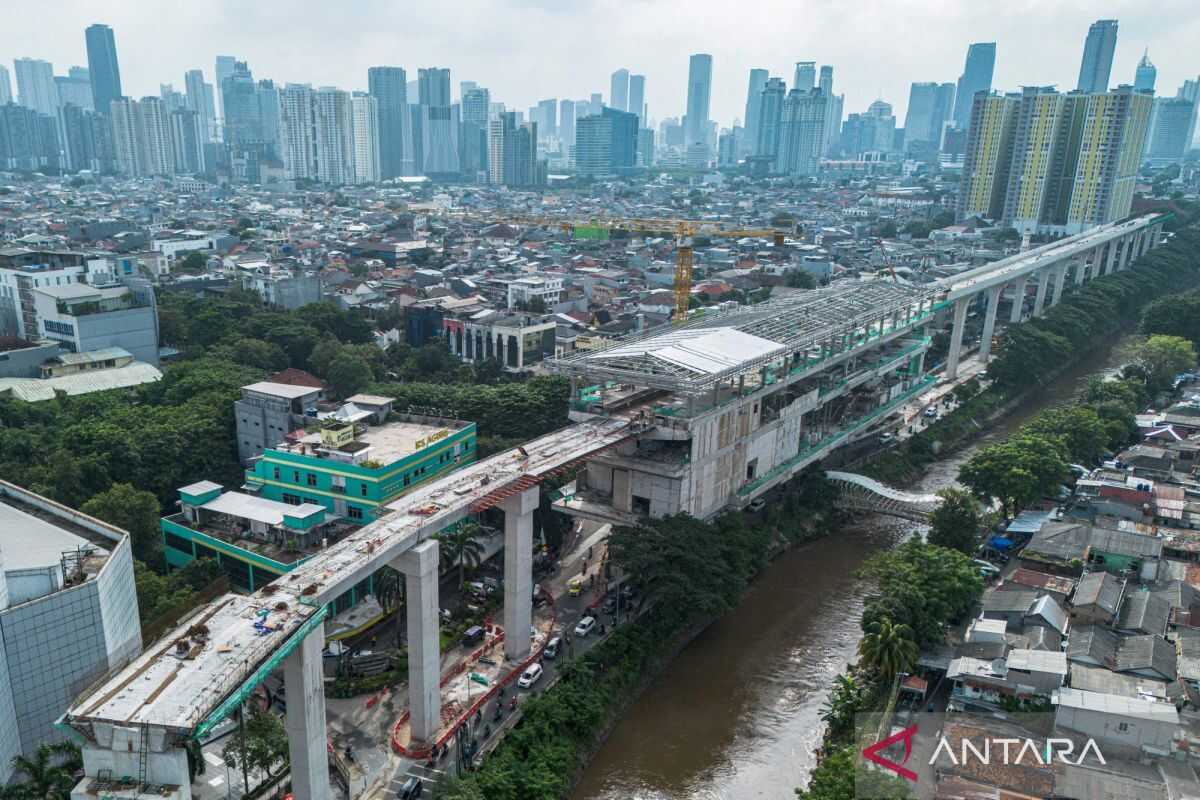
Jakarta - The DKI Jakarta Provincial Government plans to extend the Jakarta LRT line currently operating from Veledrome Station to Pegangsaan Dua Kelapa Gading Station further to Ancol in North Jakarta.
“We have two extension options for the Jakarta LRT line after the construction from Pegangsaan Dua Kelapa Gading Station connects to Manggarai Station,” said Jakarta Governor Pramono Anung Wibowo in Jakarta on Sunday.
According to him, the Jakarta LRT construction from Pegangsaan Dua Station in Kelapa Gading District connecting to Manggarai Station will be completed by the end of this year or early 2027.
“We will still hold finalisation meetings for the construction until it connects to Manggarai, and it will begin operating next year,” he said.
Following completion, there are two options: extending from Manggarai Station to Dukuh Atas Station, or connecting the Jakarta LRT from Manggarai to Kelapa Gading and extending to Ancol.
“The line will pass through JIS Station in Tanjung Priok and the Ancol area,” he said.
Jakarta International Stadium (JIS), located in Tanjung Priok District, is an international-standard stadium that hosts international-level football matches and home matches for DKI Jakarta’s pride, Persija Jakarta. JIS also frequently hosts international concerts that draw significant crowds from Jakarta and Indonesia, requiring robust mass transportation access and offering a solution.
Previously, North Jakarta resident Dian expressed hope that the Jakarta LRT could be extended to residential areas further from the city centre.
“In North Jakarta, there are already some public transport options like TransJakarta and commuter rail, but if the Jakarta LRT can reach areas far from the city centre, surely more people would consider leaving their private vehicles,” she said.
Meanwhile, a worker in the Sudirman area, Indra, said the Jakarta LRT extension could be a concrete solution to alleviate daily traffic congestion on Jakarta’s main roads.
“If access becomes wider and integrated, people will think twice about driving their own cars. This should be supported,” he said.
According to him, route expansion should be directed towards areas with high mobility, such as business centres, education and office areas.
He believes that beyond expanding the route, the public is also pushing for stronger inter-modal integration.
“Ease of transfer between transport modes is considered a key factor in the success of a mass transport system,” he said.