
DKI Jakarta's First Quarter 2026 Expenditure Realisation Reaches Rp10.38 Trillion
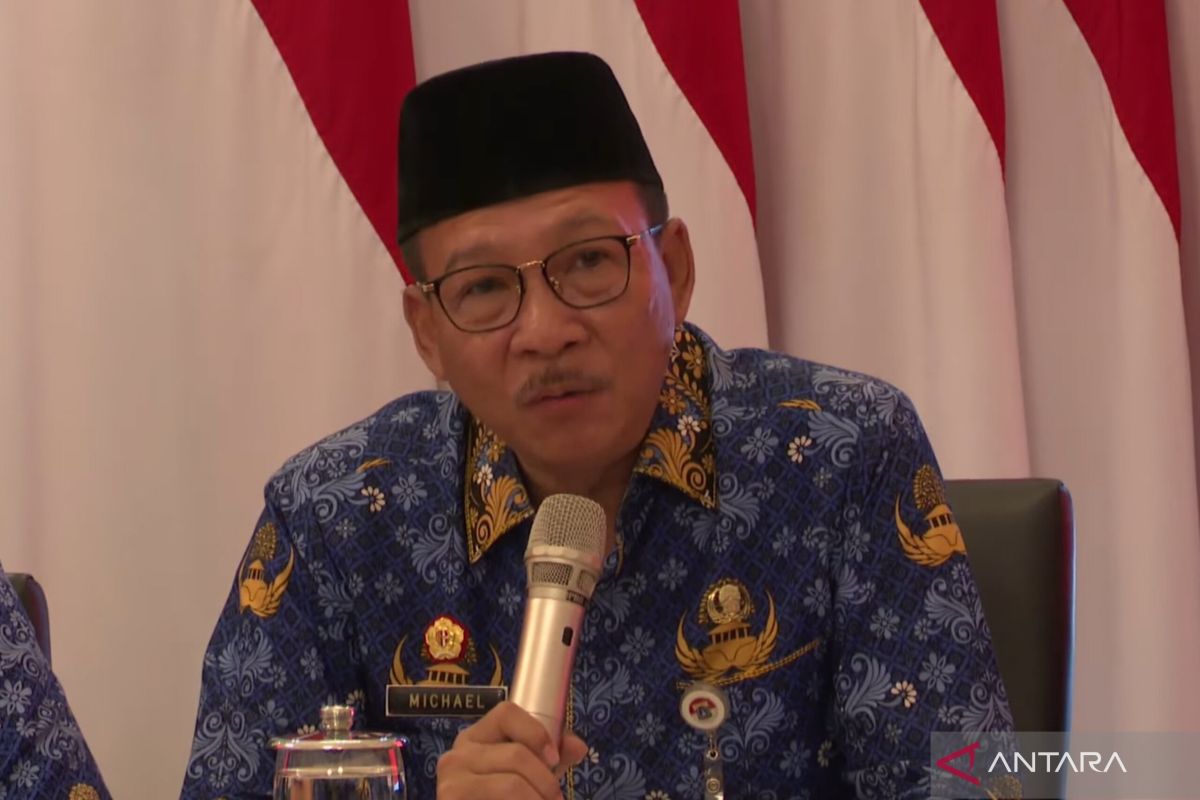
Jakarta (ANTARA) - The Head of the Jakarta Regional Financial Management Agency (BPKD), Michael Rolandi, stated that the regional expenditure realisation for the first quarter of 2026 reached Rp10.38 trillion, or 13.97% of the target in the revised Regional Revenue and Expenditure Budget (APBD-P) of Rp74.28 trillion.
“Revenue realisation is 13.39%, and expenditure is 13.97%. This is the highest that can be achieved in the last five years,” Michael said at City Hall, Jakarta, on Friday.
He mentioned that previous expenditure realisations were 9.96% in the first quarter of 2022, then 9.86% in 2023, 10.31% in 2024, and 13.19% in 2025.
“We have the 2025 APBD regional regulation and the Governor’s Regulation detailing the 2026 APBD on time. So, it was approved on 23 December, and we were able to start operational activities in the regional government on 2 January. This greatly helps in budget absorption,” Michael said.
Michael detailed that the 2026 regional expenditure components consist of operational expenditure of Rp10.33 trillion (16.35%), capital expenditure of Rp0.04 trillion (0.41%), unforeseen expenditure (BTT), and transfer expenditure, with realisations for the latter three still at zero rupiah.
“In regional expenditure, there is operational expenditure, capital expenditure, unforeseen expenditure, and transfer expenditure. The largest is operational expenditure, meaning DKI is running, DKI can operate normally even in the current conditions. Of course, we must carry out efficiency,” Michael stated.
He added that the 2026 regional expenditure realisation supports seven priority programmes for 2026, which include enhancing competitive human capital, increasing sustainable economic productivity and competitiveness.
Then, creating decent and independent livelihoods for the community, transforming dynamic and responsive government governance, and improving adequate and proper urban infrastructure.
Furthermore, optimising low-carbon and climate-resilient development, as well as creating transit-oriented mobility and areas.