
DKI Jakarta urges families to ensure children have complete immunisation before Lebaran exodus
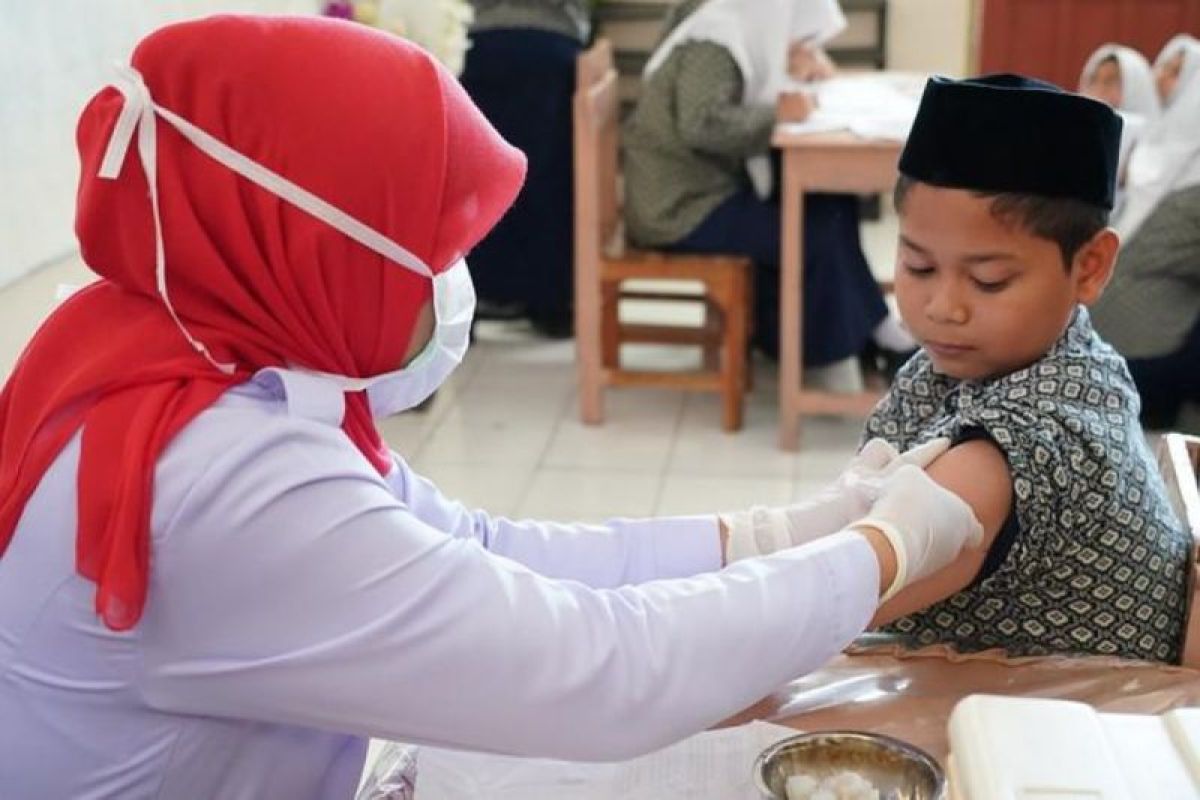
Jakarta (ANTARA) - The Jakarta provincial government has urged residents to ensure children who will travel for Lebaran have received complete immunisation, including the measles vaccine, so that children develop antibodies against various viruses and bacteria.
“We must be certain that children travelling for the holidays have been vaccinated, or when in their home villages, practice more intensive clean and healthy living habits,” said Budi Setiawan, Head of the Epidemiological Surveillance and Immunisation Section of the Jakarta Health Service, during a measles prevention podcast in Jakarta on Thursday.
Budi cited the World Health Organisation (WHO) reminding that immunisation prevents 2-3 million deaths each year from diseases such as diphtheria, tetanus, pertussis, influenza, and measles.
According to him, if children experience symptoms such as fever, red rash on the body after fever, red eyes, cough and runny nose, and itching sometimes accompanied by diarrhoea, they should be taken immediately to a health centre or the nearest healthcare facility, and travel should be postponed to prevent measles transmission.
Regions with Extraordinary Event (KLB) status for measles in Indonesia in 2026 cover ten districts/cities across seven provinces, including West Sumatra (Solok and Pariaman), Central Java (Cilacap and Klaten); Yogyakarta (Sleman and Gunung Kidul); East Java (Jember); West Java (Garut); South Sulawesi (Sinjai); and Central Sulawesi (Tojo Una-una).
Currently, the Jakarta provincial government is conducting a Simultaneous Catch-up Immunisation (IKS) campaign for measles to reach groups of children and strengthen their immunity and prevent disease transmission.
The 2026 IKS in March is focused on children who have not received complete immunisation, specifically MR1 for children aged 9-59 months.
Regarding cases, in early 2026, 1,236 suspected measles cases were recorded across Jakarta, with the highest cases in West Jakarta (398 cases), Central Jakarta (276 cases), and South Jakarta (226 cases), followed by North Jakarta with 179 cases, East Jakarta 155 cases, and the Thousand Islands with two cases.
The subdistricts with the most suspected cases were Tanah Abang, Tambora, Taman Sari, Cengkareng, and Pesanggrahan.