
DKI Jakarta Promotes Large-Scale Activities to Sustain Economic Growth
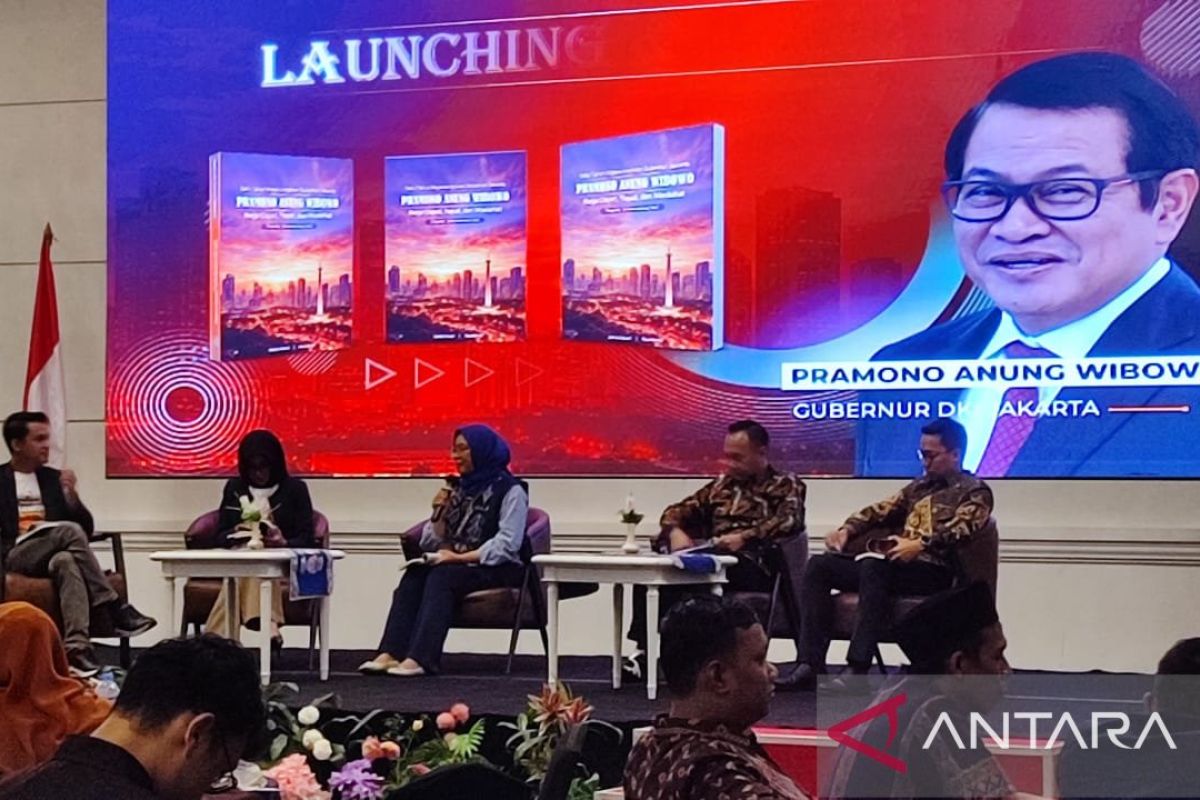
Jakarta — The DKI Jakarta provincial government is promoting the organisation of large-scale activities as catalysts for maintaining economic growth in the capital amidst dynamic global economic conditions.
Desa Apridini, special staff to the DKI Jakarta Governor for governmental affairs, stated that the economic policies implemented by Jakarta Governor Pramono Anung are directed towards maintaining high economic growth despite the dynamic global situation.
This was stated during a book launch of “One Year of Leadership of Jakarta Governor Pramono Anung Wibowo: Fast, Precise, and Beneficial Work” in Central Jakarta on Wednesday.
“Certainly, Pram desires this economic development to remain high. Given the current global situation and the economic challenges we face, creative financing is certainly needed,” said Desa.
According to him, the organisation of large-scale activities is one way for the regional government to stimulate economic activity whilst expanding the involvement of business actors.
“In the last two weeks of December, through the Jakarta Festive Wonder event, Jakarta’s economic circulation reached approximately 15.25 trillion rupiah,” he said.
Additionally, the celebration of major holidays also delivers significant economic impact for Jakarta. “During Chinese New Year celebrations, in four days the economic circulation reached approximately 9 trillion rupiah,” he said.
According to Desa, such large-scale economic circulation is important as it involves many business actors whilst providing direct benefits to the community.
“Economic growth like this and economic circulation that can involve many entrepreneurs and also be directly felt by the community, that is what we need,” he said.
He stated that the regional government prioritises mandatory expenditure in the Regional Revenue and Expenditure Budget (APBD), particularly for the education, healthcare, and social programme sectors.
“When discussing Pram’s budgetary policy regarding the APBD, we certainly focus on expenditures that are mandatory in nature, such as education, healthcare, and social programmes. These must not be disrupted whatsoever,” he said.
Additionally, the regional government also endeavours to strengthen community connectivity through various programmes, including public transport subsidies.
“From a policy perspective, we certainly focus on education, healthcare, and social matters as well as building connectivity through subsidy programmes for public transport and other initiatives,” he said.
Desa explained that these programmes are initiatives by Pramono Anung to promote tourism and consumer spending in the capital during the holiday migration season.
“There is one programme we have also developed to boost Jakarta’s economy, which is the ‘Come Home to Jakarta’ programme. The Come Home to Jakarta programme is an original initiative launched by the Governor,” he said.
The programme involves the business community with various incentives to attract people to remain active in Jakarta during the Ramadan holiday period.
Aprilia Hariani, author of the book, explained that the publication reviews various strategic policies implemented by the DKI Jakarta Provincial Government in efforts to develop Jakarta into a global city.
According to Aprilia, there are four main pillars forming the basis of analysis regarding Jakarta’s current development direction.
“We identified four aspects, namely improvement of welfare, acceleration of economic growth, improvement of environmental quality, and strengthening of governance,” she said.
Nevertheless, city development remains directed to be based on community economic strength. “Jakarta is changing its garb from a capital city to a global city,” she said.
The analysis also noted several economic indicators showing positive trends. One of these is Jakarta’s economic growth in 2025 reaching 5.21 per cent, which is above the national average.
Additionally, various policies implemented by the regional government, such as public transport subsidies and support for micro, small, and medium enterprises (MSMEs), are considered to help maintain community purchasing power amidst economic dynamics.