
DKI DPRD Requests Provincial Government to Control Influx of Migrants Post-Eid
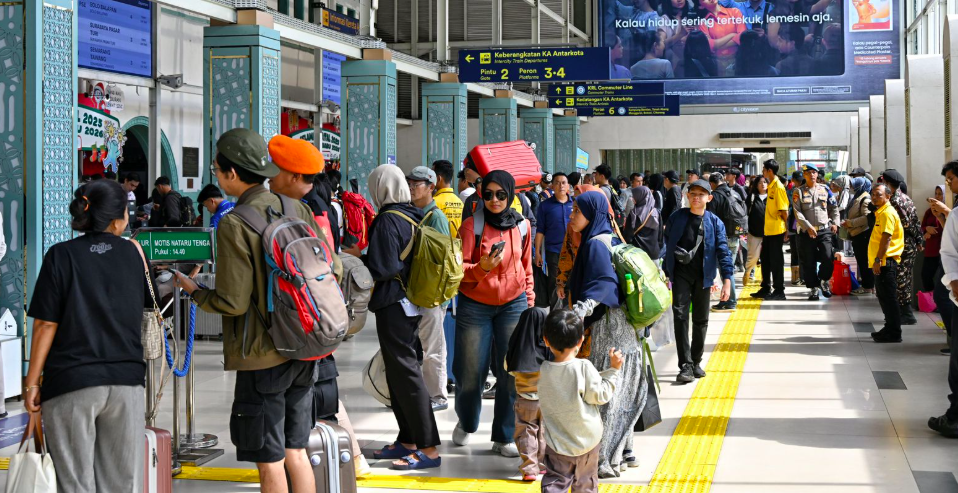
A member of Commission A of the DKI Jakarta DPRD, Kevin Wu, assesses that the annual urbanisation wave poses a risk of exacerbating population density and pressuring the availability of jobs in the capital. “The phenomenon of the post-Lebaran influx of migrants occurs routinely every year and must be addressed seriously because its impact is directly felt by Jakarta residents,” said Kevin on Friday (27/3). He stressed that the DKI Provincial Government needs to place the protection of Jakarta residents as the top priority. According to him, an uncontrolled influx of migrants has the potential to increasingly marginalise local residents amid increasingly tight economic competition. “It must be emphasised that the government’s top priority must remain on protecting and ensuring the welfare of Jakarta residents who have lived and contributed to the city first. Do not let our own residents become increasingly sidelined,” he asserted. On the other hand, Kevin acknowledged that Jakarta cannot completely close itself off to migrants. However, that openness must be balanced with strict and measured oversight. “Jakarta cannot close itself off, but it also must not adopt an overly lax attitude without control. Many migrants arrive without skills and job certainty, thus potentially increasing unemployment rates and the burden on public facilities,” explained the PSI politician. To that end, he encouraged the Provincial Government to tighten the registration of new migrants through the population administration system down to the RT/RW level. Migrants, he said, must have clear identities, definite purposes, and guarantees of decent accommodation. “There needs to be a selective policy based on economic readiness. That means those who come are those who are ready to work and contribute, not those who instead add to the city’s burden,” he stated. Not only in terms of control, Kevin also emphasised the importance of proactive steps from the government in expanding employment opportunities. Skills training programmes are deemed necessary to be prioritised for Jakarta residents so they can compete amid the strong current of urbanisation. “If not managed seriously, this phenomenon could become a social time bomb. The approach cannot be just administrative, but must also be strategic and biased towards residents,” he said. He also warned that without the right policies, Jakarta residents could end up as mere spectators in their own city. “Jakarta must remain open, but it must not lose control. Most importantly, do not let Jakarta residents become spectators in their own city,” he concluded.