
DKI Coordinates with Supplier Regions to Ensure Healthy Sacrificial Animals
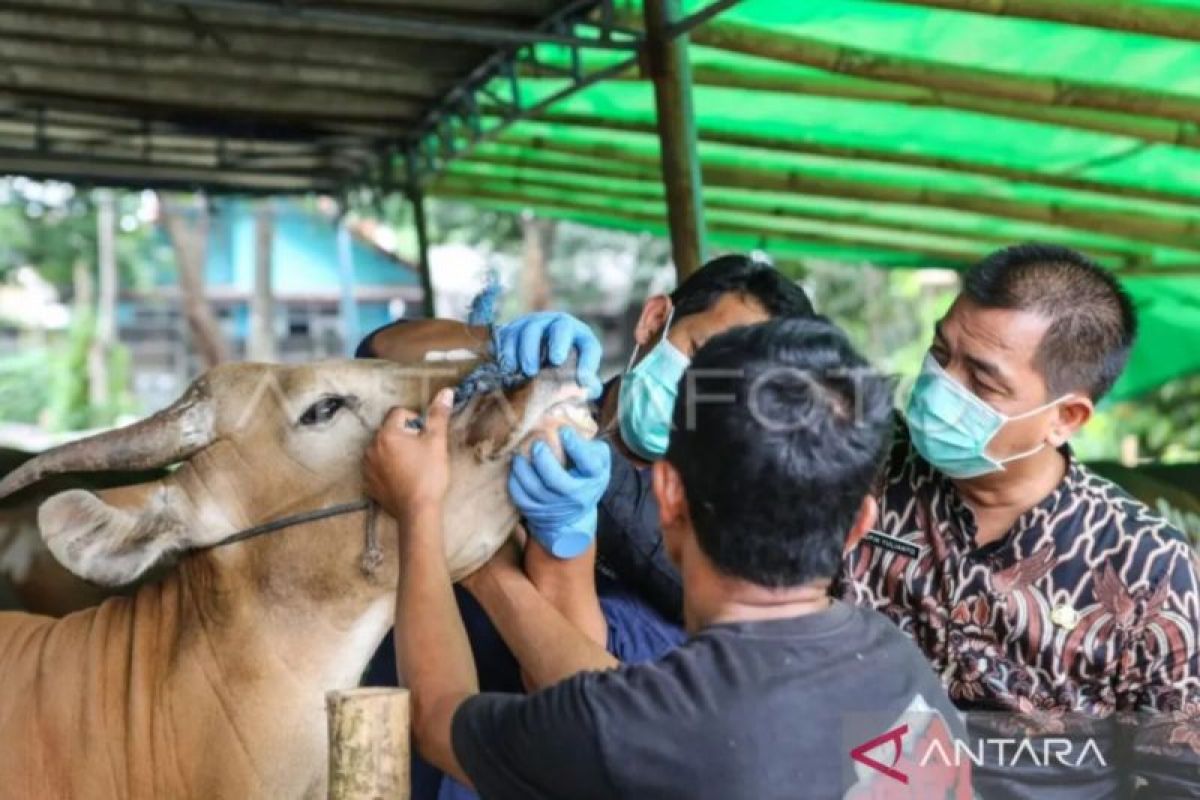
Jakarta (ANTARA) - The DKI Jakarta Food Security, Maritime, and Agriculture Agency (KPKP) is coordinating with several supplier regions for sacrificial animals to ensure that the animals entering the capital are in healthy condition and free from diseases.
“To ensure that the sacrificial animals to be sent to Jakarta are in healthy condition and free from potentially fatal diseases, both for the animals and those that could transmit to humans,” said Acting Head of the Livestock and Animal Health Division of the DKI KPKP Agency, Mujiati, during an online event in Jakarta on Tuesday.
She mentioned several regions that serve as suppliers of sacrificial animals to Jakarta, including West Java, Central Java, East Java, East Nusa Tenggara (NTT), West Nusa Tenggara (NTB), Bali, and Lampung.
“The total number of sacrificial animal holding sites is 1,327, with the number of animals reaching 80,959, originating from West Java, Central Java, East Java, NTT, Bali, NTB, and Lampung,” said Mujiati.
Referring to the procedure for importing sacrificial animals, in accordance with Minister of Agriculture Regulation No. 17 of 2023 and considering the animal disease situation status, the DKI KPKP Agency requires several documents for sacrificial animals, namely veterinary-livestock certificates from the province/district and Animal Health Certificate (SKKH) from within the same district, specifically for the circulation of animals within the district.
“Anthrax disease is highly fatal and can spread quickly to humans. We must not allow any anthrax-infected animals to affect the community, especially the committees who come into direct contact with the sacrificial animals,” stated Mujiati.
In 2025, the DKI KPKP Agency took samples from 106 TPHK locations with a total of 547 samples, and all results were negative for anthrax.
“Additionally, we also took soil samples because the anthrax virus lives in the soil. From 93 samples, all results were negative,” revealed Mujiati.
She also urged all sacrificial animal slaughter committees to ensure hygienic sanitation, both in the work environment and for the personnel carrying out the slaughtering activities as well as the handling of sacrificial meat.