
Djony Bunarto Tjondro: Astra strengthens foundation towards seven decades, preserving roots, cultivating the future
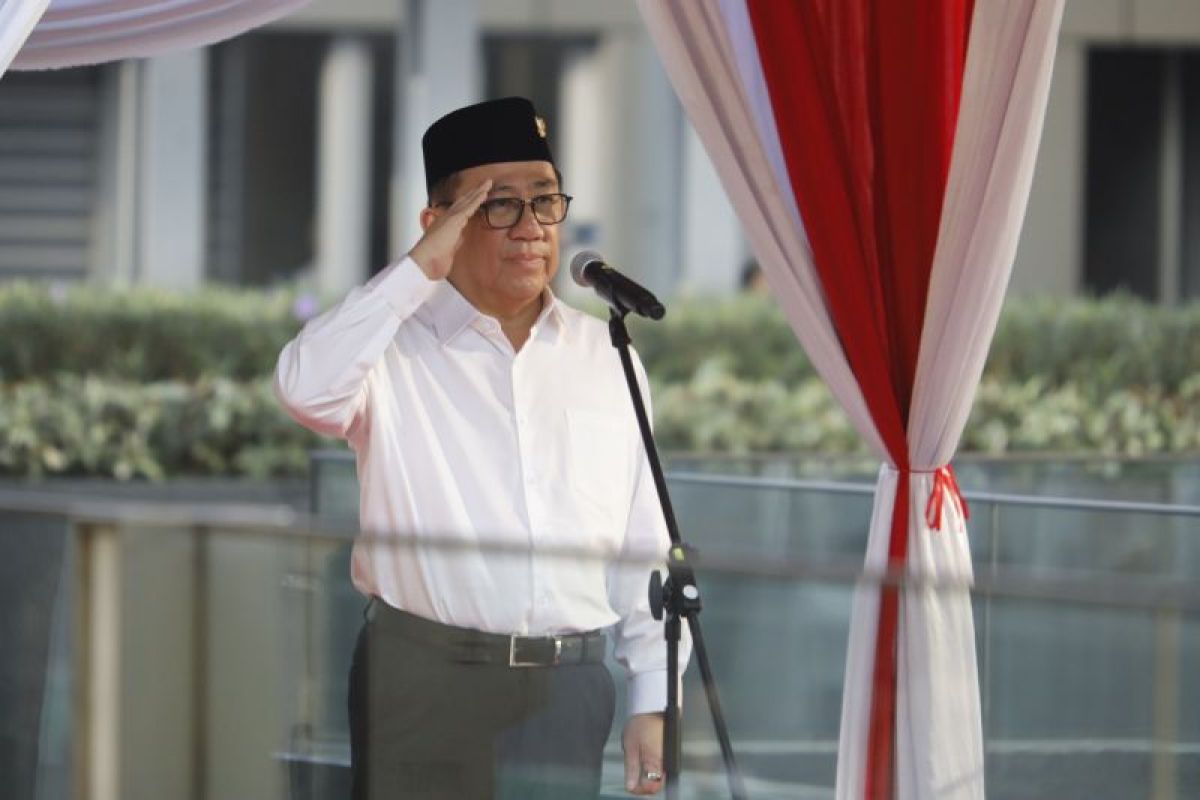
Jakarta — As it approaches its 70th anniversary, PT Astra International Tbk has reaffirmed its strategy of strengthening the foundation of corporate values, developing human resources (HR), and diversifying its business portfolio as key to maintaining business sustainability amid global dynamics.
Astra’s President Director Djony Bunarto Tjondro, in an interview with Chief of Corporate Affairs Boy Kelana Soebroto, stated that Astra’s 69-year journey reflects not merely business growth but also sustained contribution to the Indonesian nation.
“Sixty-nine years is not merely a matter of time, but a story of millions of steps that have grown and moved together with the nation,” said Djony.
According to Djony, the fundamental foundation that has enabled Astra to remain resilient and relevant since its establishment is the “shaded tree” philosophy inherited from Astra founder William Soeryadjaya. This philosophy portrays Astra’s role as a company that not only grows strong but is also able to provide broad benefits to society.
This philosophy is realised through the values of Catur Dharma, which serve as guidance in every company decision-making process. Djony emphasised that Catur Dharma is not merely a normative principle but a value that is lived in daily operations.
“These values serve as a compass for all Astra personnel, ensuring the company’s direction remains clear amid various dynamics,” he said.
In its implementation, Astra translates these values into the 3P Roadmap strategy encompassing Portfolio, People, and Public Contribution. This strategy is designed to balance business performance with sustainability aspects whilst strengthening the company’s resilience to change.
Djony added that beyond values, the human factor or people legacy becomes an important element in maintaining Astra’s continuity from one generation to the next. According to him, a company is not built only by systems and strategies, but by the people who implement them.
“Astra continuously seeks and develops new talent whilst preparing leaders who possess not only competence but also character and integrity,” he said.
HR development is carried out through various programmes, such as cross-business line rotation, strategic assignments, and gradual increase in responsibility. This approach aims to provide comprehensive experience for prospective Astra leaders.
Djony emphasised that the leadership regeneration process at Astra is carried out in a planned manner and is not sudden. Leadership succession has been prepared years in advance to ensure organisational continuity.
“Every era has its people, and every person has their time,” he said.
In terms of performance, Astra has recorded consistent growth over the past six years. The company’s net profit increased from Rp16.2 trillion in 2020 to Rp32.8 trillion in 2025. This growth occurred despite Astra facing various challenges, ranging from the COVID-19 pandemic to global economic dynamics.
In 2020, the pandemic placed significant pressure on nearly all of Astra’s business lines, accompanied by concerns about employee health and safety. However, in subsequent years, Astra was able to adapt and strengthen its business resilience.
Djony explained that this resilience was supported by a measurably diversified business portfolio, decades of operational experience, and a commitment to maintaining product and service quality.
Currently, Astra has 321 subsidiaries supported by more than 190,000 employees, an increase from 236 entities in 2020. All these entities are spread across seven main business lines: automotive and mobility, financial services, heavy equipment, mining, construction and energy, agribusiness, and infrastructure and information technology.
“Well-managed diversification enables stable performance across various economic cycles,” said Djony.
Beyond strengthening existing businesses, Astra is also expanding into new sectors that are adjacent to or different from its main business lines. These include increased investment in the used car segment, development of multipurpose financing products, and digital banking services.
Astra is also exploring opportunities in the healthcare services sector and non-coal minerals as part of its long-term growth strategy. According to Djony, expansion is conducted selectively by considering the direction of Indonesia’s economic growth.
“Every expansion step is undertaken with the principle of caution to ensure portfolio strengthening and long-term value creation,” he said.
Strategically, Astra divides portfolio management into three main groups: optimisation of existing businesses, development of related business lines, and investment in new sectors. These three aspects serve as the foundation in maintaining balance between short-term performance and long-term transformation.
On the other hand, Astra also places great emphasis on social contribution as part of its vision of “Shared Prosperity with the Nation”. Djony affirmed that the company must provide real benefits to society, not only economically but also socially.
One implementation of this commitment is through the Astra Prosperous Village programme, which encompasses four main areas: health, education, entrepreneurship, and environment. This programme has reached more than 1,500 villages across 35 provinces.
Additionally, Astra has initiated the Astra Unified Spirit For Indonesia Awards as a form of appreciation for young people who contribute positively to society. To date, this programme has produced hundreds of inspiring youth from various regions.
In the humanitarian sector, Astra operates the Astra Conscience programme, which focuses on distributing assistance to communities affected by disasters and emergency conditions.
According to Djony, all these initiatives reflect Astra’s commitment to delivering sustained and measurable social contributions to Indonesian society.