
DJKI: three flagship products to drive GI Tourism development in Dieng
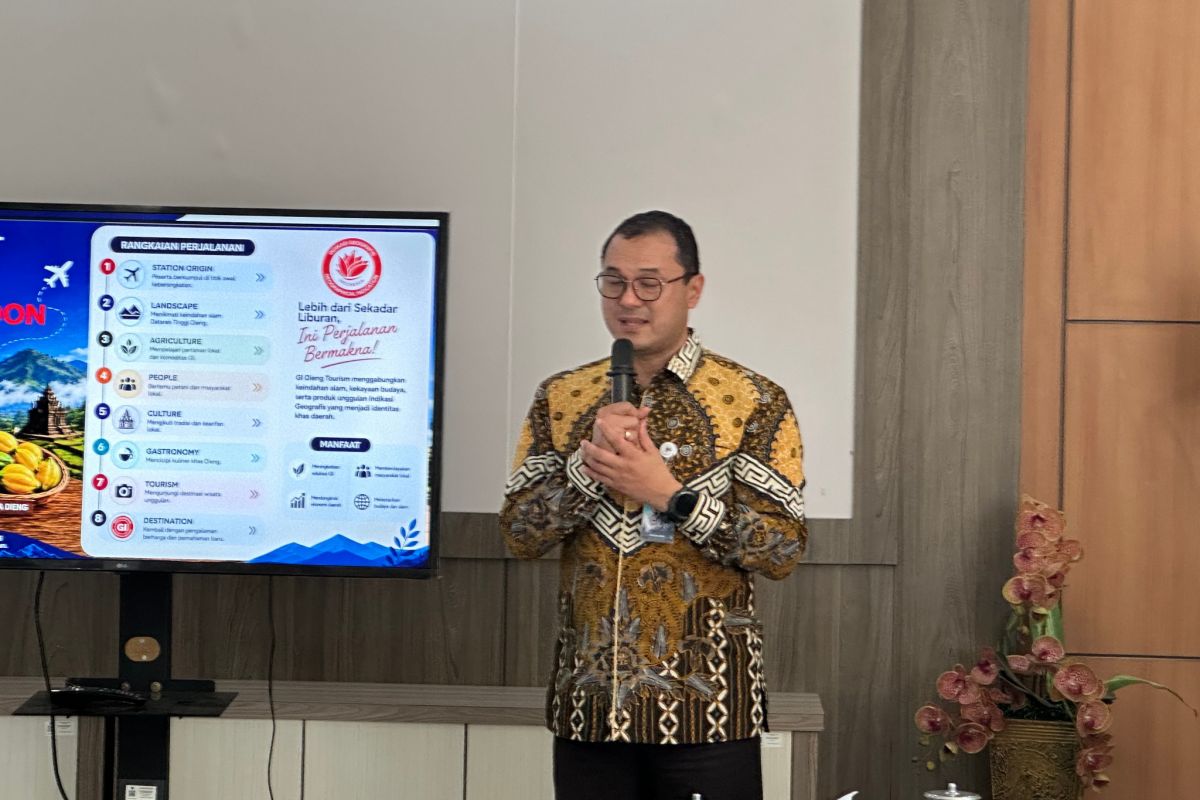
Wonosobo (ANTARA) - As part of developing its Geographical Indication (GI) Tourism programme, the Directorate General of Intellectual Property (DJKI) of Indonesia’s Ministry of Law has identified arabica coffee, carica and purwaceng as products the Dieng area can develop.
Fajar Sulaeman Taman, Director of Trademarks and Geographical Indications at DJKI, speaking in Wonosobo on Tuesday, outlined the concept of GI Tourism as an initiative to change the paradigm of tourism from merely visiting destinations to understanding and directly experiencing the origins of a product.
He said GI Tourism is designed to connect a region’s geographical character with its people, signature products, production processes, traditions, cuisine and travel experiences.
Under this approach, tourists do not simply come to see the scenery, take photographs and go home; instead, they are invited to follow a journey of discovering where products come from, meeting farmers and business operators, observing the production process, tasting, buying, and ultimately taking home the story of the region they visited.
“So far, people come to a place, see the scenery, take photos, eat, and then go home. Through GI Tourism, we want to provide a more complete experience. Tourists come, learn, meet the community, see how products are made, taste them, then buy the products and take home their story,” he said.
He explained that a geographical indication is not merely about products, but also about the relationship between a region, its nature, its people, knowledge, traditions and the reputation built up in an area. For this reason, GI protection is considered important to ensure that a product’s reputation is not separated from its place of origin.
He illustrated that a product’s reputation of origin can become an economic strength and even a country’s identity. Products with strong ties to a particular region can command added value because consumers trust the quality and characteristics inherent in the product’s origin.
“Geographical indications carry the reputation of a region, and even carry the name of Indonesia. That is why they must be protected. When the community, the region, nature and the product share distinctive connections, that is where the value of a geographical indication lies and what we must protect,” he said.
He noted that Dieng was chosen as the GI Tourism pilot project because it is considered to have a strong combination of natural landscape, cultural richness, community activity and products that already enjoy geographical indication protection.