
DIY Regional Police and UGM to Establish Police Studies Centre
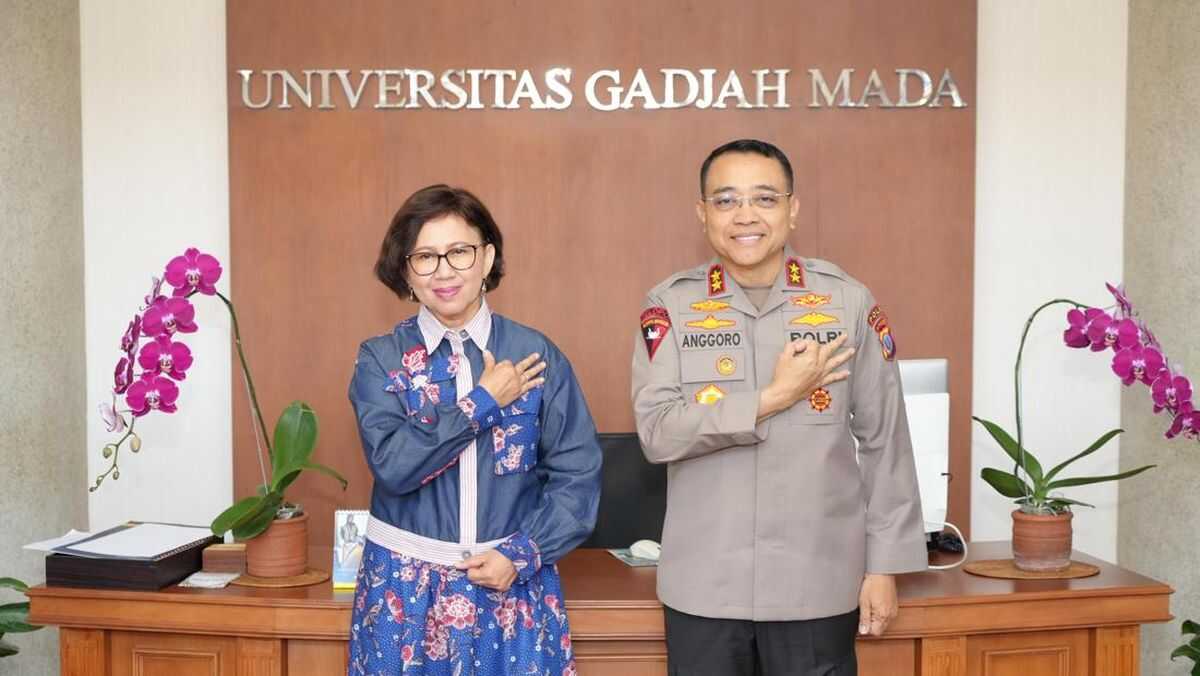
The DIY Regional Police (Polda DIY) together with Universitas Gadjah Mada (UGM) signed a Cooperation Memorandum on the development of a Police Studies Centre on Wednesday, 4 March. The signing ceremony was attended by the DIY Police Chief, Inspector General Anggoro Sukartono, the Rector of UGM, Ova Emilia, and senior officials from both institutions. Anggoro said the signing is a manifestation of a shared commitment to strengthen collaboration between the academic world and the police. “This is a concrete manifestation of the institutional commitment to strengthen the synergies between the academic world and the police in addressing the dynamics of security and public order challenges that are becoming increasingly complex,” Anggoro said in a statement on Wednesday. Developments in information technology, social changes, and rising public expectations of the professionalism of state agencies, according to Anggoro, have demanded a policing approach based on research, data, and comprehensive scientific study. Therefore, the establishment of the Police Studies Centre is hoped to realise a centre of excellence. Its function would be as a forum for the development of knowledge, applied research, and the formulation of strategic policy recommendations in the policing field. The Polda DIY–UGM collaboration is also described by Anggoro as a space for constructive dialogue between practitioners and academics. Its mission is to align policing practice with the principles of good governance, accountability, and respect for human rights (HAM). Through a range of education, training, seminars, scientific publications, the centre is also expected to contribute to strengthening human resource capacity and, through policy studies relevant to the needs of the police organisation. Ova Emilia meanwhile expressed appreciation to Polda DIY for the trust placed in UGM to develop this Police Studies Centre. For her part, the partnership represents a very strategic step in strengthening the synergy between the development of knowledge and the practice of law enforcement. UGM also reaffirmed its commitment to supporting the development of the centre through academic contributions, research, and strengthening interdisciplinary scholarly networks. So that the collaboration can have a sustainable positive impact on the development of policing science and the improvement of public service quality. The DIY Regional Police and UGM, through this cooperation, are optimistic about building a stronger police science ecosystem, adaptable to social dynamics, and supporting the realisation of a professional and increasingly trusted Polri institution.