
DIY Develops Symmetrical AI-IoT Technology System to Prevent Rising Food Poisoning Cases
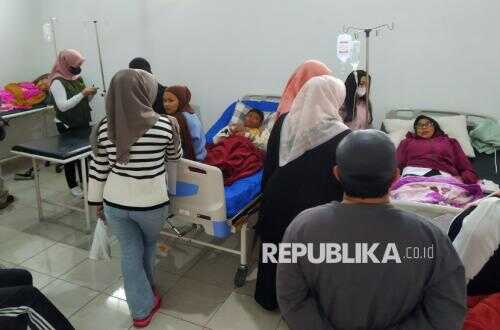
YOGYAKARTA — The rising cases of food poisoning within the Free Nutritious Meals programme (MBG) across various regions in Indonesia have raised concerns from multiple stakeholders. In Yogyakarta, a significant breakthrough in safeguarding food sovereignty and public consumption safety has emerged to address this challenge. Through the Symmetrical Information System for Monitoring and Evaluating Strategic Food Security (SIMETRIS), an Artificial Intelligence (AI) and Internet of Things (IoT)-based system, food distribution channels are now monitored stringently, from the farmer’s field to the student’s plate in the MBG programme.
The system functions as more than a mere data dashboard; it operates as a ‘control centre’ that integrates the role of women in Farmer Women’s Groups (KWT) at Lumbung Mataraman with Nutritional Fulfilment Service Units (SPPG).
According to Fajar Saptono, IT Development Officer for SIMETRIS, food stock recording has traditionally been conducted manually and in fragmented fashion. With SIMETRIS, data concerning stock levels at sub-district level, commodity types, and residents’ home garden harvests are now digitalised in real-time. KWT members serve as primary data producers.
“Women farmers in Yogyakarta now not only till the soil but also input production data such as chilli peppers, vegetables, and eggs directly into the system. The KWT transforms the status of housewives from mere consumers into producers and guardians of regional food data,” explained Fajar.
One notable feature is the implementation of QR code or barcode technology on food packaging. This technology provides traceability guarantees. Each vegetable or egg harvested from Lumbung Mataraman receives a QR code sticker before being sent to the MBG kitchen.
“When scanned, officers can identify the source KWT, farm location, harvest date, and expiry date of the item,” Fajar explained.
The food distribution workflow within this programme is designed to be highly streamlined to maintain quality, comprising the Production Phase (Upstream), where KWT members under Lumbung Mataraman harvest produce and input it into SIMETRIS as “Stock Ready for Sale”.
This is followed by the Consolidation Phase, where SPPG managers check the dashboard to identify the nearest supplier within one administrative district (Kapanewon) to eliminate middleman chains. The process continues to the Distribution Phase, where food is delivered directly from KWT to kitchens. The short distance preserves nutritional freshness and reduces logistics costs.
Then comes the Processing Phase, where kitchens plan menus based on available ingredients in SIMETRIS. Cooking processes are monitored by AI-based CCTV to ensure hygiene standards.
Finally, the Monitoring Phase records transactions and final distribution to students digitally for budget accountability and direct cash payments to farmers.
Food safety is a paramount priority. SIMETRIS is equipped with an Early Warning System (EWS) that monitors food security in layers. Should a problematic batch be identified, the system immediately pinpoints the food’s distribution locations for real-time recall.
“Additionally, each service unit must implement HACCP (Hazard Analysis and Critical Control Point) standards. This ensures meat cooking temperatures reach critical thresholds above 75 degrees Celsius to eliminate harmful bacteria such as Salmonella or E coli,” clarified Fajar.
SiBagz, a young farmer from Punk Gunungkidul, has welcomed the arrival of the MBG kitchen in partnership with farmers in Gunungkidul. According to him, the programme represents a welcome development for young farmers who have frequently faced marketing challenges for their harvests.
He hopes the programme becomes a catalyst for farmer succession, given the critical role young farmers play in maintaining food security over the next twenty years.
“Our vegetable farming output in Gunungkidul has been extraordinary, yet we have often struggled with marketing and relied on middlemen. With the MBG kitchen, we hope local farmers, including potential millennial or Gen Z farmers, can directly supply food requirements without lengthy distribution chains,” said SiBagz.
Meanwhile, RM Wahyono Bimarso from the Biijana Paksi Sitengsu Foundation stated that through intensive coordination between the foundation and the National Nutrition Agency (BGN), the integration of local food supplies is entering a maturation phase to fully support the MBG programme.
In areas such as Gunungkidul, according to RM Wahyono, the system engages local communities such as Punk Farmers to supply raw materials. With SIMETRIS, the government acts as the official buyer (offtaker).
As a result, farmers gain market certainty with fair prices, whilst schoolchildren receive optimal nutrition from their own land.
“Through this integration, the Free Nutritious Meals programme in DIY is not merely about feeding children, but building a resilient, healthy, and transparent rural economic ecosystem from source to table,” he concluded.