
Divorce Over, But Responsibilities Remain Unfinished
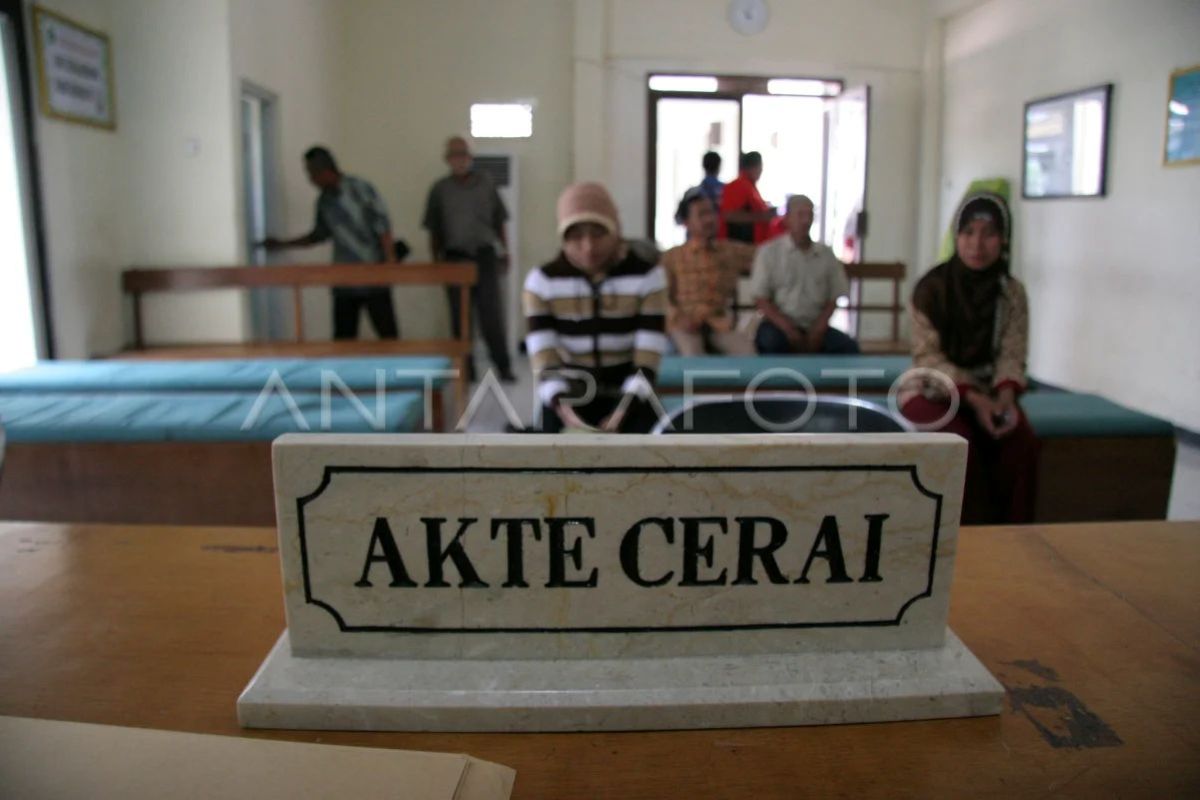
Surabaya (ANTARA) - Divorce often does not mark the end of family conflicts. Instead, it opens a new, quieter chapter: women losing their source of livelihood, children growing up in uncertainty, and court decisions that remain mere powerless documents without enforcement.
In many cities, court rulings on child and ex-wife maintenance obligations become mere legal formalities. In Surabaya, East Java, this situation is being addressed.
The city government has taken an unusual step by suspending civil registry services for ex-husbands who have not fulfilled their post-divorce maintenance obligations.
This policy has sparked debate as well as hope. On one hand, it is seen as a breakthrough in protecting vulnerable groups. On the other, questions arise about the limits of state authority, effectiveness, and potential social impacts.
Amid rising non-compliance with religious court decisions, this policy becomes a crucial moment to reorganise the relationship between family law, state administration, and social responsibility.
Data from the Surabaya City Government shows the scale of the problem is not insignificant. As of early April 2026, 8,180 ex-husbands have not met their maintenance obligations, according to court decisions.
From that number, the civil registry system issues notifications for service suspension until obligations are fulfilled. At the same time, child maintenance arrears reach nearly 5,000 cases, while iddah and mut’ah maintenance obligations are even higher, at 7,189 cases.
These figures indicate that divorce does not end in the courtroom but continues as economic uncertainty for women and children.
The Surabaya City Government’s step is implemented through data integration between the Civil Registry and Population Office and the Religious Court. The automatic system will flag citizens who have not fulfilled maintenance obligations.
Administrative services, such as KTP changes or population document processing, are not processed until obligations are met. This mechanism is not a permanent block but a temporary suspension as an administrative reminder.
This policy shows a paradigm shift. Previously, family law often relied on individual awareness. The state was only present at the decision stage, but enforcement oversight needs strengthening.
Surabaya is attempting to link legal decisions with access to public services. Civil registry administration, previously neutral, now becomes an instrument to enforce family responsibilities.
Administrative Protection
Behind this policy lies a social reality often overlooked. Divorce frequently places women and children as the most vulnerable parties.
Many ex-husbands remarry without settling previous maintenance obligations. As a result, children lose access to education, health, and other basic needs. In the long term, this condition could widen social inequalities.
The administrative approach taken by Surabaya aims to close that gap. When someone needs population services for various purposes, from employment to remarriage, the system reminds them of unfulfilled obligations.
Thus, the state not only records citizens’ status but also ensures social responsibilities continue.
This policy is also noteworthy because it does not alter the substance of family law but strengthens its implementation. Court ruling decisions remain the primary basis.
Local government, as a representation of the state, merely links the execution of decisions to public services. This approach is relatively safe legally, as it does not create new sanctions but reinforces compliance with existing decisions.
In the context of child protection, this step aligns with the principle of the best interests of the child. Divorce does not erase parental responsibilities. Children still have rights to maintenance, education, and protection.
When those obligations are ignored, the state has strong grounds to intervene. Surabaya chooses a relatively non-repressive administrative path, yet one with persuasive power.
However, this policy also raises challenges. Not all ex-husbands in arrears have economic capacity. Some may have lost jobs or face financial difficulties.
If service suspension is implemented without sensitive verification mechanisms, the policy could create new problems. Therefore, flexible implementation is key.