
Diving Profession Involves More Than Attraction: Risks Include Ear Injury and Death
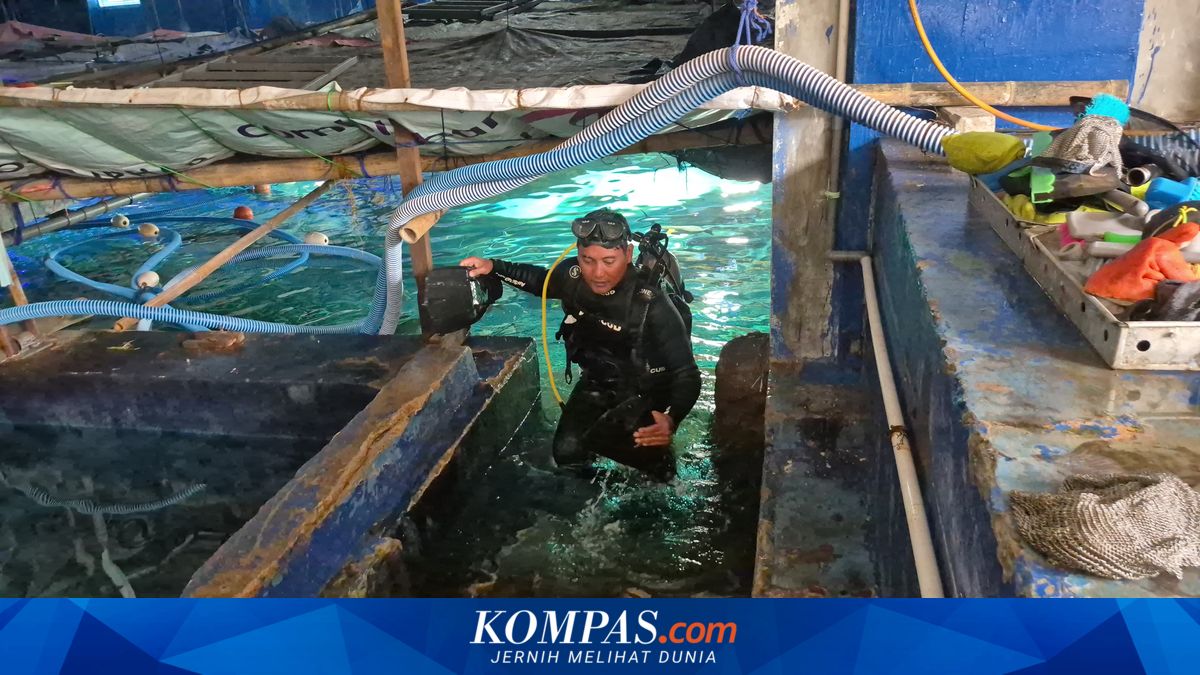
Jakarta — Swimming in a giant aquarium filled with thousands of fish represents a rare experience for most people. However, for Chandra (35), a diver at SeaWorld Ancol in North Jakarta, this activity is part of his daily routine.
Over the past seven years, Chandra has worked diving in the SeaWorld aquarium, which is home to approximately 175 species of marine life, totalling around 8,000 fish. He does not merely observe the marine biota from behind aquarium glass, but swims directly amongst thousands of fish.
Despite spending each day in the aquarium’s artificial seawater, Chandra reports that his skin and body remain healthy. “It never itches, because the water here at SeaWorld is better. This is genuine seawater that we take from Ancol, but the process to get it here is lengthy,” Chandra said during an interview at the location on Tuesday (10 March 2026).
Seawater used in the aquarium is not simply placed inside. It must undergo a lengthy series of processes, including ozonisation, filtration, and several other purification stages. Through these processes, seawater entering the aquarium is ensured to be free of contaminants and bacteria, making it clearer and safer for both marine life and divers.
Water quality is important because the aquarium is inhabited not only by thousands of fish, but also serves as a workplace for divers who must remain in the water for set periods.
Nevertheless, Chandra recognises that his work carries significant risk if not performed carefully. One health risk that divers can experience is decompression sickness, a condition when nitrogen in the blood or body tissues forms bubbles due to sudden pressure changes.
“If decompression occurs it is very dangerous and can cause death, the lungs can rupture, the eardrum can burst,” he said.
However, this does not necessarily mean absolute safety for health. Bacteria cannot be entirely eliminated, because an aquarium is a living ecosystem and fish, fish food, and biofilters continually produce microorganisms.
Some types of bacteria can still be found in aquarium systems, including Mycobacterium marinum, which can cause skin infections in people who frequently contact aquarium water.
Decompression sickness (DCS) is indeed one of the frequent health risks faced by divers. Decompression is a medical condition when gas bubbles, particularly nitrogen, form in the blood and body tissues due to pressure changes that occur too rapidly. This condition typically occurs when a diver ascends to the surface too quickly after diving for an extended period.
When a diver is in water, pressure on the body increases as depth increases. Pressure underwater increases approximately one atmosphere for every ten metres of seawater depth. The deeper and longer a person dives, the more nitrogen is absorbed by the blood, muscles, fatty tissues, and joints.