
Distribution of Social Assistance in Post-Disaster Areas Set to Boost Public Purchasing Power
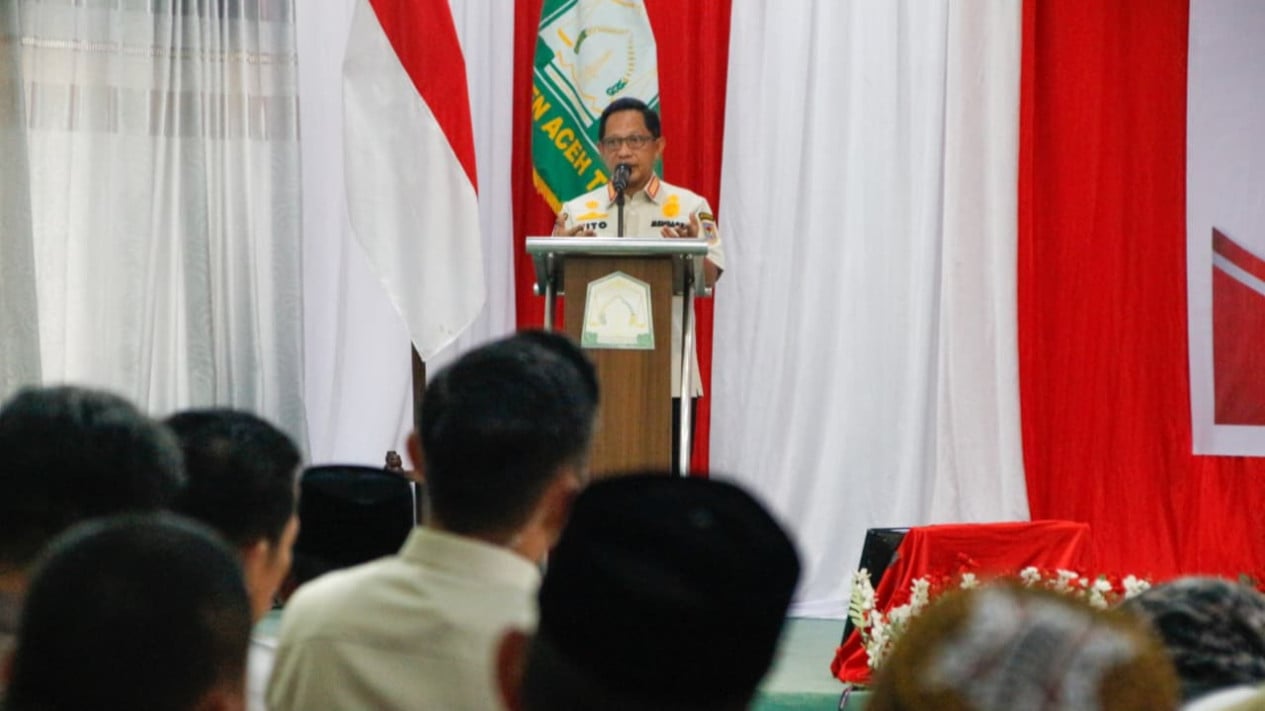
East Aceh, VIVA – The Minister of Home Affairs (Mendagri) and Chair of the Task Force for Accelerated Rehabilitation and Reconstruction (PRR) following the Sumatran natural disaster, Muhammad Tito Karnavian, has assessed that the distribution of post-disaster social assistance (bansos) in Sumatran regions will deliver tangible benefits to the public. One such benefit is the increase in public purchasing power.
“People are given money so they can shop. If there is shopping, then there will certainly be traders. Where there is demand, supply will follow, allowing commerce to function and markets to operate,” said Task Force Chair Tito during the Government Assistance Presentation for Disaster Victims in Sumatran Regions at the East Aceh Regent’s Hall in Aceh on Monday, 16 March 2026.
On this occasion, Task Force Chair Tito extended appreciation to the Minister of Social Affairs (Mensos) Saifullah Yusuf, who had symbolically distributed assistance in East Aceh through PT Pos Indonesia. Tito explained that the natural disasters affecting Sumatran regions, including East Aceh, have significantly impacted local economies. The government’s distribution of social assistance, in addition to benefiting the public, will also stimulate economic activity.
“And this is the same approach. It is hoped that all other regions will follow suit. That is the purpose of assistance programmes such as this,” Tito added.
He assured that this distribution of assistance would not be the final one. Should vulnerable populations be identified in the future with verifiable data, the government will increase such assistance.
Furthermore, Tito explained that the characteristics of the natural disasters affecting Sumatran regions differ considerably from other natural disasters in Indonesia. This is because the disasters occurred across 52 districts in West Sumatra, North Sumatra, and Aceh with uneven conditions. This has complicated the data collection process. In response, the PRR Task Force has conducted data collection in waves.
“If we wait for all data to be completed before distribution or temporary housing allocation, the recovery process will take much longer,” he added.
Tito further noted that, given the data situation, the PRR Task Force has classified house damage into three categories: minor damage, moderate damage, and severe damage/total loss. Households experiencing such damage are provided with stimulus assistance based on data submitted and verified by the Central Statistics Agency (BPS).