
Dispute Over Uranium Figures
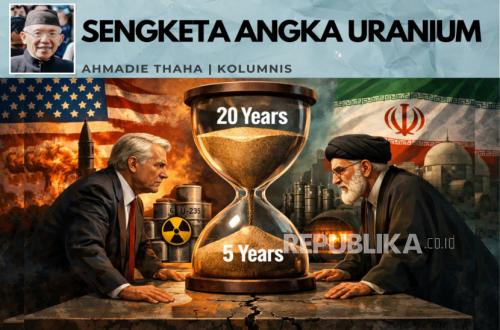
In Islamabad last weekend, US and Iranian diplomats sat almost without a break for about 21 hours. The negotiation room became like a political ICU: full of tension, with few smiles. Every word was measured like a dose of medicine that could save or kill hopes. They came with one major mission: to halt the conflict and mend long-cracked trust. But like many major negotiations before, they left without an agreement. At the end of that diplomatic marathon, one crucial sticking point emerged that could not be bridged: Iran’s nuclear programme, more precisely the issue of uranium enrichment. The United States proposed a harsh condition: Iran must halt uranium-235 enrichment for 20 years. Iran responded with what it considered a more realistic tone: a maximum of 5 years. These two numbers seem simple, but it was in the difference of those figures that the entire discussion collapsed. Only then do we understand: this is not just a 15-year difference. This is the difference in how they view the future. For Washington, 20 years means enough time to “disable” Iran’s nuclear capabilities strategically. For Tehran, 5 years is more than enough to demonstrate good faith without losing sovereignty. At this point, the negotiation table turned into a battleground of wills. Each side stuck firmly to their chosen number. Without agreement, they finally left with hot hearts, to the point that Donald Trump threatened all sorts. The problem sounds technical: uranium enrichment. But like bitter coffee without sugar, behind that scientific term lies the bitter taste of geopolitics. We start to think that muscular wars have now shifted to issues of uranium. Uranium, an element nestled in the earth’s belly, suddenly becomes a symbol of humanity’s insatiable ambitions. It can light up homes but also extinguish civilisation with one button. Before we get too carried away by the political current, it’s good to first get acquainted with the main character of this drama: uranium. This creation of Allah SWT is so powerful yet frightening. It is not a mysterious creature from the sky, but a natural element found in rocks, soil, even water in various parts of the earth. Countries mine it from the earth’s belly like mining gold. Only the mining result is not jewellery, but potential energy and destruction at once. Then uranium-235? That number is not a secret code, but the number of particles in its atomic nucleus: 92 protons plus 143 neutrons, total 235. Another variant like uranium-238 has more neutrons, more stable but less reactive. It is precisely this “lighter” uranium-235 that is easily split, easily reacts, and therefore becomes fuel for reactors as well as the basic material for nuclear weapons. Scientifically, the issue is simple. Uranium-235, originally only 0.72 percent, is spun in a centrifugal machine until its level rises. Below 20 percent, it becomes electricity fuel. Above that, it starts to smell military. And when enrichment passes 90 percent, uranium turns into humanity’s nightmare: material for nuclear weapons. Physics explains the process with formulas. Politics explains it with paranoia. Iran today stands at a point that makes the world anxious. They possess about 440 kilograms of uranium that they have enriched to 60 percent. That number is not just a statistic; it is like petrol already half-poured into a jerrycan. Next, it just waits for who holds the lighter. Theoretically, that amount is enough for more than ten nuclear warheads. But theory, as usual, is always more honest than human intentions.