
Discussions on 'Ticket War' for Hajj Draw Criticism; 22nd Minister of Religious Affairs LHS: What Differentiates the State from an Event Organiser?
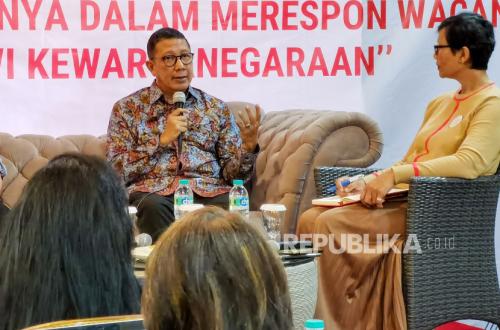
REPUBLIKA.CO.ID, JAKARTA — Discussions on implementing a ‘ticket war’ scheme for organising the Hajj pilgrimage have drawn criticism from the 22nd Minister of Religious Affairs, Lukman Hakim Saifuddin. He questioned the urgency and impact of such an approach, particularly if Hajj quotas were to be contested freely like concert or commercial event tickets.
“When Hajj quotas are contested freely like a ticket war, then what differentiates the state from an event organiser?” Lukman told Republika on Friday (10/4/2026).
According to him, the state has a primary responsibility to protect its citizens from unfair practices. In the context of Hajj organisation, this becomes even more important given the diverse backgrounds of prospective pilgrims and the limited access to technology in various regions.
“The implementation of guarantees for justice in protection, service, and guidance for prospective Hajj pilgrims provided by the government must be absolutely prioritised,” he said.
Lukman also highlighted the current Hajj waiting list, which stands at around 5.6 million people with an average waiting period of up to 26 years. He assessed that the ‘ticket war’ scheme could potentially ignore the rights of pilgrims who have waited a long time.
“That is truly unfair and highly likely to cause social unrest,” he stated.
In addition, he reminded that implementing such a system could impact the management of Hajj funds, which has so far been handled by the Hajj Financial Management Agency (BPKH). According to him, changing the scheme could disrupt the governance of community funds valued at around Rp180 trillion.
“Then what and how would the substitution for managing Hajj funds of Rp180 trillion be in the ‘ticket war’ model?” Lukman said.
He also spotlighted aspects of digital infrastructure readiness and public literacy. According to him, the ‘ticket war’ system requires even internet networks, public ability to access technology, and reliable digital systems that are not yet evenly available across all regions of Indonesia.
Lukman emphasised that the government should focus on optimally implementing the mandate of the law and conducting thorough internal studies before throwing ideas into the public sphere.
“Do not throw raw ideas into the midst of the public; it confuses society and is counter-productive in the government’s efforts to gain public trust,” he said.